
Indian Ikat particularly from Odisha is admired for extraordinary illustration in resist technique. Nuapatna village in the cuttack district of Eastern Odisha is famous for the religious weft ikat textile – Geeta Govinda. It was inscribed with 12th Century poems of Jayadev written in the praise of Lord Krishna. In this village weavers belonging to Patra, Pal and Kundu caste were specially commissioned to create Khandua pata (silk cloth) for Lord Jagannath – one of the avatars of Lord Vishnu. Being Vaishnav devotees, weavers adorned their pata or silk with patterns in the honour of their supreme God.
The symbolism associated with Vishu such as gaja (elephant) padma (lotus), sinha (lion), matsya (fish), rudraksha represents dasavatar – the ten incarnations of Vishnu in textiles.Vaishnav devotees wove sacred cloth, rendered with love and devotion, which reflected in their practice and belief. With the passage of time, Vaishnav culture flourished and textiles were adapted to several types of khandua for wedding ceremonies.
Odisha Khandua is a famous silk textile known for its curvilinear motifs and intricate weaves in tussar and silk both for religious and local purposes. The age old tradition of khadua pata is a living tradition and the communities have retained this practice till date as their legacy. It is the only kalika vriti legacy, which weavers have inherited from their ancestors.

Weaving threads of tradition is the main source of sustenance. The beauty of this hand-woven textile lies in the intricacy of ikat pattern, called Bandha in Odiya Language – it means to resist or to stop dye from penetrating. In this tie and dye resist textile process threads are tied and dyed by hand using a graph according to desired patterns and colours prior to weaving. The process of ikat creation begins from visualisation to translation of patterns into threads inside the weaver’s abode.

This mud house, adorned with wall painting- chitta using rice paste by women – is the weaver’s studio where the most beautiful textiles are cultured. In Nuapatna, single ikat technique is practiced either in the warp or the weft direction. In the process of making these, the tie-dye masters, weavers and dyers are involved at different stages of textile production. Traditionally, the pata or silk is enhanced with supplementary thread work pattern and rudrakhsa, kumbha and matsya motifs. Usually mulberry silk in the warp, locally produced malda-silk and tussar are used for sarees. A handcrafted ikat saree represents skilled age old tradition and culture.
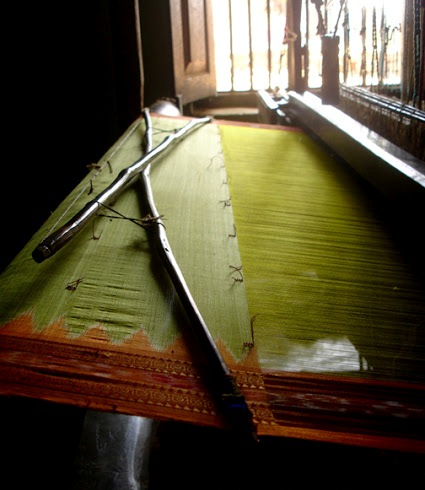
This contemporary Bandha design story is visualised and interpreted by textile designer Pankaja Sethi and translated by the second state award winner 2012 Arjun Pal. He is a weaver and master of Tie-dye process living in Bidharpur village near Nuapatna, Cuttack district with his family. He is one of the rare weavers who understands the milieu of present context and believes in experimentation. Even though finance is the biggest hurdle to tackle at the field level he supported his spouse for higher education in nursing so that his family can run irrespective of fluctuations in handloom sector.
In 2007 he associated with Kala aur Katha, a co-operative design studio run by Pankaja, as a trustee and active member. He learned to access email and thus became more tech savvy. In 2011 Kala aur Katha gifted him a camera because he wanted to document his textiles. In 2012 he was honoured second prize for his natural dyed ikat silk saree in lacquer and catechu. In April 2014 he represented Kala aur katha at Delhi Crafts Council- Kairi exhibition.
Pankaja’s experiments with ikat textiles portray her personal journey and exploration with material cultures. Her contemporary textiles are an example of confluence of rich textures and elegant weaves in vibrant colours.
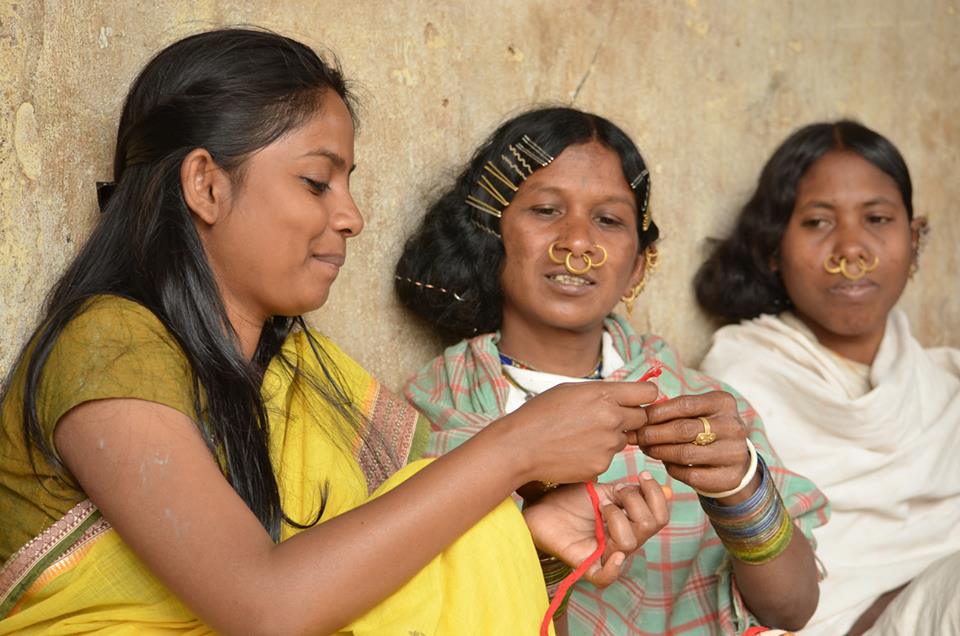
~ Story by Pankaja Sethi & photography by Tanuja Sethi
Shop for Ikat Bandha Sarees by Pankaja on http://www.jaypore.com


 Storytellers of Wonder
Leave a comment