
You see them all around you – those complex geometric motifs in red and blue, the floral vines, the Mughal jali, the deep, earthy colors and the symmetry of patterns on fabric. But do you ever wonder who makes these block prints with exotic names like saudagari, dabu or Sanganeri? Do you know how the dyer boils indigo in a vat to make that beautiful blue for that dress you love or why water forms the pivot of a block-printer’s life?
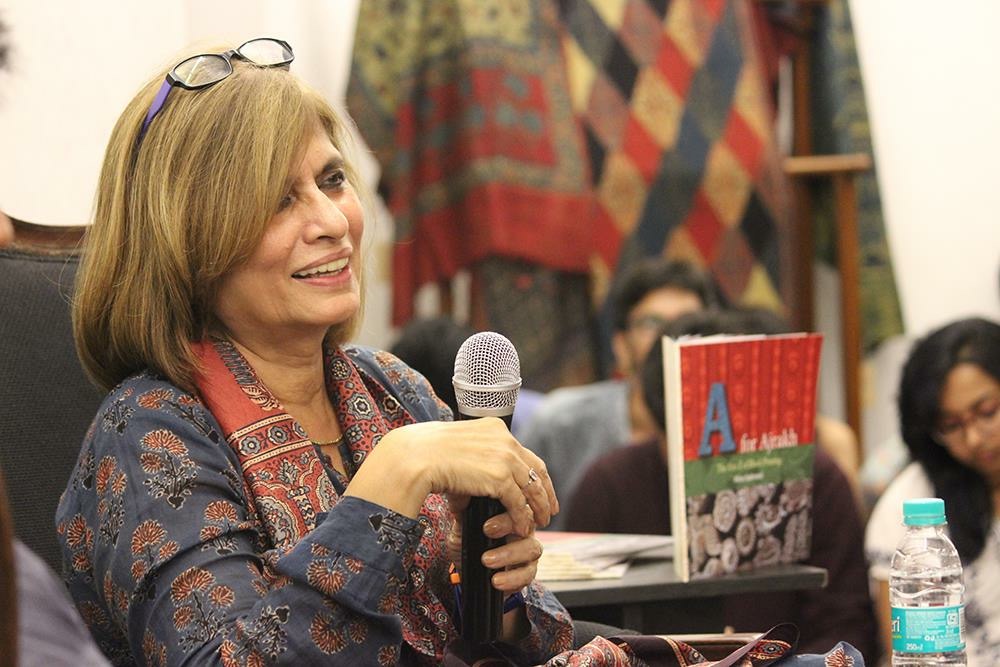
(Author Nina Sabnani at a book launch for A for Ajrakh)
Nina Sabnani, an animator and filmmaker, a critically acclaimed author and currently a professor at the Industrial Design Centre, IIT Mumbai regales us with fascinating stories and anecdotes about India’s hand block-printing techniques in her new book, A For Ajrakh. Written in an alphabetical form, it unfurls a whole new world in front of you as you move from A (Ajrakh) to B (Bagru) to C (Chhipa) and become privy to the tenacious connections between the people and the places behind the craft. The book is gaining ground for its innovative storytelling framework and the way it endeavors to interest young adults about India’s rich craft heritage.


(The book’s alphabetical form makes for interesting reading)
Why did you choose to write on block prints and not some other Indian craft?
I don’t do anything that I don’t completely believe in and enjoy. This book is the result of nearly 15 to 20 years of conversations with craftspersons and designers that resulted in unique stories about block printing. I wanted to write particularly on block printing because I am very fond of textiles – it is wearable art, it is all around us – and I thought it only logical that we document it and understand it. This book is a step in that direction.


(L to R: A Bagh artisan with printed fabric; Brilliant hues of block prints)
What draws you to block printing?
Block printing is not just an imprint of the design off a wooden block – it is the impression of the artist’s hand and personality. It is the handmade-ness of it, the fact that the artisan’s stories are transferred into a pattern with each impression; the lines and forms of those patterns and the natural dyes that most artisans still use pull me towards the craft. We live in an increasingly organized world and the slight irregularities in block prints that make them one of a kind, give the craft a uniqueness that I love.


(Clockwise L to R: A wood block; A block printer at work; A dyeing vat)
What was the journey of this book from inception to publishing?
It took a whole year of compiling all the stories I had collected, confirming and reconfirming them with artisans and my designer colleagues to take this book from a mere idea to its concrete form. The alphabet system (the book’s framework) did not mean I could simply put the information under each one and be done with it. I also wanted to talk about where the craft was born, who was it made for initially, what geography it belongs to and who it impacts. I also wanted to use beautiful stories that most kids and laypersons would not normally have access to.
Who is the book for and what do you hope would be the takeaway for the reader?
The book is for kids and also for that layperson who sees a craft like block printing around her all the time but has no idea of its antecedents. It is important for them to learn where it comes from, the skills required to create it, how it makes a culture unique. I also hope the reader will have a better understanding of the communities that make various types of block prints and that the craft can be adopted by anyone who wants to. Ultimately, I hope the book with invoke the spirit of inquiry in the reader; make them ask ‘what is its story’ the next time they see a block print.
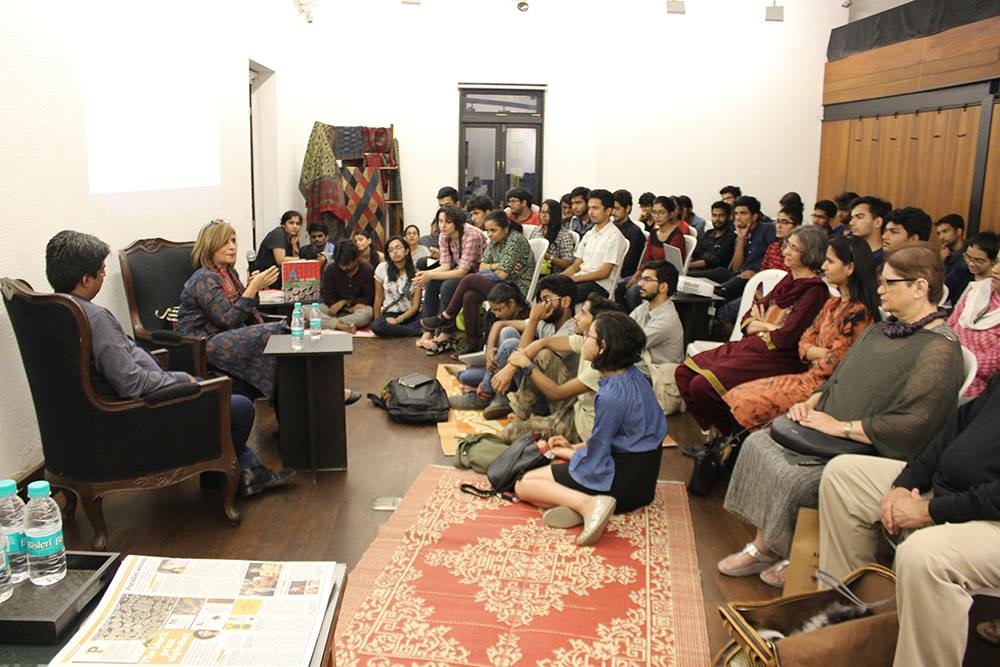
(A rapt audience at a book launch for A for Ajrakh)
Do you have plans for more series on other crafts?
I definitely do. I would love to do a book on weaving and all the stories related to it but there must be some breadth of information to do that. I am interested in everyday crafts and how they are re-interpreted by artisans who want to tune them to the contemporary but preserve the inherent poetry, which comes from being rooted in nature and all her elements.
Get your copy of A for Ajrakh and other titles by the author here: https://goo.gl/3MnC6c



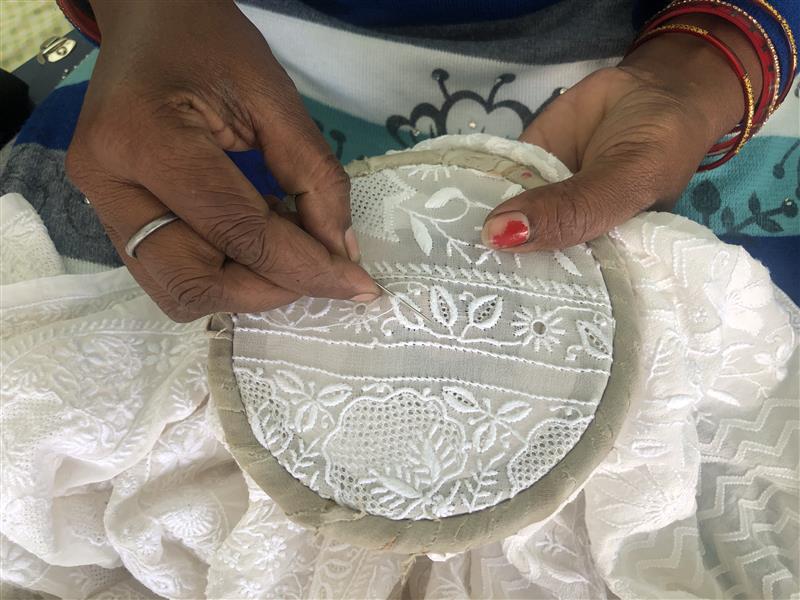
 Storytellers of Wonder
Leave a comment