
From chic LBDs to flowy anarkalis, silk kurtas to tulle gowns—your wardrobe might have it all, but when the festive season rolls in, nothing compares to the elegance & grandeur of a saree. Be it the vibrant festivities of Ganesh Chaturthi or the floral elegance of Onam, a saree can light up every celebration.
Picture this: Six yards of fantasy come alive in exquisite weaves, stirring motifs, draped in festive colors, and you want it all! A saree is more than just a garment, it’s a timeless symbol of tradition, culture & celebration that no wardrobe should be without.

So, what makes a saree collection truly festive? Is it the curation of iconic weaves, eclectic finds from across India, and contemporary twists on heritage designs? The answer is all the above, but there are some that you simply can’t do without. Varying from region to region, each drape reflects the diverse traditions & styles across the country. From the elegant Nivi drape of Andhra Pradesh to the intricate Nauvari of Maharashtra, saree is a personal experience for every woman in india.
Dive into our ultimate guide to must-have sarees that will make your celebrations unforgettable:
Handwoven Silk

India is home to three exquisite handwoven silks—Eri, Muga, and Tussar—each with its own distinct beauty. Eri, also known as Ahimsa Silk, is produced in Assam through a unique process where silk is extracted after the silkworm leaves the cocoon, ensuring no harm to the silkworm. Muga silk, native to Assam, is renowned for its natural golden hue & durability, while Tussar, often referred to as ‘wild silk,’ is produced from silkworms that breed on forest trees. These silks are handwoven using traditional techniques passed down through generations, making these fine silks an essential addition to your festive saree collection.
Benarasi
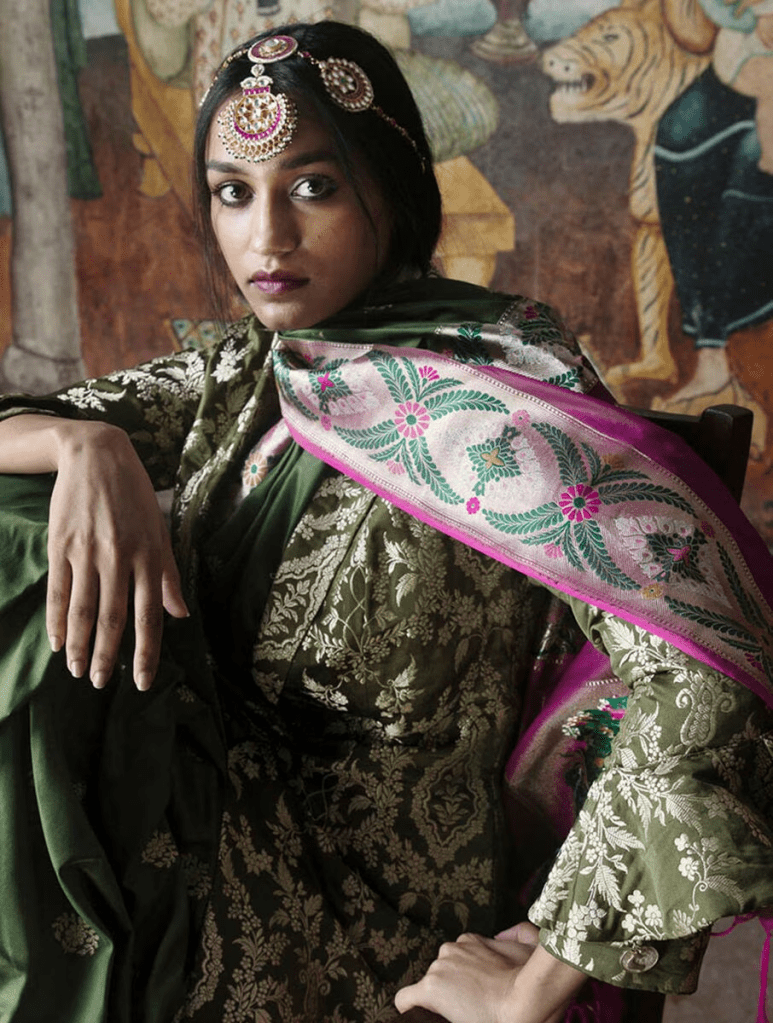
A masterpiece from the sacred ghats of Varanasi, the Benarasi saree is synonymous with luxury & opulence. This regal silk, once known as Hiranya Vastra or ‘cloth of gold,’ is painstakingly woven on handlooms by master weavers. The process involves intertwining silk yarns with gold & silver zari threads to create intricate motifs and decadent brocades in vibrant colors. Each Benarasi saree can take weeks to months to craft, making it a cherished addition to any festive wardrobe.
Chanderi

With a glimmering, sheer texture, dainty motifs borrowed from nature and the world around the weaver and an ‘almost, not there’ weight, the Chanderi is one of the finest weaves in India’s saree repertoire. Perfect for pre-wedding events, festivals and starlit soirees, the Chanderi adds a new layer of sophistication to your wardrobe.
Maheshwari
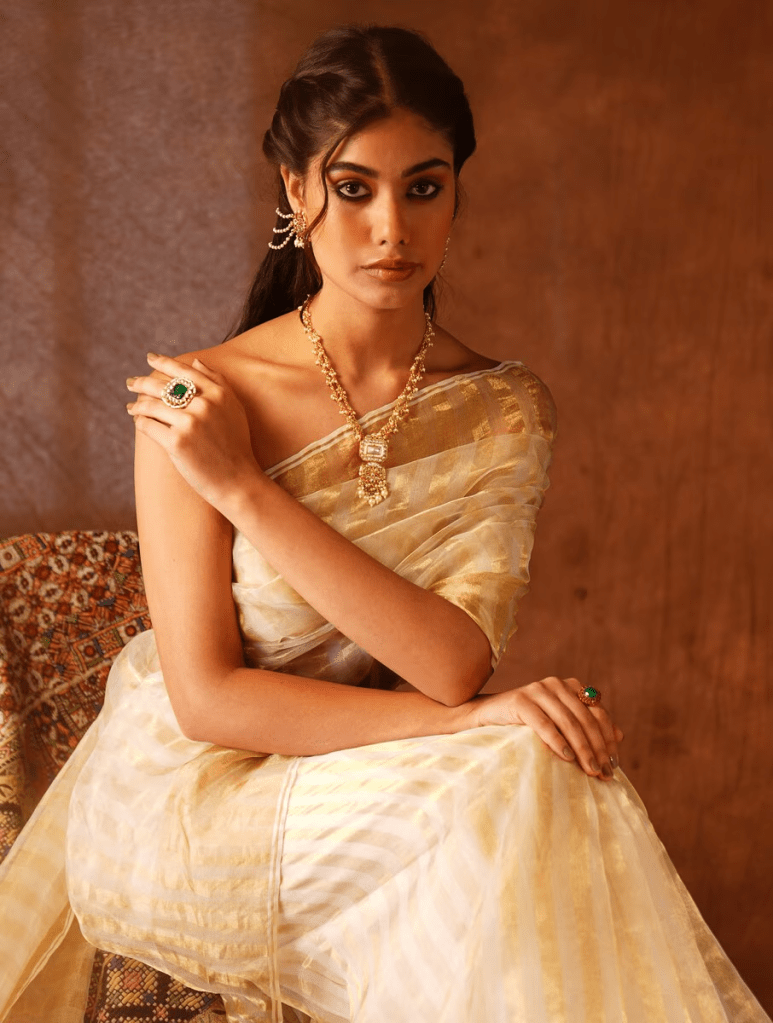
The Maheshwari saree hails from the historic town of Maheshwar, Madhya Pradesh, where the first saree was designed by Queen Ahilyabai Holkar herself. Crafted on handlooms, these sarees blend cotton & silk threads to create a lightweight silky textile. The weaving process involves intricate patterns & motifs, often inspired by the architecture of the Maheshwar Fort, and it can take several days to complete one saree. With such a rich history, the Maheshwari saree certainly deserves a place in your closet.
Kanjeevaram

Woven in the town of Kanchipuram, Kanjeevaram is considered as one of the dressiest sarees. A handwoven marvel using pure mulberry silk, with a contrasting pallu that is meticulously stitched to the body of the saree. The intricate motifs, often inspired by temples, folklore & fantasies, are woven with gold-dipped silver threads. The craftsmanship behind a Kanjeevaram saree ensures that it remains one of the most treasured pieces in any festive collection.
Kalamkari
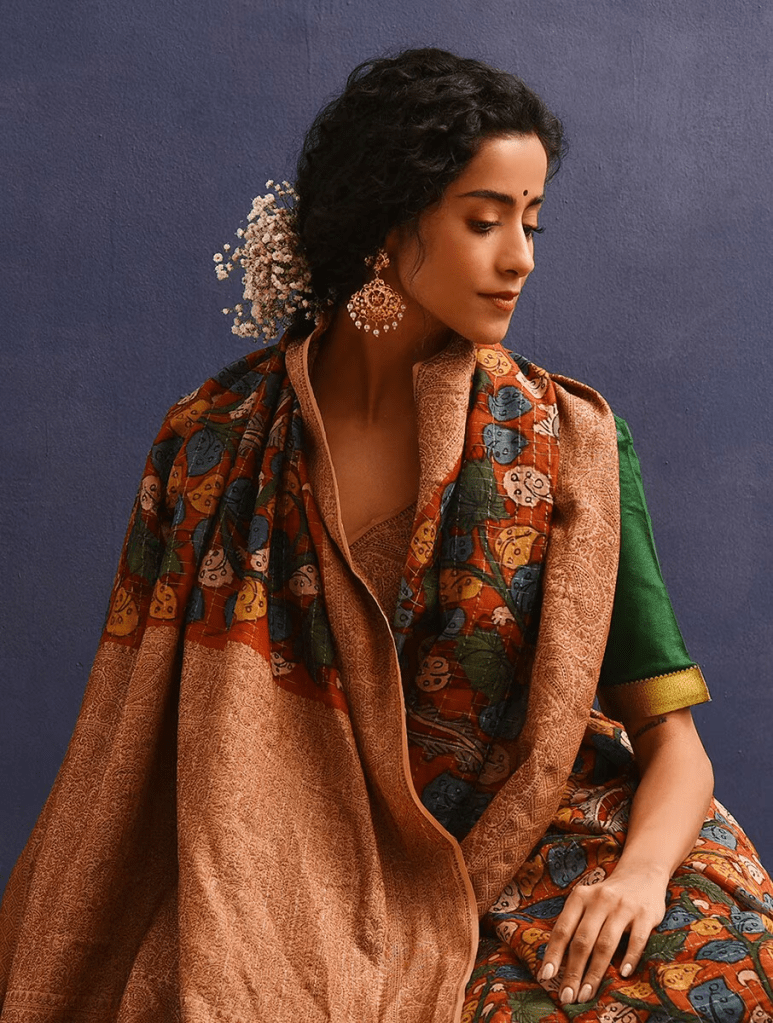
Brilliantly hued flowers & foliage, temple scenes & muggu or the traditional Kolam designs, painted with a bamboo reed qalam (pen) or block printed by hand adorn that visually stunning textile called Kalamkari. Each Kalamkari saree can take weeks to produce, with every color & motif added in layers with the help of resist dying technique. It’s a meticulous 23-step process that includes cloth treatment, sketching, dyeing, printing, numerous washing procedures, and even gold or silver brocade work. This visually striking textile is a perfect blend of art, history & culture, making it an essential piece for your work to festive wardrobe.
Fun Fact: The kalamkari fabric was once used as currency to trade spices with Southeast Asia!

Celebrate the joy of festive days with Jaypore. Elevate your celebrations with these iconic sarees, each one a testament to the rich craftsmanship and cultural heritage of India. Let these masterpieces be a part of your celebration, as they bring together tradition, artistry and the spirit of India.


 Storytellers of Wonder
Leave a comment