
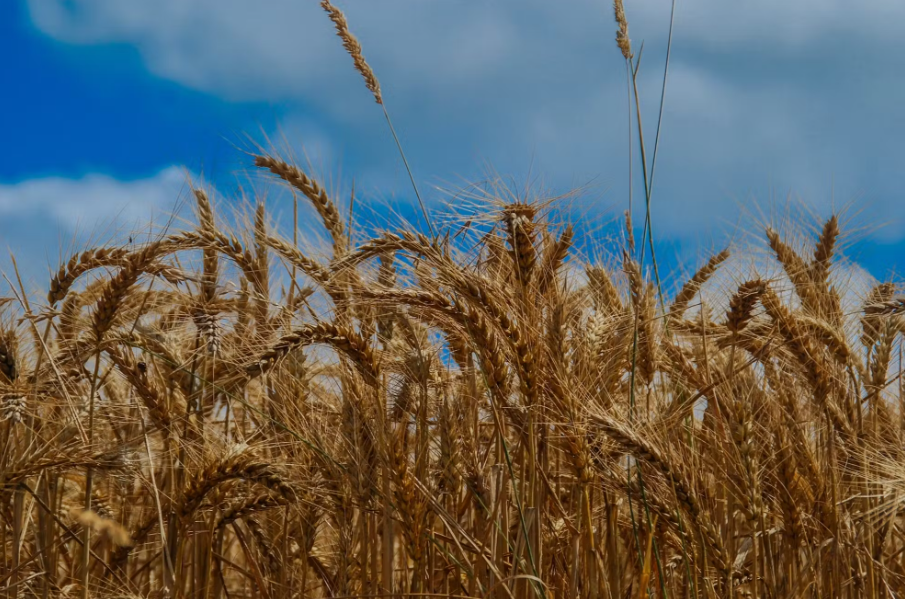
The winds of January carry with them an ancient melody—one of abundance as the fields shimmer with golden grains, gratitude & the deep connection between land & people. One of the most joyous times of the year—the harvest season— is not merely an agricultural milestone but a cultural phenomenon celebrated across the country with great fervor & gratitude.
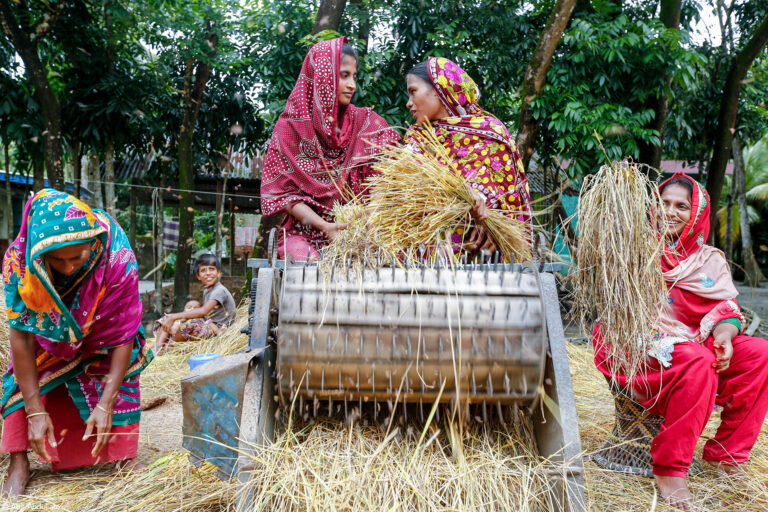
Harvest festivals mark the culmination of hard work, the prosperity of the season & the hope of abundance. They bring people together, fostering a sense of community & honoring the intimate connection between humans & mother nature. From the fiery festivities of Lohri in Punjab to the colorful skies of Gujarat’s Uttarayan & the sweet traditions of Pongal in Tamil Nadu, these festivals showcase the rich diversity & shared spirit of celebration that defines India. Let us delve into the vivid history, customs, culinary delights & crafts of these remarkable festivals, which remind us of the profound relationship between humanity & the land.
Lohri: A Fiery Celebration of Gratitude
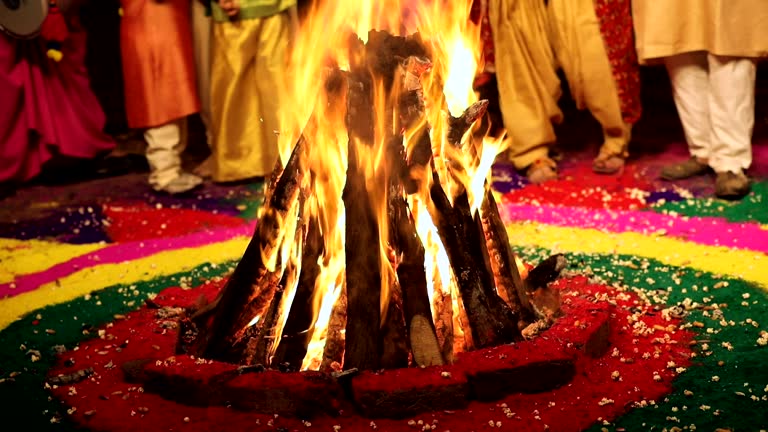
The crisp winter air carries a sense of nostalgia, as the festival of Lohri graces the landscapes of Northern India, painting the night with the glow of flickering bonfires. A celebration rooted in warmth & rich cultural roots, Lohri marks the closing chapter of the winter solstice, a moment of triumph as the earth’s journey tilts toward longer days & brighter skies. In the heart of the Duggar & Punjab regions, where the land is as vibrant as its traditions, Lohri emerges as a festival of joy, community & renewal. It’s a night where the warmth of togetherness shines brighter than the flames that dance in the air.
Mythology
Beyond the rhythms of the dhol & the crackling of the fire, Lohri is a story told through the ages. The myth of Dulla Bhatti, the legendary hero of Punjab, adds a layer of courage & compassion to this celebration. In an era where tyranny ruled, Dulla Bhatti stood as a beacon of resistance, saving young girls from being forced into the harsh fate of the slave markets in the Middle East. Among those he rescued were Sundri & Mundri, whose tales of bravery & love continue to echo through the songs sung around the Lohri bonfires.
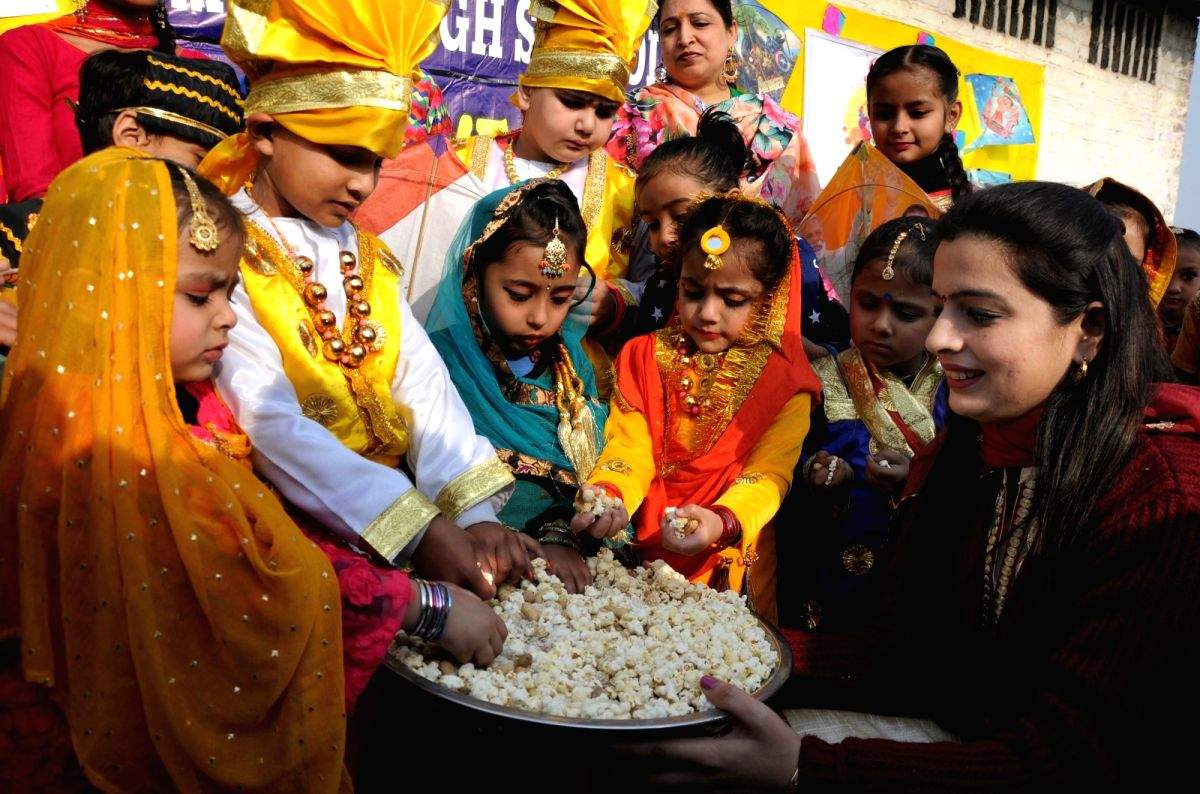
Children, dressed in bright colors, roam the streets during the festivities, joyously singing folk songs that tell the stories of Dulla Bhatti’s heroism. Their voices add a lively energy to the night, as they collect Lohri – the symbolic offerings of sugarcane, sesame & jaggery – which is then shared with everyone around the fire, bridging generations & communities in a single, sweet moment of unity.
Rituals & Celebration
The beating heart of Lohri lies in the fire— its flickering flames hold a symbolic power, a connection to the sun, earth &the energies of life.
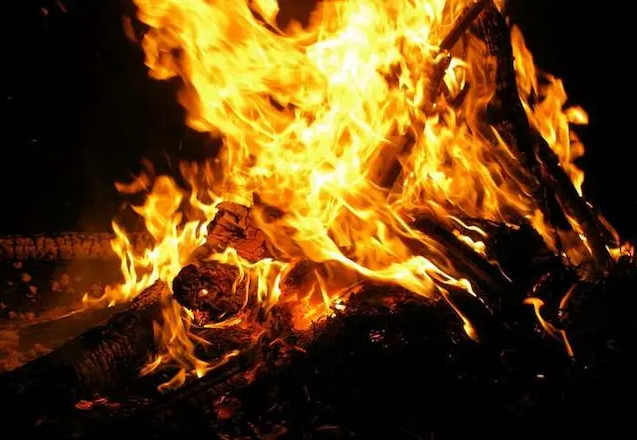
For the farming communities, the fire represents the warmth that nourishes the crops, a life-giving force that sustains their livelihood through the harsh winter months. As the bonfires burn brightly across villages, offering sesame seeds & jaggery to the flames, there is a collective expression of gratitude for the harvest and a fervent prayer for future prosperity.

This deep cultural bond to nature’s rhythm is further brought to life through the vibrant dances of Bhangra & Gidda. With every step, every twirl, there is a celebration of life’s vitality, a joyous expression of community & a homage to the blessings of the season.
The rhythmic footwork of Bhangra, often accompanied by the hypnotic beats of the dhol, infuses the air with a contagious energy.
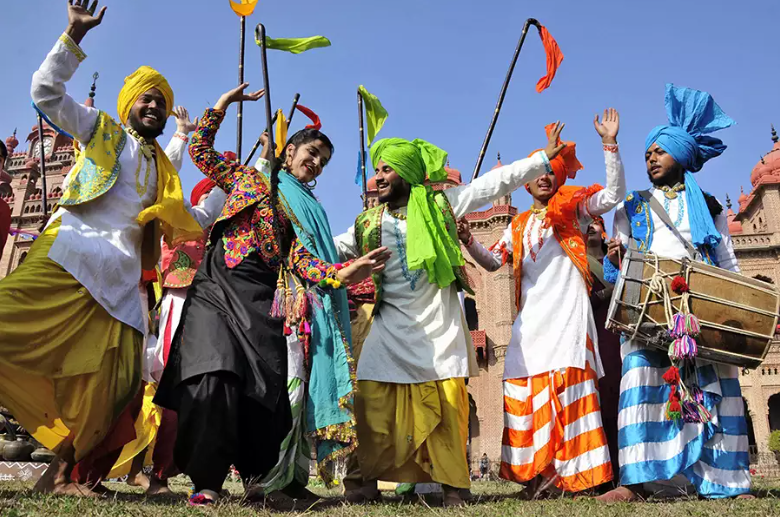
The fire, the dance, the music—it all comes together to form a beautiful symphony that celebrates not just the harvest but the spirit of togetherness, prosperity & gratitude. Lohri is a moment when the world feels just a little bit more connected, where memories of generations past mingle with the laughter & joy of today.
Traditional Food
Among the plethora of dishes that grace the Lohri feast, two standout dishes are Sarson da Saag & Makki di Roti, a quintessential to Punjabi cuisine.
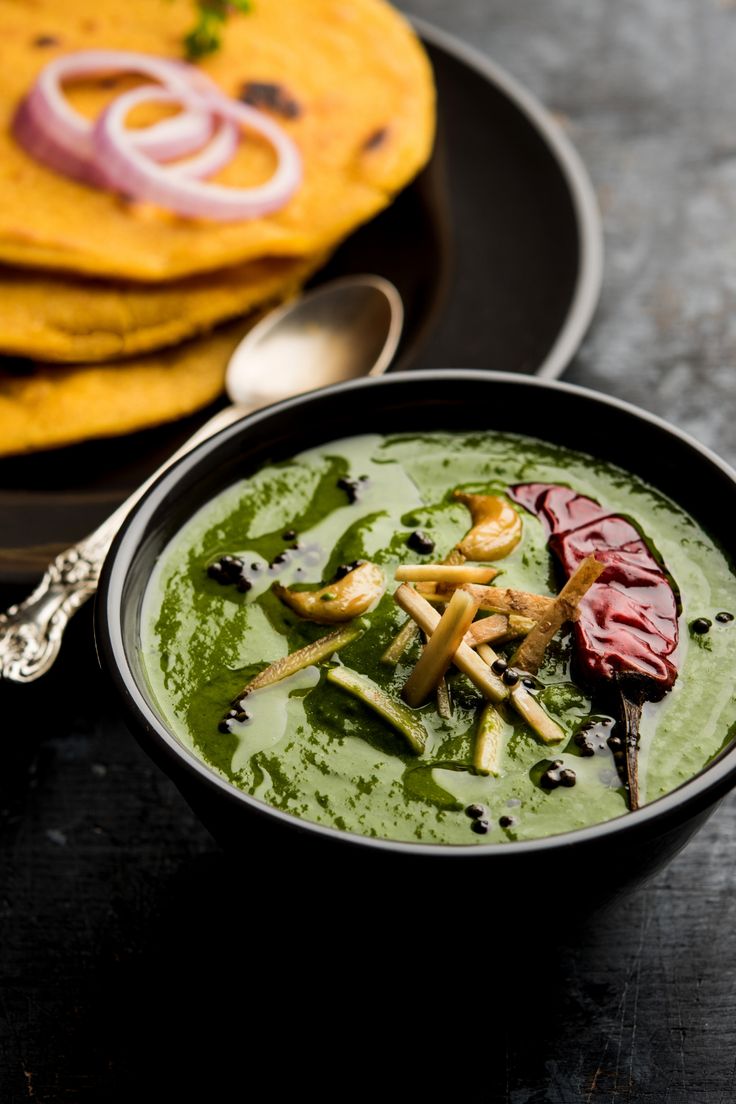
Sarson da Saag, a luscious and aromatic vegetable curry complemented with Makki di Roti, a rustic & wholesome bread crafted from corn flour steals the spotlight with its vibrant medley of mustard greens. The dish is a testament to the region’s rural roots, showcasing the seasonal abundance of fresh produce.
Beyond these culinary gems, Gajak, a sweet confection made from sesame seeds & jaggery, offers a delightful crunch & a burst of sweetness.

Til rewari, another sweet delicacy made from sesame seeds & jaggery, showcases traditional sweet-making artistry. Jaggery, a natural sweetener derived from concentrated sugarcane juice, is a common thread that binds these treats together, infusing them with a unique sweetness that resonates with the spirit of Lohri.
Crafts & Cultural Significance
Lohri is not just about the celebration of harvest; it’s a day to embrace & showcase the rich cultural heritage of Punjab through its crafts, particularly the exquisite art of Phulkari.

This traditional embroidery, which means “flower work,” holds a special place in Punjabi households, symbolizing warmth, prosperity & the vibrant spirit of the people as it finds its way into dupattas, Patiala suits, potlis, wall hangings, cushion covers & even table runners, filling spaces with cultural richness & a burst of color.
In Assam, the festival is called Magh Bihu, where community feasts, plays traditional games, & the construction of makeshift huts, or “Bhelaghar,” mark the season. These huts, lit by the warmth of bonfires, echo the essence of Lohri’s fiery heart.
In Himachal Pradesh, the day is celebrated as Magha Saaji, signifying the start of a new month in the Hindu calendar. Families bathe in rivers, don new clothes & exchange local delicacies, honoring the cyclical rhythm of life & nature.
Makar Sankranti: A Transition of Seasons

Remember the sweet warmth of til laddoos melting in your mouth as you giggled at the sesame seeds sticking to your nose? Or the cozy moments by a crackling bonfire, with its smoky aroma promising the farewell of winter’s chill? That nostalgic charm, layered with cultural significance, is the essence of Makar Sankranti—a festival that bridges the simplicity of tradition with the grandeur of cosmic movements.
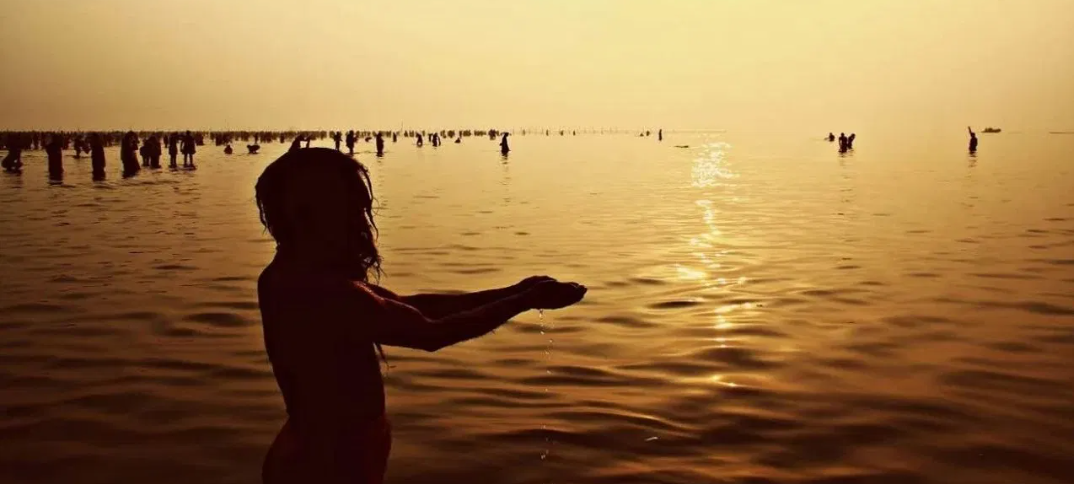
Rooted in ancient Vedic wisdom, Makar Sankranti celebrates the Sun’s transition from one zodiac sign to another, specifically into Makar Rashi (Capricorn). This celestial event, known as Sankranti, occurs 12 times a year. However, Poush Sankranti, which marks the Sun’s northward journey (Uttarayana), holds unparalleled importance. It signifies a pivotal shift—not just astrologically but symbolically—ushering in longer days, warmer rays & renewed hopes.
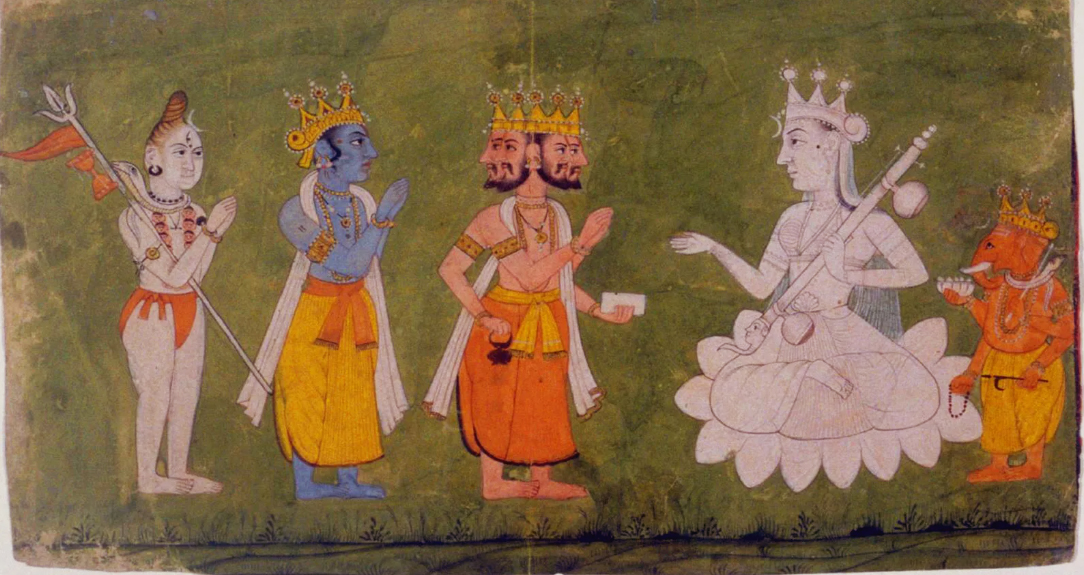
More than an astrological marvel, Makar Sankranti signals the dawn of the harvest season. Across India, fresh crops are worshipped & joyously shared, symbolizing gratitude for nature’s bounty. This day intertwines the cycles of agriculture with the rhythms of life, bringing communities together in a celebration of abundance.
The Sun’s movement into the northern hemisphere also denotes the end of the dark, cold days of Dakshinayana & the beginning of light & energy-filled Uttarayana. This transition carries profound spiritual significance, as it is believed to be a time when the gods awaken, blessings abound & auspicious events can unfold.
Mythology

In the epic Mahabharata, Bhishma Pitamah chose to leave his mortal body during Uttarayana, a period believed to grant liberation (Moksha) to those departing this realm.
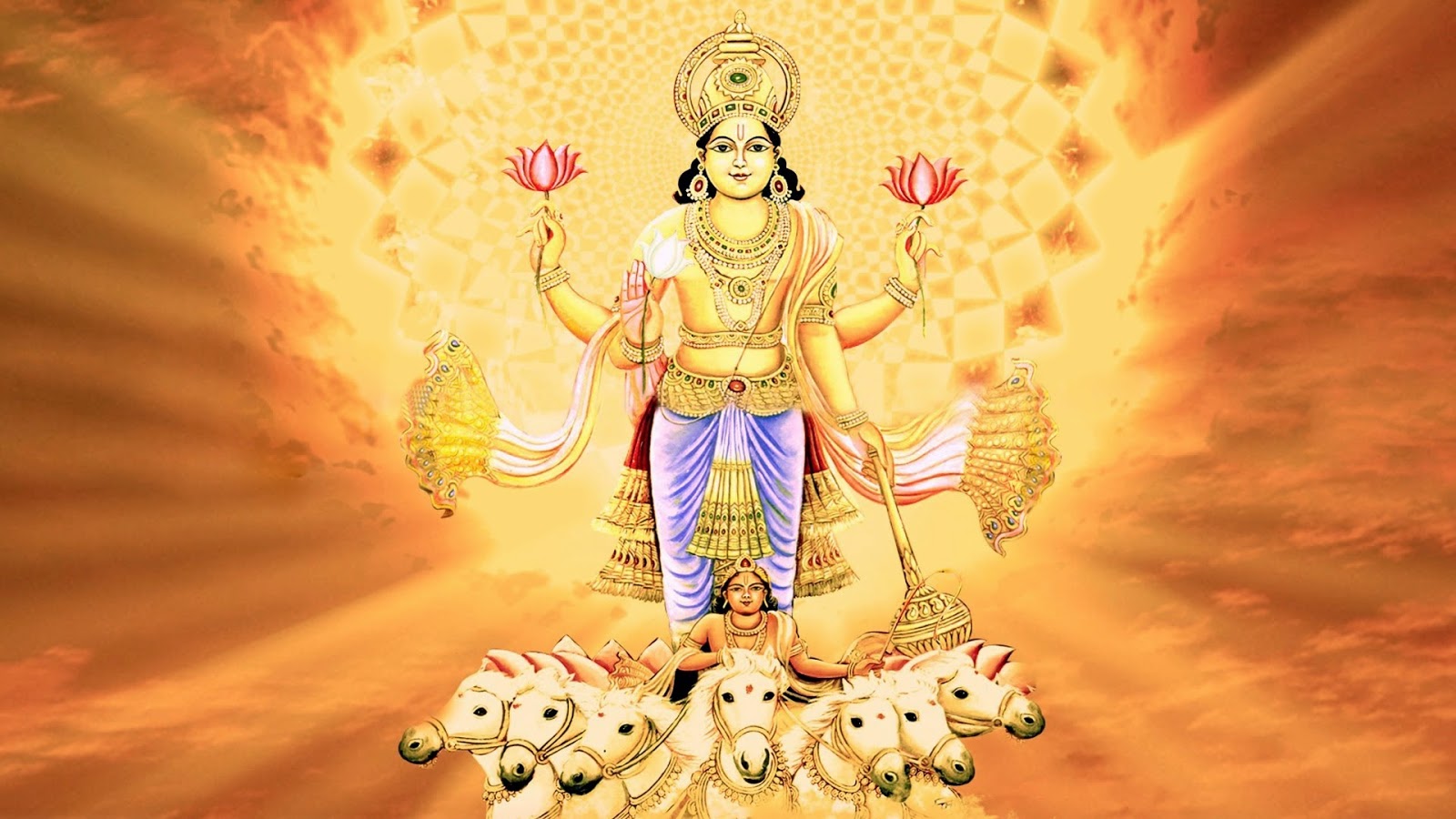
The day also commemorates Lord Vishnu’s triumph over demonic forces, symbolizing the end of negativity & the rise of righteousness. This victory signifies a fresh start, encouraging good intentions & prosperity.
According to Hindu scriptures, Makar Sankranti is ideal for Sadhana—spiritual practices like meditation—owing to the environment’s heightened Chaitanya (cosmic intelligence). It is a time to align oneself with positive energy & embrace the transformative power of this sacred day.
Rituals & Celebration
Makar Sankranti is celebrated with enthusiasm across various states in India, each adding its own cultural essence to the festival.
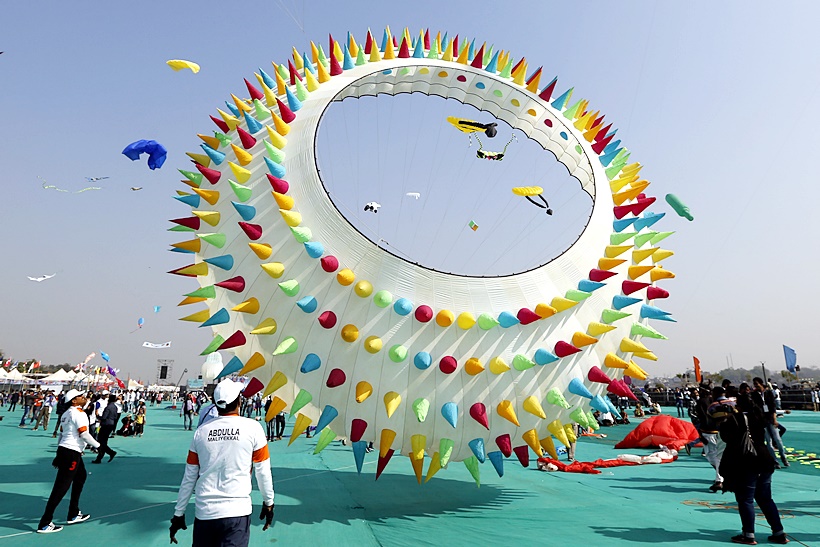
In Gujarat, the International Kite Festival turns the skies into dazzling canvases of colorful kites. Uttrayan is a lively celebration that blends artistry & competition, fostering a spirit of unity among participants & spectators alike. Each state’s unique way of celebrating Makar Sankranti showcases India’s cultural richness & diversity, uniting people in gratitude, joy & new beginnings.
Traditional Food
Culinary traditions during Makar Sankranti beautifully mirror the local flavors & seasonal abundance of each region, deeply rooted in cultural significance.

In Gujarat, Undhiyu—a slow-cooked mixed vegetable delicacy prepared with winter produce— & jalebi, a syrupy dessert, become the highlights. Together, they signify the richness of harvest & the joy of communal feasting, often enjoyed under skies filled with colorful kites.

In Maharashtra, the emphasis on Puran Poli (sweet stuffed flatbread) & sesame seeds & jaggery takes a sweet turn with the preparation of tilgul laddoos, which are distributed among friends & family. These sweets symbolize togetherness, as people exchange them with a warm phrase: “Tilgul ghya ani god god bola.”
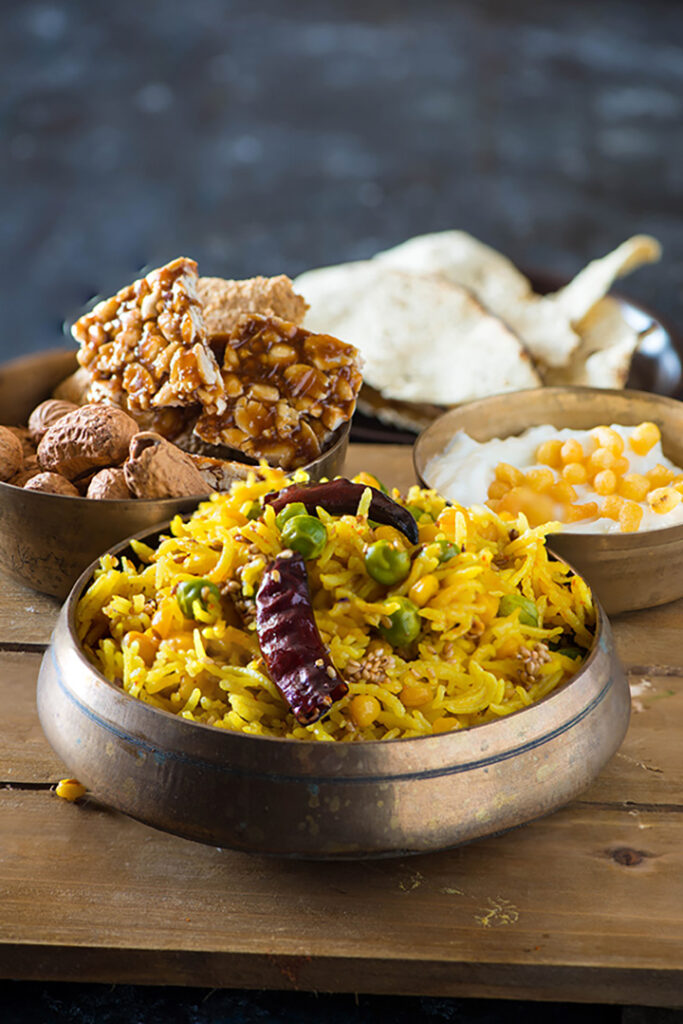
In Uttar Pradesh, Khichdi, a humble yet nourishing dish of rice and lentils, takes on a ritualistic aspect, which the devotees after taking a dip in holy water, offer to the Sun God in gratitude. This dish is also shared with the underprivileged, emphasizing the festival’s message of giving.
Crafts & Cultural Significance
Yellow holds a deep cultural & spiritual significance on Makar Sankranti. Associated with the Sun, the harbinger of warmth & energy, yellow symbolizes positivity, prosperity & the joy of new beginnings.
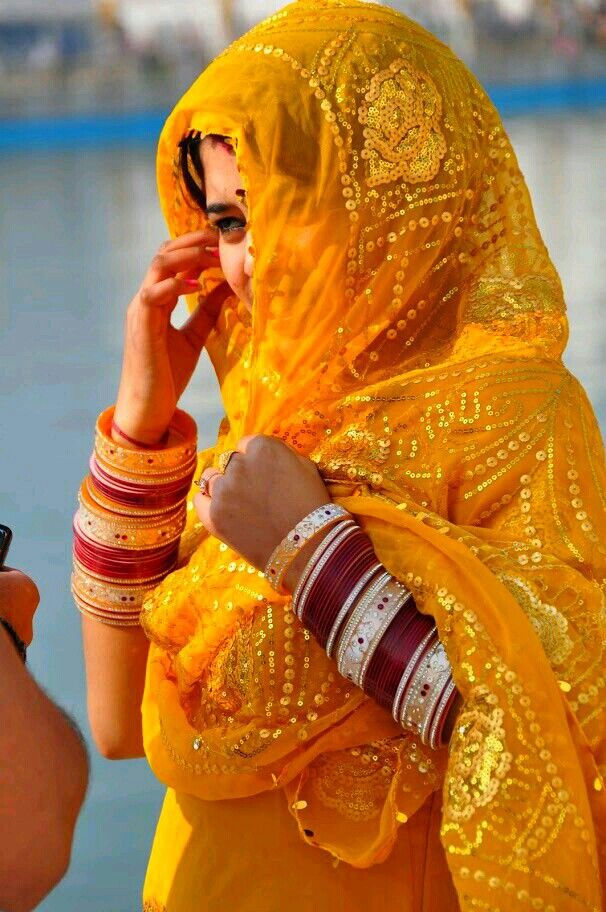
Wearing yellow on this day is not just a tradition but a way of expressing gratitude for the Sun’s life-sustaining energy as it marks the transition to brighter, warmer days.
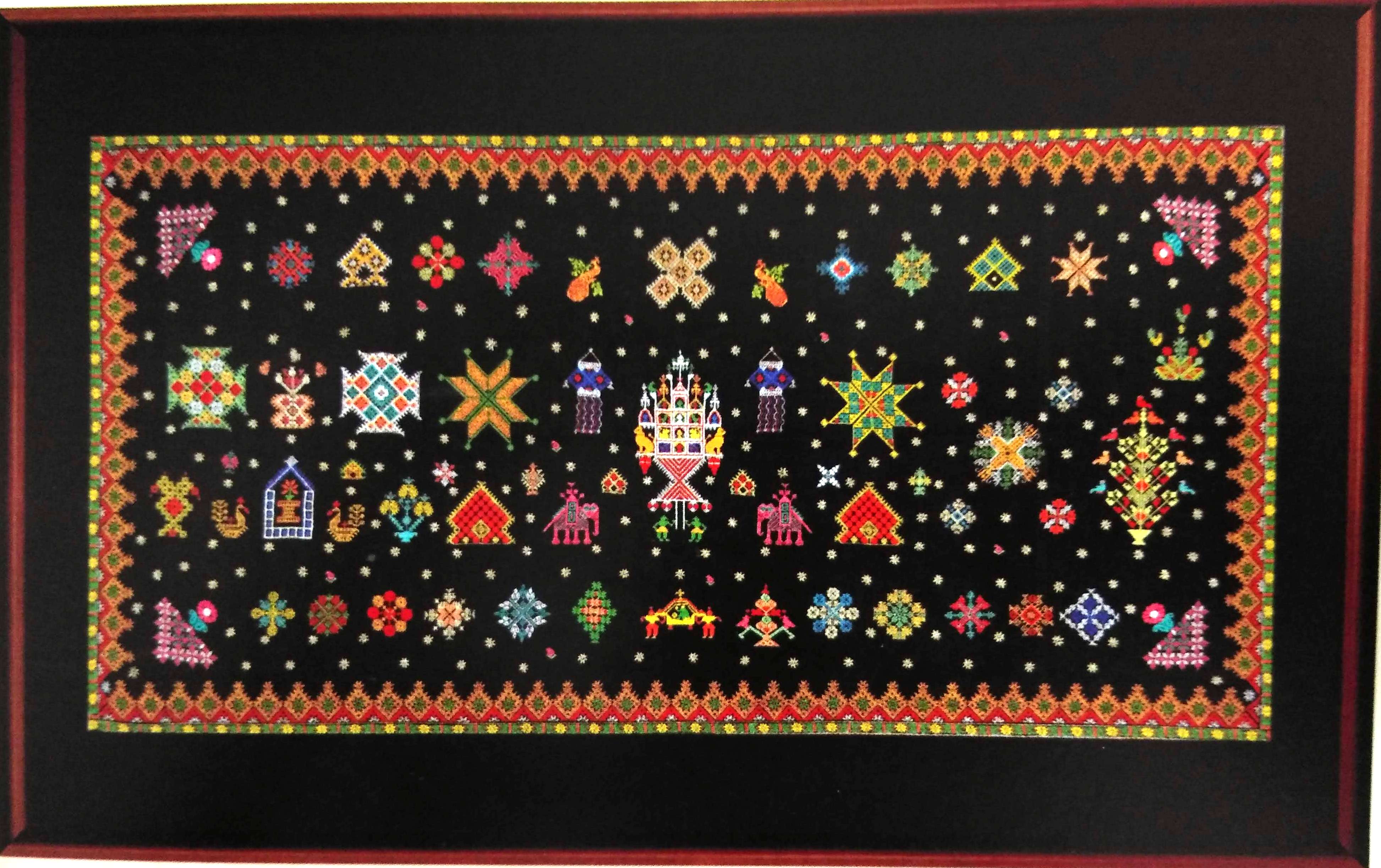
Karnataka: Known as Sankranthi or Suggi Habba, the festival celebrates the region’s agricultural heritage.

Traditional crafts like Kasuti embroidery, an intricate hand embroidery style, adorn the festive silhouettes, adding a touch of local artistry to the celebrations.
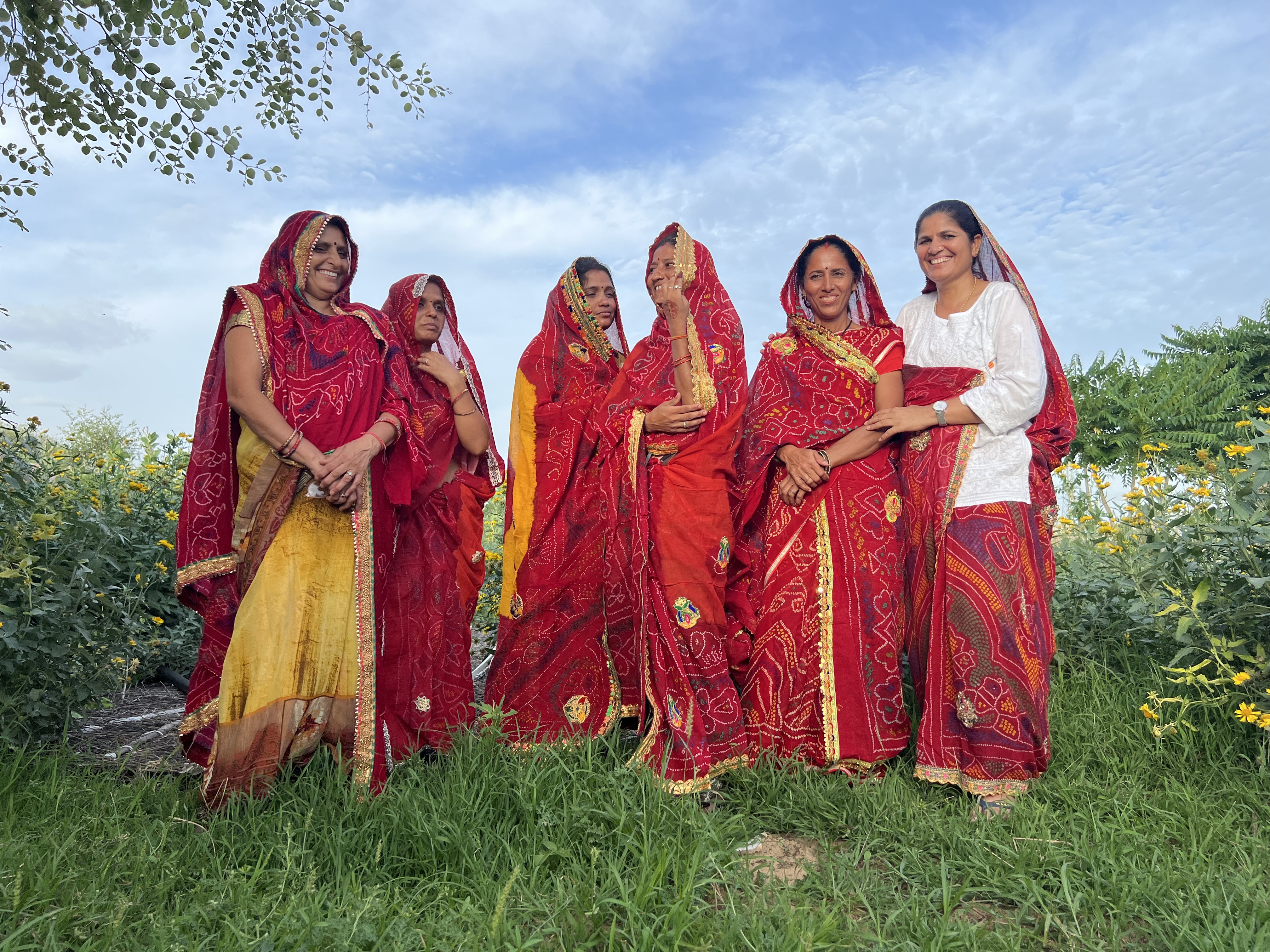
Gujarat & Rajasthan: The vibrant art forms of Bandhani in Gujarat & Leheriya in Rajasthan bring a festive exuberance to the day.

These intricate tie-dye patterns, bursting with colors like yellow, orange & red, not only reflect the festive spirit but also the cultural richness of the regions.
Pongal: An Ode to Prosperity
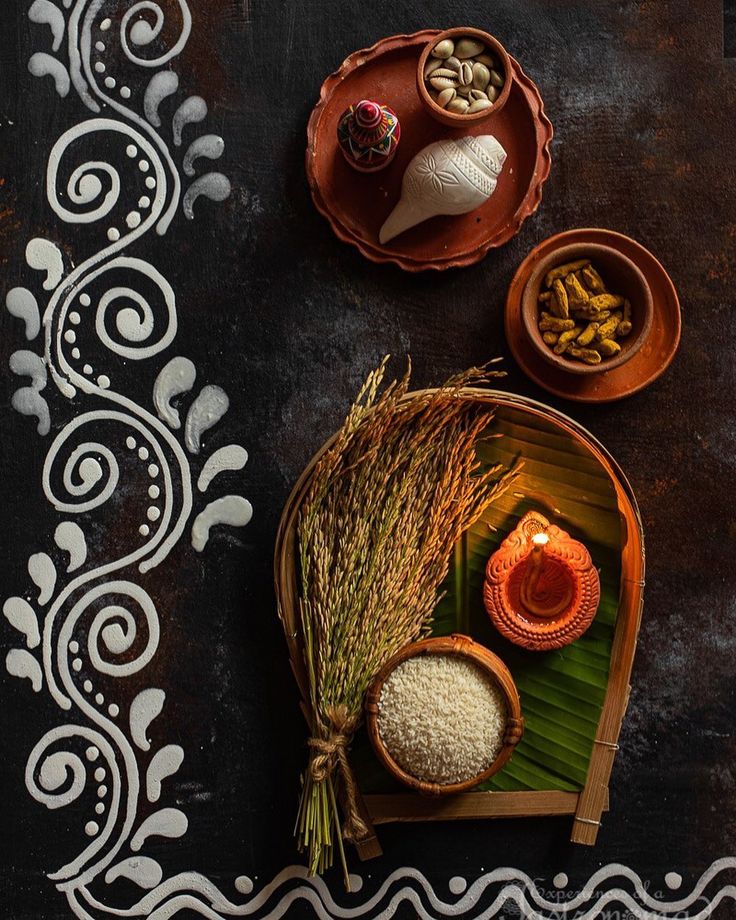
Remember the warmth of the kitchen as the aroma of freshly harvested rice filled the air, mingling with the sweetness of jaggery & the comforting richness of milk? The milk bubbling over, spilling from the pot, was more than just a sign of a dish being ready—it was a moment of magic, a promise of abundance. That’s the heart of Pongal, a festival that cherishes the memories of overflowing bowls, shared joy & heartfelt gratitude.
Pongal, meaning “to boil over or overflow,” is a symbol of prosperity & harmony. It is a celebration of the Sun God’s blessings, a time to give thanks for the land’s harvest.

Over four days, families come together to prepare a sweet, kheer-like dish made from freshly harvested rice, milk & jaggery, carefully cooked until the milk overflows from the pot. As the milk spills, so does the promise of prosperity, happiness & warmth for the year ahead. In every drop, there’s a wish for harmony & a joyful abundance that fills not just the plate, but the heart as well.
Mythology
The origins of Pongal date back to the Sangam Era ( 4th to 8th century AD), when festivals like Thai Niradal & Pavai Nonbu were celebrated during the Tamil month of Margazhi (December-January).
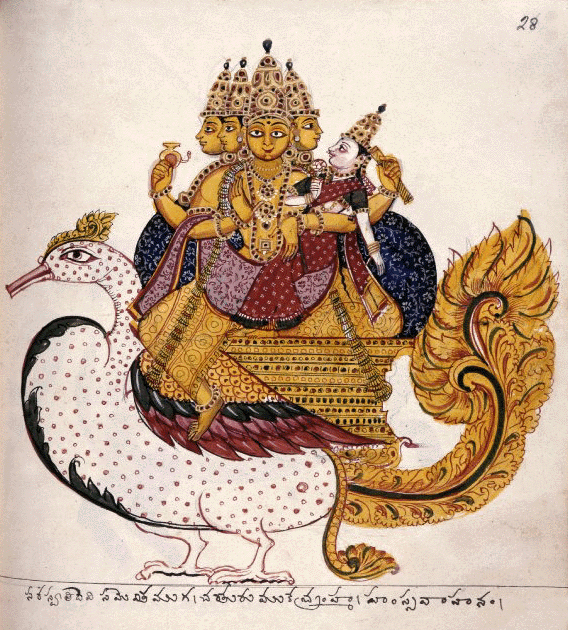
Maidens prayed for rain & prosperity, undertaking penance by avoiding milk products, refraining from harsh words & bathing early in the morning. They worshipped an idol of Goddess Katyayani, crafted from wet sand & concluded their rituals on the first day of Thai (January-February), symbolizing their hope for abundant rains to nourish the paddy fields.

These customs, vividly described in Andal’s Tiruppavai & Manickavachakar’s Thiruvempavai, laid the foundation for today’s Pongal celebrations. Historical records, such as an inscription from the Veeraraghava temple at Tiruvallur reveal that Chola King Kulottunga (1070-1120 AD) gifted lands to temples specifically for Pongal festivities, underlining the festival’s enduring cultural significance.
Rituals & Celebration
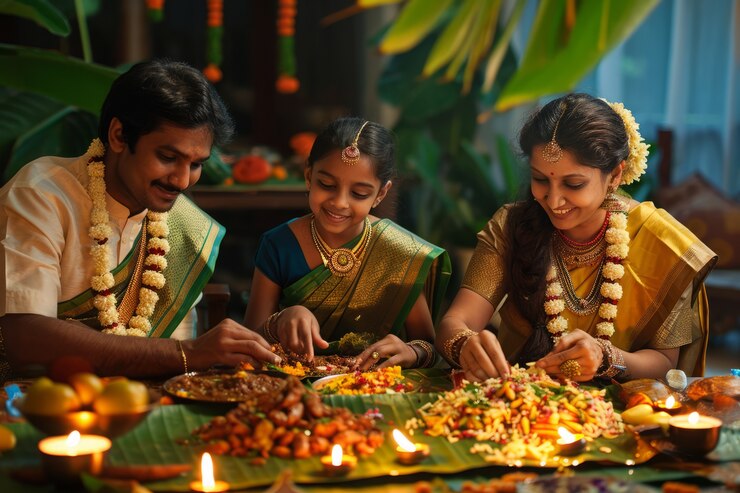
From the 14th to the 17th, the air hums with the promise of Pongal, a festival that heralds the harvest & the rising of the sun, while evoking memories of age-old traditions passed down through generations. As the Tamil month of Margazhi comes to an end, the Thai month begins, marking the start of a four-day journey of thankfulness & celebration.

Bhogi Pongal begins this journey, a day when the soul of the home is cleansed & is made ready for new beginnings. Early mornings are filled with the soft glow of lamps, as homes are swept clean, both inside & out.

People adorn themselves in traditional outfits, the air fragrant with the scent of fresh flowers, colorful rice flour rangolis (Kolam) greet visitors at the doorstep. As the day unfolds, the old is discarded, burned in a bonfire, symbolizing the shedding of past burdens & the warm embrace of fresh possibilities.

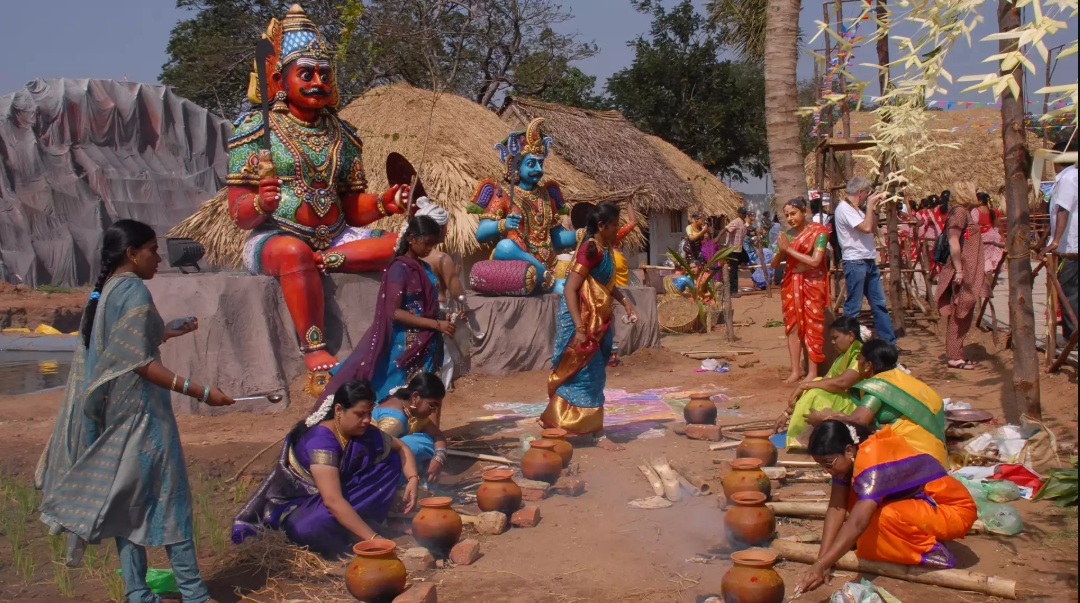
Surya Pongal or Thai Pongal, a day that invites the blessings of the Sun God, Surya Dev. Pongal—a sweet, fragrant pudding made of newly harvested rice, milk & jaggery—is carefully prepared in a clay pot. As the milk rises & the pot overflows, there is a collective gasp, followed by the jubilant cry of “Pongalo Pongal.” is offered first to the Sun, then to the animals that have toiled under the sun’s heat. Finally, the dish is shared with family & friends in a celebration of togetherness. The sound of the Sanggu (conch) echoes in the air, marking the triumph of light over darkness, the arrival of a new season full of promise.

On Mattu Pongal, the focus shifts to the revered creatures who have supported the agricultural way of life: the bulls & cows.

These sacred animals, symbols of hard work & strength, are bathed & adorned with garlands. Their horns are painted with vibrant hues & the fields are alive with prayers of gratitude.
The final day of Kaanum Pongal is a celebration of community—a day when families & friends come together to rejoice in the blessings they have received. The joyous spirit is reflected in the laughter shared over sumptuous meals, in the lively conversations & in the vibrant social programs that fill the day with life.
Traditional Food
A celebration of Pongal is incomplete without its signature dish, a heartfelt offering of gratitude & abundance.
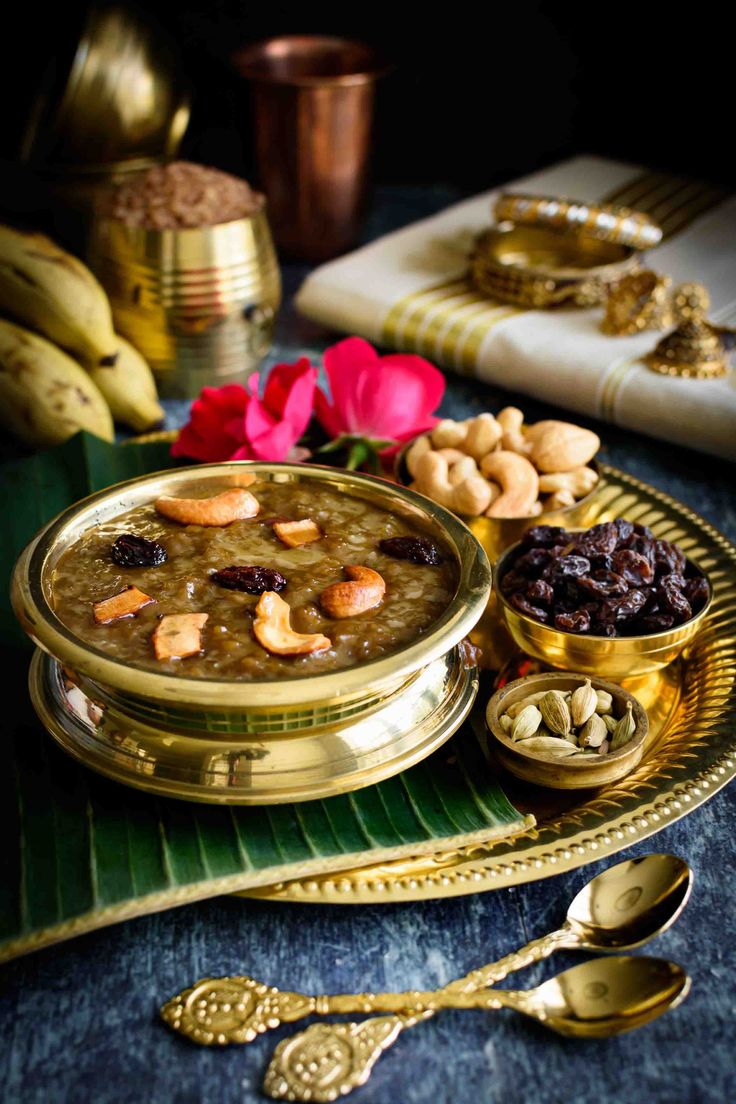
Made with freshly harvested rice, jaggery, milk & ghee, the Pongal dish is simplicity at its finest yet rich in symbolism. Cooked in clay pots beneath the open sky, the dish is allowed to overflow, a gesture that represents prosperity & the overflowing blessings of life.
Crafts & Cultural Significance
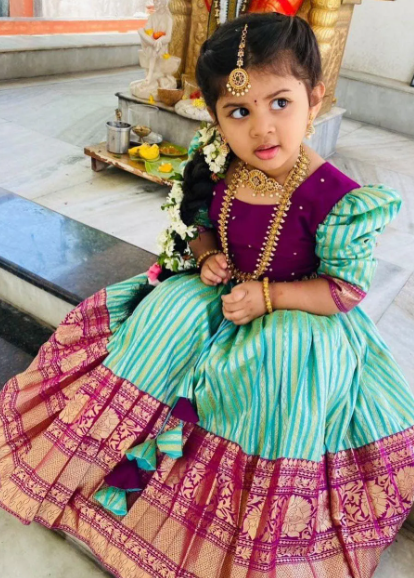
For women, the Pavada Davani—a combination of a long skirt (pavada) & a draped dupatta (davani)—is a beloved choice, exuding youthful charm & grace. This attire, often adorned with intricate borders & bright hues, reflects the joyous spirit of the harvest festival.

Another outfit worn is the Kanjivaram saree, renowned for its luxurious silk texture & elaborate zari work. Known locally as Kasavu, these sarees with golden borders symbolize prosperity & heritage.
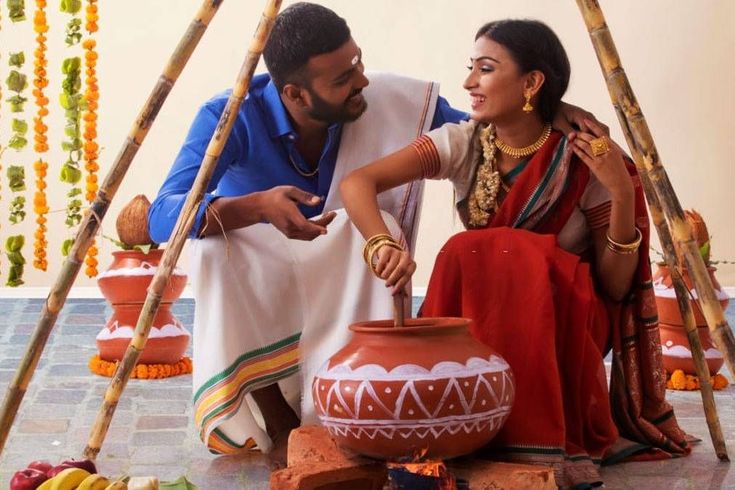
For men, the Veshti, or dhoti, becomes a mark of cultural pride & simplicity. Woven from breathable cotton or silk, the veshti, paired with an Angavastram (shoulder cloth), ensures both elegance & comfort during rituals & festivities. Its pristine white color, often accentuated with gold borders, signifies purity & auspiciousness.
In the glow of festive bonfires & the aroma of freshly harvested feasts, we are reminded to honor our past, cherish the land that sustains us & embrace the unity that transcends borders. Let these celebrations inspire us to preserve our culture, nurture our Earth & sow the seeds of harmony. Wishing you the warmth of Lohri, the blessings of Makar Sankranti & the abundance of Pongal, celebrate Harvest Season With Jaypore.


 Storytellers of Wonder
Leave a comment