
A small hand grips the tricolor tightly, the vibrant saffron, white & green fluttering in the crisp January breeze. My eyes, wide with wonder, mirror the excitement of the day as the stirring notes of the national anthem filled the air. Republic Day, for me as a child, was more than a holiday; it was an enchanting symphony of pride & patriotism. Memories flood back of those mornings spent eagerly joining my neighbors to hoist the flag, our voices uniting in a youthful chorus of “Jana Gana Mana,” followed by sweet treats that somehow made the day feel even more special.

The day’s essence didn’t end with the morning celebrations. As the afternoon sun streamed through our windows, my family gathered around the television, watching the Republic day parade, president of India hoisting the national flag, accompanied by the national anthem, ceremonial 21-gun salute, dazzling displays of weaponry, disciplined marching contingents, vibrant cultural tableaux & performances, each illustrating the diverse heritage & unity that defines India. Movies like “Bhagat Singh,” “Lagaan,” & “Rang De Basanti” became an annual ritual, their narratives weaving together the tales of sacrifices made by revolutionaries painted vivid pictures of a nation’s struggle for independence—a struggle etched deep within our hearts.

For the veterans & elders in my family, Republic Day held a gravity beyond my childhood enthusiasm. It was a poignant reminder of the relentless efforts & sacrifices that shaped India into a sovereign republic. Their recollections often began with teary eyes & ended with a big heartwarming smile, as they spoke of the sweat, blood & tears poured into building the freedom we now enjoy—freedom that sometimes goes unnoticed in the hustle of our daily lives.
Republic Day is indeed more than just a celebration where wishes are exchanged with a “Happy Republic Day” sentiment. It is a canvas of collective memory & gratitude, reminding us of the heroes who dared to dream of an independent India. As we unfurl our nation’s flag, it’s not just a piece of cloth that soars high; it’s the symbol of sacrifices, resilience & the undying hope that paved the way for the nation we cherish.
History
The transformative step towards a republic began with the Indian Independence Act of July 18, 1947, which officially ended British rule & transferred legislative authority to the Indian Constituent Assembly. This assembly undertook the monumental task of drafting a constitution, with Dr. Bhimrao Ambedkar at its helm as the chairman of the drafting committee.
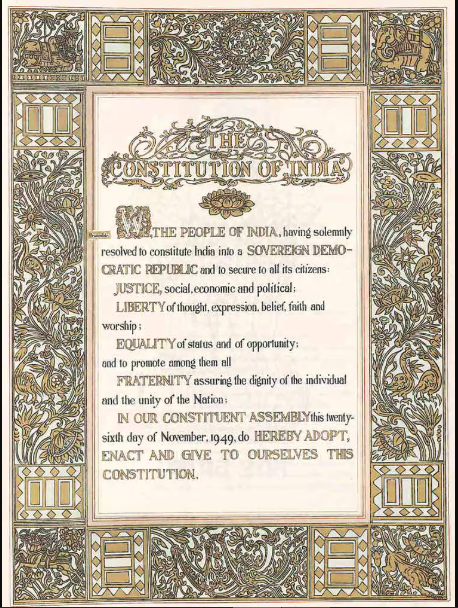
The decision to enact the constitution on January 26 was a tribute to the historic Purna Swaraj resolution passed by the Indian National Congress in 1930. This resolution, because of the dissatisfaction with Britain’s offer of Dominion status, marked a definitive call for complete independence. “Purna Swaraj,” derived from Sanskrit, पूर्ण (Pūrṇa) ‘Complete’ & स्वराज (Svarāja) ‘Self-rule or Sovereignty’, embodying India’s unyielding resolve to break free from colonial shackles. The constitution—one of the most comprehensive & detailed globally—came into force on 26th January 1950 & transformed India into a democratic republic & a union of states
An excerpt from Jawaharlal Nehru’s Tryst of Destiny speech, August 15, 1947
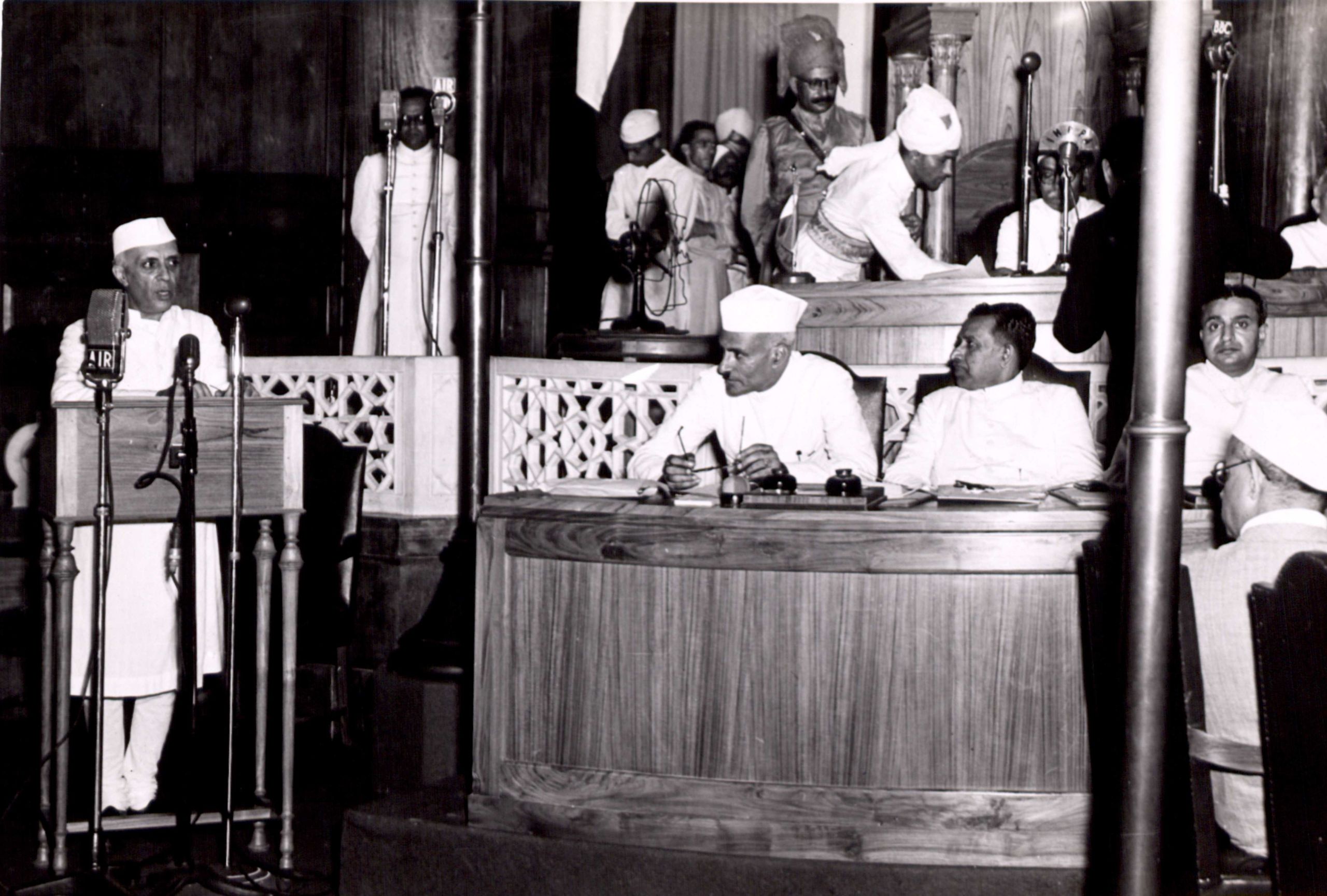
“At the stroke of the midnight hour, when the world sleeps, India will awake to life & freedom. A moment comes, which comes but rarely in history, when we step out from the old to new, when an age ends & when the soul of a nation, long suppressed, finds utterance”
– Jawahar Lal Nehru
Did You Know

- Copies of original Constitution, in English & Hindi, are preserved in nitrogen-filled hermetically sealed boxes & kept in the Parliament Library.
- At the suggestion of Prime Minister Jawaharlal Nehru, multi-colored illustrations were avoided & real gold spray was used for the margins.
- The idea of adorning the Constitution with calligraphy & art came from economist K.T Shah.
Theme of India Republic Day 2025
The theme for Republic Day 2025, “Swarnim Bharat: Virasat aur Vikas,” translates to “Golden India: Heritage & Development.” This year’s theme shines a spotlight on the delicate balance between honoring India’s rich cultural heritage & embracing the strides made in development. It encapsulates a vision of progress rooted in the values & traditions that have shaped our nation.
“Swarnim Bharat” is a call to celebrate the golden milestones of India’s past, including its art, literature, architecture & spiritual legacy, while “Virasat aur Vikas” emphasizes the coexistence of heritage & modernity. From the ancient wisdom of the Vedas to the technological advancements of today, the theme paints a picture of a nation that harmoniously blends its historical identity with forward-thinking innovation. This Republic Day, as the parade unfolds, the theme will be reflected in the grandeur of the tableaux, showcasing India’s journey of transformation & its commitment to a future shaped by its glorious past & dynamic progress.
Indian Art Forms That Survived British Colonization
As we reflect on the heritage of the 76th Indian Republic Day, it’s natural to acknowledge the resilience of Indian art forms that endured the test of colonial oppression. Despite numerous challenges during British rule, India’s cultural identity thrived, standing as a testament to the nation’s strength & creativity.
Traditional Weaving

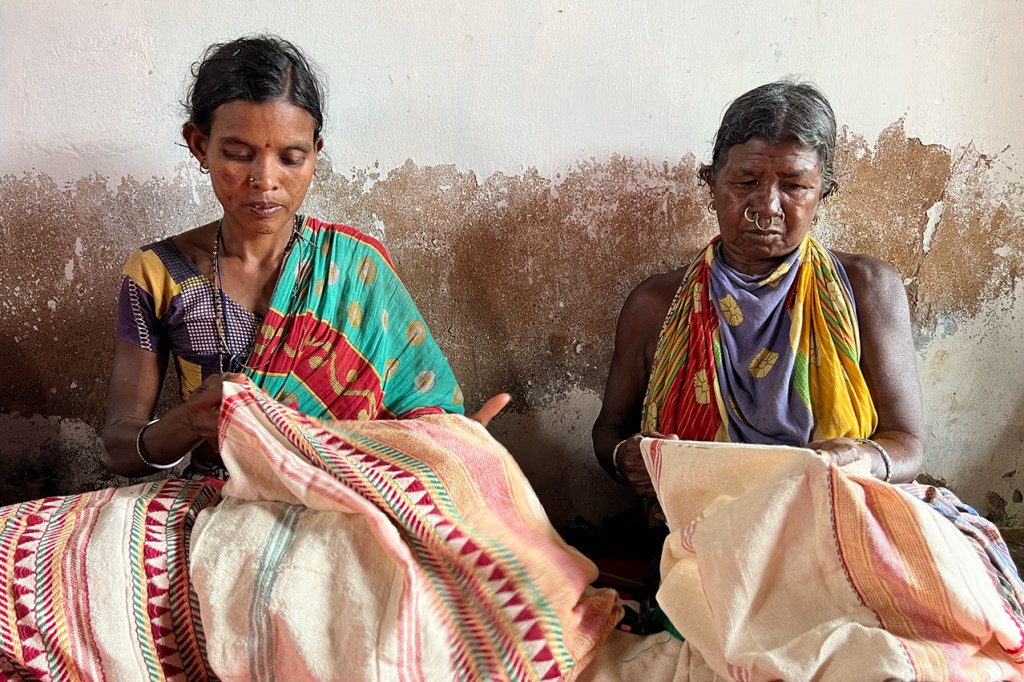
Indian textiles have long been celebrated for their exquisite craftsmanship & unparalleled beauty. In the 18th century, these textiles captured global admiration, posing a threat to the British textile industry. The artistry & quality of Indian fabrics made them coveted treasures worldwide.
However, this flourishing industry was stifled by colonial policies. The British government imposed heavy taxes on Indian textiles & with a crushing blow, enacted the Calico Act, banning the sale of these masterpieces in Britain. This deliberate move aimed to protect British economic interests, leaving countless Indian weavers in despair. The once-vibrant weaving communities were plunged into poverty, their livelihoods sacrificed at the altar of colonial dominance.
Yet, the spirit of Indian artisans proved indomitable. After independence, the Indian government recognized the cultural & economic significance of traditional weaving. Policies were introduced to revive the handloom industry, ensuring that the legacy of weaving was preserved & celebrated. Today, the handloom sector stands as a testament to resilience, empowering millions of artisans & serving as a vibrant thread in the fabric of India’s heritage.
Each motif & pattern woven into Indian textiles is more than an aesthetic marvel; it is a story of survival, a tribute to the ingenuity of those who kept this art alive through the most challenging times.
Mysore Murals

In the heart of southern India, the city of Mysore once flourished as a cradle of artistic brilliance, with its iconic murals capturing the grandeur of an era. Mysore Murals flourished in the heart of southern India, the city of Mysore, renowned for intricate details & vivid colors, adorned the walls of palaces & temples, narrating tales of history, mythology & royal life. Their charm lay in the delicate interplay of rich hues & fine lines, depicting scenes of courtly magnificence , nature’s elegance & the indomitable spirit of the time.
The reign of Tipu Sultan in the late 18th century marked a golden age for this art form. These masterpieces celebrated not only the splendor of his rule but also the essence of Mysore’s cultural identity. However, with the fall of Tipu Sultan & the onset of British colonial rule, these murals became a target. Viewed as symbols of defiance & resistance, they were dismissed as propaganda & many were systematically destroyed, plunging the art form into obscurity.
It wasn’t until the mid-20th century that revival efforts breathed new life into this age-old tradition, with dedicated artists & craftsmen meticulously rediscovering the techniques & materials used by their predecessors. Today, these murals are celebrated not just as relics of a bygone era but as vibrant expressions of India’s cultural resilience.
Modern-day Mysore continues to be a canvas for this legacy, with the murals adorning temples, museums & private collections. Each stroke tells a story of survival, a tribute to the artistry that has withstood the tests of time & adversity.
Kalighat Painting

In the bustling lanes of 19th-century Kalighat, Kolkata, a vibrant art form was born, capturing the spirit of the era with every brushstroke. Kalighat paintings, crafted by the patuas—traditional scroll painters—became iconic for their bold lines, vivid colors & the ability to weave stories from mythology, social life & political undercurrents.
These artworks were more than mere aesthetic expressions; they were visual storytellers of their time. Mythological deities shared space with scenes from everyday life, while sharp social commentaries & political satire provided a lens into the shifting dynamics of colonial India. The patuas mastered the art of distilling complex narratives into accessible, striking imagery, making Kalighat paintings resonate deeply with the masses.
During the British colonial era, these paintings rose to prominence, with their unique style captivating art enthusiasts, including British artists who admired & emulated the form. However, the very nature of Kalighat paintings—critical, satirical & occasionally anti-British—drew the ire of colonial authorities. Paintings deemed politically subversive faced censorship & attempts were made to suppress the art form.
Despite these challenges, the mid-20th century marked a revival, with contemporary artists reinterpreting its themes & techniques, infusing new life into this tradition. Today, Kalighat paintings are celebrated for their historical significance, offering a glimpse into the socio-political textile of Colonial India.
Madhubani
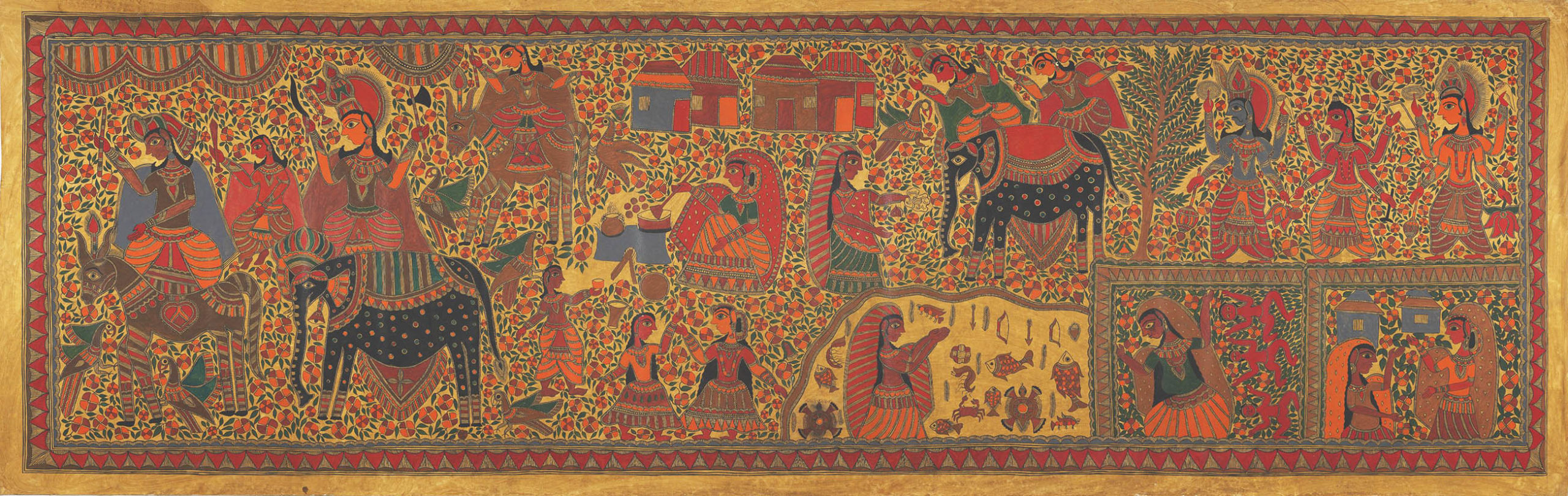
Rooted in the heart of the Mithila region in Bihar, Madhubani painting is more than an art form—it is a cultural heritage that tells stories of mythology, spirituality & everyday life with meticulous precision. Characterized by its bold lines, intricate patterns & luminous colors, Madhubani embodies a timeless tradition passed down through generations.
Unlike many Indian art forms that faltered under British colonial rule, Madhubani not only survived but also found a new platform during this period. The turning point came in the aftermath of the devastating earthquake of 1934, which left the region in ruins. Amid the chaos, British colonial officer William G. Archer, tasked with relief efforts, stumbled upon the breathtaking murals that adorned the damaged walls of homes in Mithila.
Captivated by the artistry & storytelling imbued in these paintings, Archer saw an opportunity to preserve & promote this indigenous tradition. He encouraged the women of Mithila to transfer their art from walls to paper, transforming the transient beauty of their murals into masterpieces.
What began as a domestic ritual—used to decorate walls during auspicious occasions—transcended its local origins, becoming a symbol of cultural pride & a means of livelihood for many. Women who once painted solely for familial & ceremonial purposes now gained financial independence by sharing their art with the world.
Preserving Heritage, Crafting Swarnim Bharat
Republic Day stands as a vibrant celebration of India’s journey—a constant reminder of its hard-won freedom, the resilience of its people & the enduring legacy of its rich heritage. This year’s theme, Swarnim Bharat: Virasat aur Vikas stands as a testament to the nation’s indomitable spirit, having survived centuries of challenges, including British rule. Yet, the challenges persist today, as artisans struggle to sustain their craft in a world dominated by machine-made goods, threatening their livelihood & centuries-old traditions. Jaypore bridges this gap, providing a platform for Indian artisans & placing their extraordinary efforts at the forefront. By bringing their handmade creations to a global audience, Jaypore not only preserves India’s cultural legacy but also empowers the hands that weave, paint & craft the stories of our nation.


 Storytellers of Wonder
Leave a comment