
The Urdu poet Ahmad Faraz compares his beloved to the beauty of spring blossoms in his poem Suna Hai: “Sunā hai us ke badan kī tarāsh aisī hai, ki phuul apnī qabāeñ katar ke dekhte haiñ”— “I have heard that the beauty of her form is such that the flowers bow before her.” The celebrated poet Faiz Ahmed Faiz also describes spring as a season of longing, writing, “Chale bhī aao ki gulshan kā kārobār chale—Come now, so spring’s work can commence.”
In a world where desires are restrained and histories weigh heavy, metaphors are not just figures of speech—they become a way of being, carrying profound meaning. Every expression of love intertwines with the rhythms of nature, echoing the changing seasons, the dance of the wind, and the quiet presence of bees and insects that breathe life into blooming landscapes.
Season of New Beginnings
So, what comes to your mind when you think of spring? The romance in the air, blossoming of flowers, and the fragrance of fresh beginnings that come along with it. As we step into the season of bloom, take a moment to look around all the chamelis, gulmohars, lotus, gerbera daisies, and cybidiums around you. Spring is not just a season, it’s a feeling! A state of being—an awakening, a moment to realign with beauty, balance, and breath. The sunlit mornings, the crisp breeze, the warmth of colors unfolding in every little detail—each shade a reflection of nature’s renewal, drawn from its palette. Bright yellows from the sun, vibrant oranges from the corals, tranquil blues from the sky, lush greens from the leaves, and tender pinks from blossoms are the hues you need in your spring wardrobe.
Lord Kamadeva’s Bow
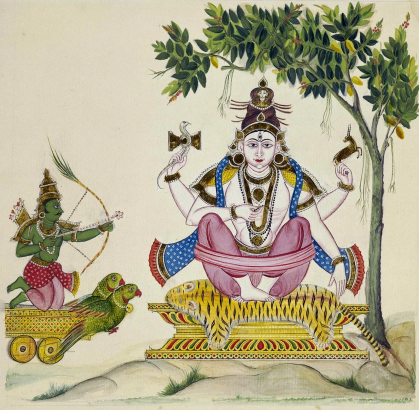
As legend goes, when Lord Shiva was deep in meditation, the world was engulfed in lifeless stillness. The love god, Kamadeva, shot his arrow of flowers to awaken Shiva, bringing back warmth and vitality to nature. But in doing so, Kamadeva was reduced to ashes by Shiva’s wrath. Parvati’s devotion later revived him, though only as a spirit—his presence felt in the soft breeze, blooming flowers, and the scent of spring. This eternal love story is mirrored in motifs like trailing vines in Kantha embroidery, Madhubani’s floral creepers, and Ajrakh’s rhythmic patterns, all capturing the romance and renewal of spring.
The Blossoms of Phulkari
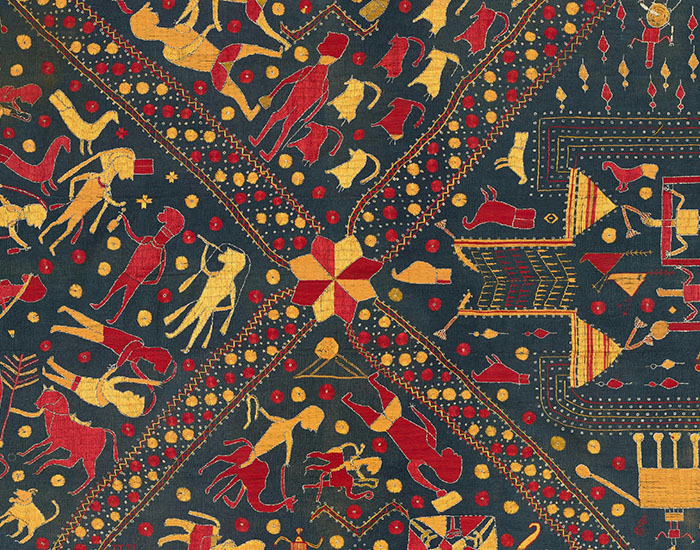
Speaking of fresh beginnings and floral motifs, there was a time in Punjab when the birth of a girl child was celebrated with Phulkari embroidery. Grandmothers and mothers would hand-embroider Phulkari dupattas to welcome the newborn, as the arrival of a girl was considered auspicious, a creator of future generations. This embroidery finds mention in Waris Shah’s legendary Heer Ranjha and features in numerous folk songs and films of Punjab. Phulkari employs traditional needlework, evolving from floral patterns to geometric motifs over time, using vibrant hues of red, yellow, blue, and green.
Blooming Impressions of Block Print
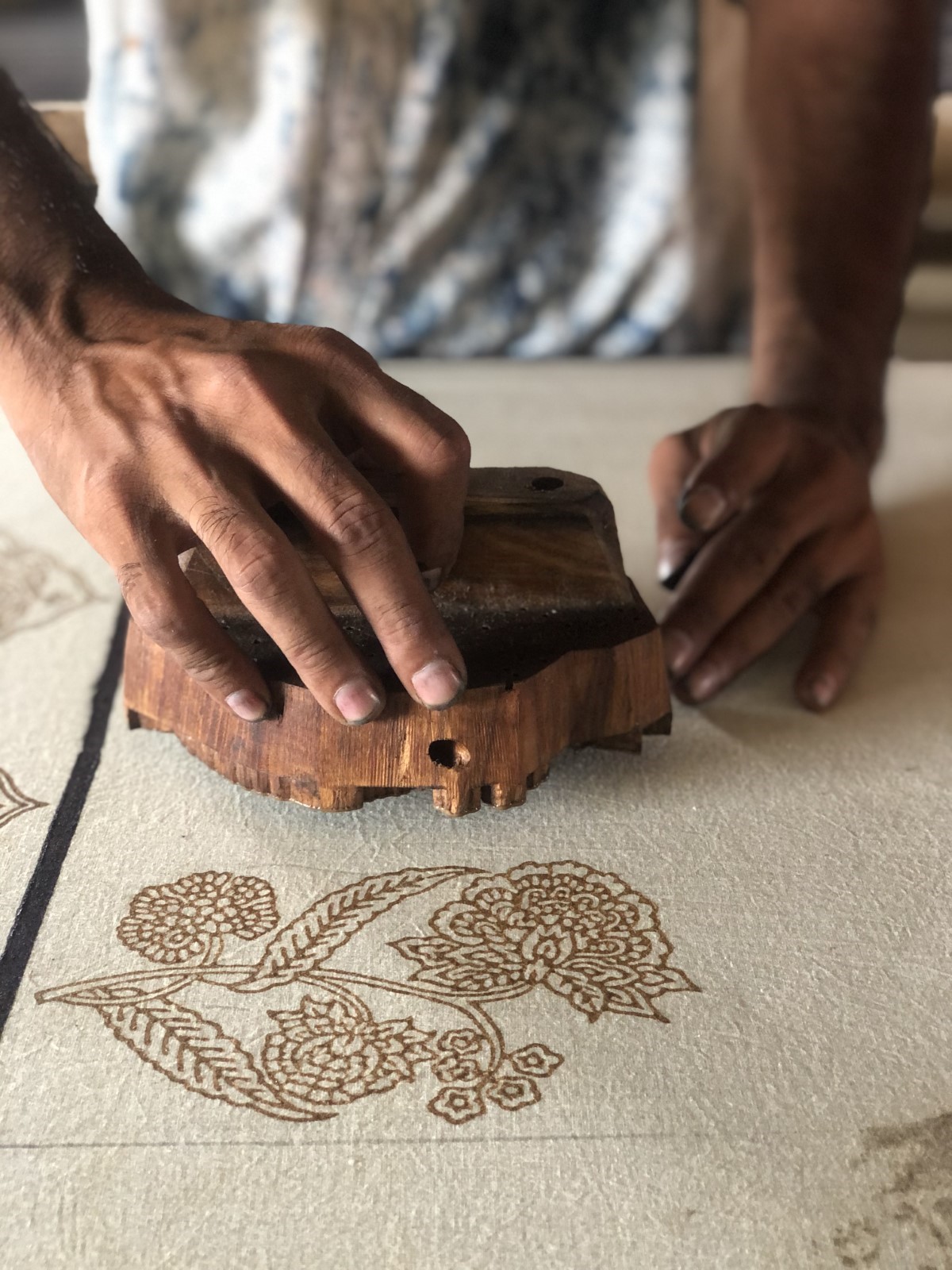
Look closely at the designs and impressions on your clothes? The prints, the patterns on it are made with great attention to detail. The art on it is inspired from all around you and the process to get it on the fabric is a time consuming one. Like the ancient craft of block printing, each block impression is different from the other as it’s dipped and then stamped on the fabric by the human hand, making us realise that there is beauty in imperfections. The wooden blocks are usually made of teak wood or rosewood as they are durable and are hand carved with the desired design using chisel and hammer by artisans.
Mythology in Motifs: The Art of Kalamkari
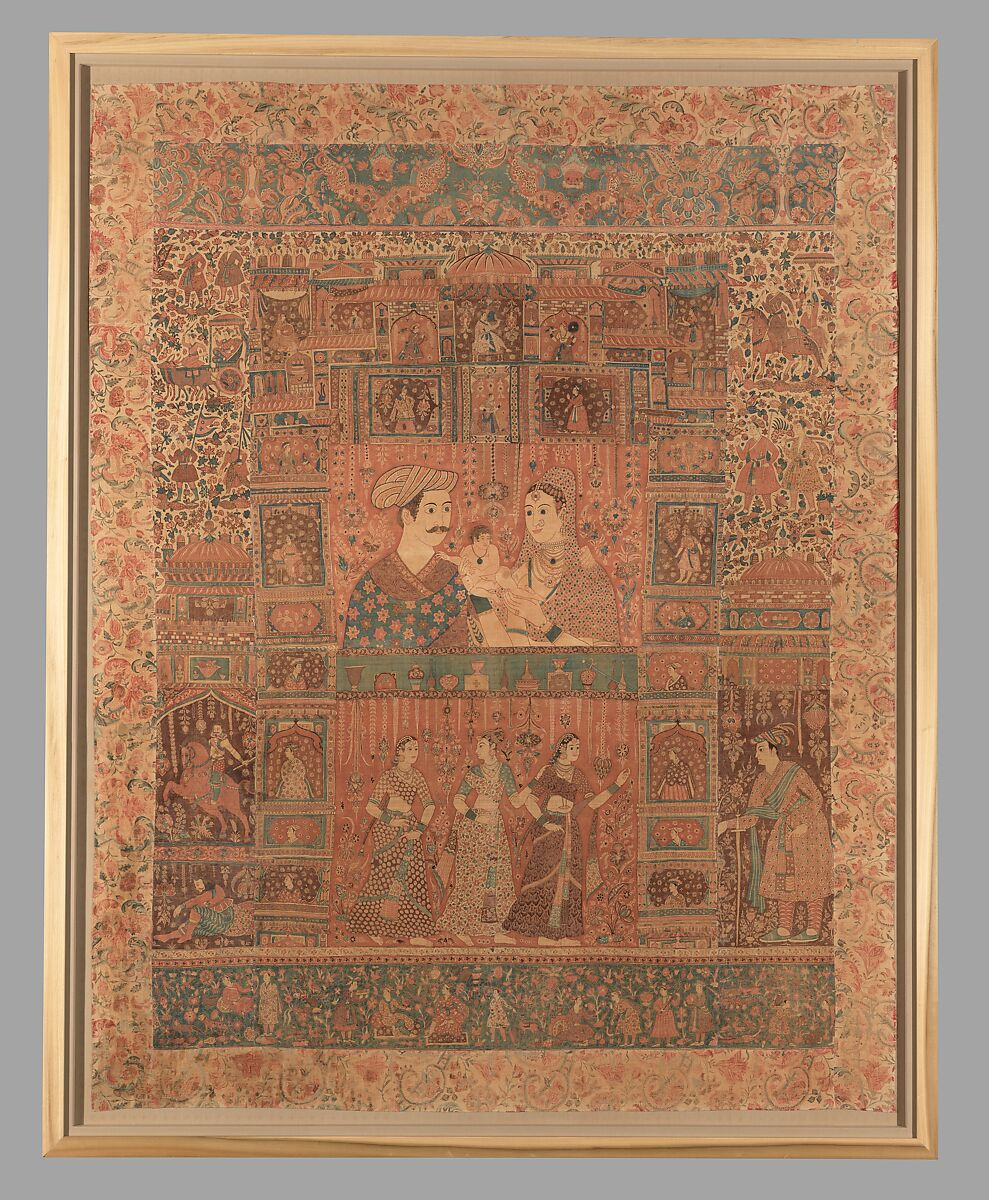
Growing up all of us have heard the epics of Ramayana & Mahabharata, embed in our minds & souls, we have witnessed these tales on our nani’s & dadi’s sarees, there’s a good chance if you’ve seen this on a handcrafted fabric that it is none other than the art of Kalamkari from Andhra Pradesh. Kalamkari portrays these sagas vividly, with depictions of stunning lotus, peacock, musical instruments, temples, Hindu symbols like swastika and Buddhist inspired motifs dipped in earthy hues such as mustard, indigo, green, black and green, no better way to tell a story, right?
The Celestial Symphony of Ajrakh

In spring season, the love is not only in air but also in the sky. When was the last time you looked up the starry night sky with your loved one? Here’s a fun fact for next time you do – the stars, the moon, the constellations in fact the whole universe make up for beautiful geometrical patterns. The exquisite craft of Ajrakh draws its inspiration from celestial bodies, the universe being its central theme. Usage of Indigo and Madder dyes makes the appearance of the craft distinct. It originates from present day Sindh in Pakistan & from Kutch, Gujrat & Barmer, Rajasthan in India with Mughal India being a deep influence in its designs. The blue and black depicts the sky, white signifies the stars and red symbolises twilight.
Spring is a reminder of rebirth, a celebration of tradition infused with new life. At Jaypore, we honor these stories by bringing you handcrafted treasures that carry the soul of Indian spring—celebrating artisans who keep these age-old stories alive. As you embrace the colors and motifs of the season, know that each thread, each print, and each design carries a tale of heritage, artistry, and the eternal magic of Basant.
Image Credits : Alphonso Stories, The British Museum, Metmuseum.org



 Storytellers of Wonder
Leave a comment