
Holi isn’t just about splashing colors—it’s about recognizing the unseen hues that constantly shape our inner world. Just as we joyfully smear colors on one another, our consciousness is being painted every moment by the thoughts we think, the words we speak & the energies we absorb. Imagine your mind as a canvas, every interaction, every emotion & every experience leaves a shade behind. Some colors brighten our souls with love, kindness & joy, while others dull our spirit with anger, resentment, or fear. Holi calls upon us to become aware of these subtle shades & consciously choose the ones we wish to carry forward.
The festival begins with Holika Dahan, a symbolic ritual of burning away impurities—not just in the physical world but within us. It is a time to sit by the sacred fire & reflect: What burdens am I ready to let go of? Which emotions no longer serve me? As the fire consumes wood & offerings, visualize it taking away your stress, insecurities & regrets, making space for purity, peace & wisdom. This is the true essence of Holi—a profound celebration of renewal, of shedding old baggage & stepping into our highest selves.
When the world erupts in colors, let it be more than just a playful act—let it be a reminder of how we wish to color our lives & the lives of others. Choose to spread the hues of kindness, forgiveness & laughter. Let Holi dissolve boundaries—between people & between who we were & who we are becoming. This Holi, let us celebrate with awareness—burning away negativity, embracing our true essence & filling our world with colors that uplift, heal & inspire.

Folklores That Shaped the Festival of Colours
फागुन के रंग में रंगे हैं नंदलाल, बरसे गुलाल, सखियाँ गाएँ मल्हार।
राधा के संग खेलत रंग, कभी लाल, कभी पीत, कभी हरित अंग।
हँसत गोकुल, मोहन रस में भीगे, संग गोप संग धुली में लीन्हें।
Phagun’s colors have drenched Nandalal, Gulal showers & the Gopis sing joyful melodies.
Playing with Radha in vibrant hues, sometimes red, sometimes yellow, sometimes green cover their bodies.
Gokul laughs as Mohan (Krishna) is drenched in divine bliss, along with the Gopis, he rolls in the festive dust of colors.
This geet beautifully captures the spirit of Holi in India—a festival not just of colors, but of love, devotion & playful mischief. The changing hues mirror love’s intensity, spring’s renewal & the boundless happiness of surrendering to Krishna’s divine leela. As colors swirl & voices rise in song, Holi becomes more than a festival—it is a timeless celebration of joy, where mortals & the divine dance as one. Gokul resonates with laughter, as Krishna immerses in the dust of colours, celebrating Holi with carefree joy. This is not just a festival but a divine play, where gopis are so happy that they have surrendered to Krishna’s love.
The Divine Love of Radha & Krishna
Radhe Krishna! Radhe Krishna! Radhe Krishna!
These are the chants you’ll hear in every street & temple where love is worshipped, from Vrindavan to Barsana & everywhere in between you go. Krishna’s love for Radha runs so deep that her name is always uttered before his, as if the universe itself acknowledges their eternal bond.

Have you ever stood on the edge of love, unsure if your feelings would be returned? It’s only human to feel so & you’d be happy to know it’s not only you, even gods have their moments of doubt. Krishna, the mischievous yet tender-hearted one, once felt the same. As a young boy, he gazed at his reflection—dark-skinned, full of love, yet uncertain. Would fair-skinned Radha, radiant like the moon, accept his love? The thought weighed on him.
Seeing his worry, mother Yashoda smiled & whispered a solution—“Why not color Radha’s face in any shade you like?”
With newfound hope, Krishna approached Radha, a playful glint in his eyes. As he smeared colors across her cheeks, laughter erupted, turning hesitation into joy, doubt into devotion. Radha, in that moment, was not just painted in color but in Krishna’s love itself. And so, with smudged faces & bright smiles, the festival of Holi was born—a day where love is fearless, where colors blur all differences & where Krishna & Radha’s love story is relived, year after year, in a riot of hues.
Good Over Evil – The Tale of Holika Dahan
We’ve been taught this since we were kids & with history being proof, no matter what good always wins over evil, similar was the case of Holika & Prahlad.

As the tale goes, Hiranyakashipu, the demon king, performed a penance so severe that Lord Brahma himself was moved to grant him a boon—one that would make him nearly invincible. He could not be killed by a human or an animal, nor by any weapon. Neither day nor night could bring his end & no place—indoors or outdoors—could be his final resting ground.
This boon was granted filling him with arrogance, making him believe he deserved to be worshipped like a god, but his son Prahlad refused to do so & continued to worship lord Vishnu instead. As a result, the king was furious leading him to order his sister Holika to kill Prahlad as she was immune to fire. The fire roared to life as Holika sat upon the pyre, cradling the young prince in her lap. But fate had its own plan. As the flames rose, the supposed blessing turned into a curse—Holika was reduced to ashes, while Prahlad emerged untouched, his devotion shielding him from harm.
At this point Prahlad even refused to acknowledge his father & claimed Vishnu is everywhere making him even more furious. In anger Hiranyakashipu pointed towards pillar & asked if Vishnu is in it too. A deafening crack shattered the air. The pillar split open & from within emerged Narasimha—neither man nor beast, his form a terrifying fusion of lion & human. It was dusk, neither day nor night. The threshold of the palace became the battlefield, neither inside nor outside. Without a weapon, using only his claws, Narasimha tore Hiranyakashipu apart— fulfilling the prophecy in a way even the demon king could never have foreseen.
And so, on the eve of Holi, bonfires are lit across the land, symbolizing the victory of devotion over tyranny, of good over evil. The flames remind us of Prahlad’s unwavering faith & the divine justice that always finds its way.
Celebrated Stories of Holi Across India
Lathmaar Holi
In the lanes of Barsana & Nandgaon, Holi isn’t just celebrated—it’s relived. A tale of love, mischief & playfulness, brought to life year after year like a living legacy. Here, the festival begins a week before the world joins in, echoing an age-old narrative of color & camaraderie.

Legend has it that Krishna, the ever-playful, once set out with his friends to drench Radha & the gopis in hues of Holi. But the gopis were not to be outwitted—smiling, swift & spirited, they picked up lathis (sticks) & playfully chased the pranksters away. And so, Lathmaar Holi was born—a celebration of love wrapped in laughter, mischief met with mirth.
Even today, this vibrant spectacle unfolds just as it did centuries ago. Women, draped in radiant hues, take up lathis, recreating Radha’s joy, while men, embodying Krishna’s playful spirit, tease & dodge. A tradition retold, a legacy lived—one playful strike at a time.
Phoolon Ki Holi
The air was still, the flowers had withered & Radha sat in quiet longing, her heart aching for Krishna. It had been too long since they last met & the world around her seemed to fade, as if mourning with her. But love, like spring, always finds a way. Sensing her sorrow, Krishna could wait no longer. He rushed to see her & the moment they met, something magical happened—love blossomed & so did the flowers.
In playful mischief, Krishna plucked a delicate bloom & tossed it toward Radha. She laughed, her sadness forgotten & threw one back. The gopis around them joined in, petals flying, laughter ringing through the air & in that moment, the celebration of Phoolon Wali Holi started. A Holi not of colors, but of fragrant blossoms—a celebration of love, devotion & the joy of togetherness.
Even today, this beautiful tradition continues in the Banke Bihari Temple of Vrindavan. On the sacred day of Ekadashi, as the temple doors open, a divine sight unfolds. Priests gather baskets brimming with rose, marigold & jasmine petals, showering them upon the devotees, just as Krishna once did for Radha.
Masaan Holi
In Varanasi, the city of Moksha, where the Ganga whispers ancient hymns &funeral pyres burn endlessly, Holi takes on a different meaning. It is not just about colors—it is about the cycle of life itself. While the world revels in gulal & laughter, the ghats of Manikarnika & Harishchandra tell a different tale—one where Holi is played with fire, ashes & an unshaken belief in the eternal dance of life & death.
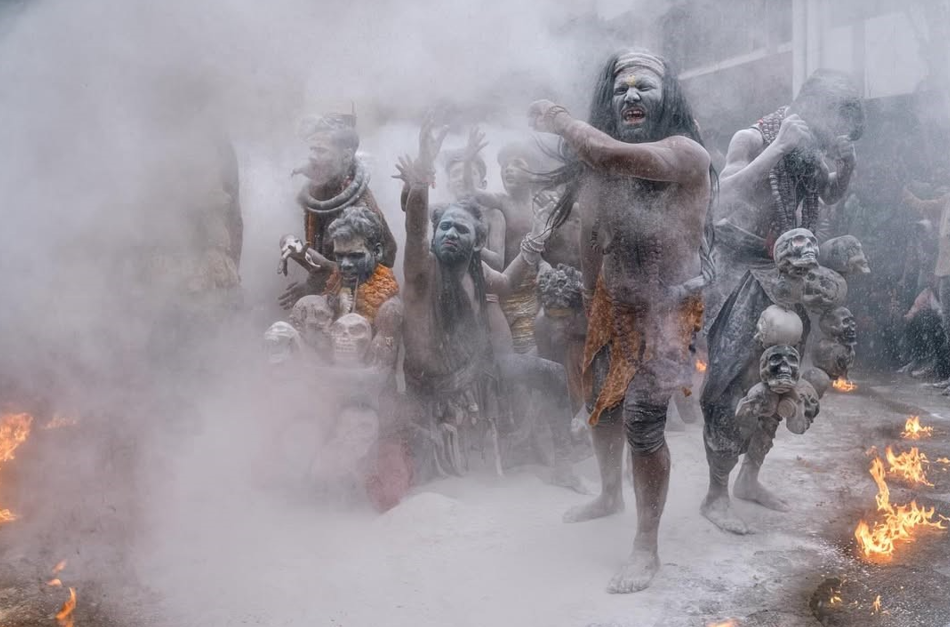
Legend whispers that Lord Shiva himself walks these burning ghats, unbound by sorrow, untouched by fear. Death, which unsettles most, is but a passage for the devotees who gather here. To them, Masaan Holi is a reminder that life is fleeting, the soul is eternal, & nothing—neither grief nor joy—lasts forever.
As the festival begins & dhols echo through the ghats, ash from the sacred pyres is lifted, smeared & thrown into the air by saffron-clad sadhus—not in mourning, but in celebration. This is Masaan Holi, where ashes become the color of the soul, because in Kashi, even in death, there is a celebration.
Faguli Holi
In the snow-capped embrace of Himachal’s Sangla Valley, where the winds carry whispers of ancient legends, Holi arrives not just as a festival, but as an 800-year-old ritual— Faguli, a celebration of good over evil, of tradition over time.

As winter loosens its grip & the first signs of spring awaken the valley, villagers gather in vibrant processions, clad in traditional handwoven attire & their signature caps, their faces masked as deities, spirits & warriors of old. The echoes of horns, drums & rhythmic chants fill the crisp mountain air, setting the stage for a spectacle where myth & devotion intertwine. The festival honors the divine triumph of the Pandavas over evil forces, a tale woven into the land’s fabric.
Drenched in hues of saffron & red, villagers dance with an untamed joy, their feet pounding the earth in famed Faguli dance that narrates Kinnauri legends & mythologies.
Manjal Kuli
In God’s Own Country, the air doesn’t burst into a riot of colors—it glows golden with turmeric, the sacred dust of prosperity & renewal. Here, among Kerala’s many legends, whispers of an extraordinary tale linger.
Long ago, as the Kudumbis—a resilient Konkani-speaking community—wandered through an uncertain migration, fate wove them into a story of divine intervention. It is said that when they faced hardship, Goddess Durga herself took the form of a mighty crocodile, rising from the waters to guide & opened his arms, offering them not just refuge, but a new beginning.
To this day, these stories live on, carried through generations—woven into the very soul of Kerala, where history, faith & resilience merge into something truly timeless.
Rangeela Re: Colors & Crafts of India
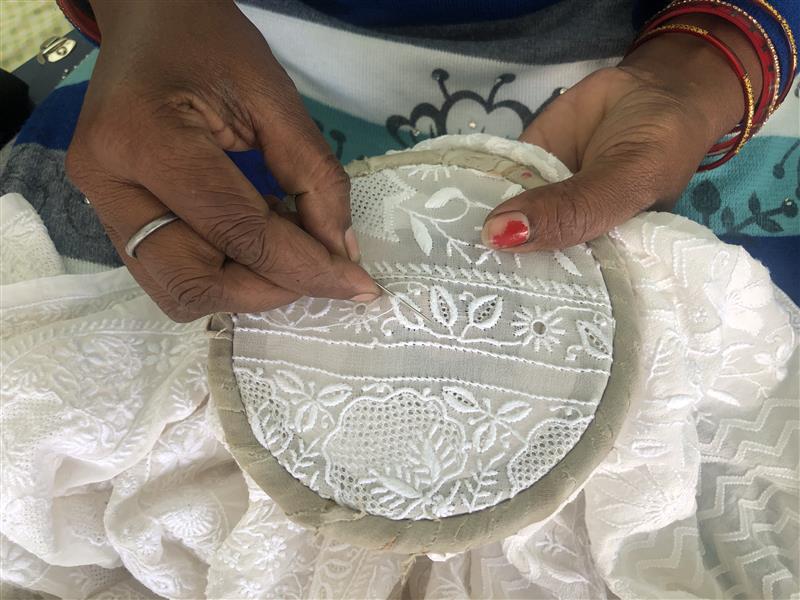
In every corner of India, hands reach out, not just to throw colors but to pass down a legacy. Holi arrives like an old, cherished song sung in courtyards, carrying the echoes of age-old traditions. Draped in the hues of nature, artisans have long played a silent yet significant role in this revelry—mixing natural pigments from flowers & roots, weaving garments in festive shades & crafting ornaments that gleam under the Holi sun. These crafts are more than just objects, they are the keepsakes of our heritage, linking the present to the past in an unbroken thread of artistry.
At Jaypore, we honor this tradition—not just in the colors we wear but also in the stories we continue to tell. Our handcrafted apparel, intricate jewelry & artful home accents are steeped in the same love for craft that has adorned Holi celebrations for generations. So, as colors swirl in the air & laughter echoes once more, may we celebrate not just the festival, but the legacy of hands that keep its spirit alive. Happy Holi!



 Storytellers of Wonder
Leave a comment