
On a blazing April afternoon, the kind that sizzles rooftops and wilts bougainvillea, little Veda wandered into the courtyard where Maharishi Ji sat in quiet contemplation. In his hand was a reddish-brown glass—gleaming, almost alive in the sunlight. “Why does this tumbler look different than the rest?” she asked. With a gentle smile, Maharishi Ji replied, “This is no ordinary glass, my child. It’s made from tamba—copper. A vessel as old as time, as alive as our breath.” He explained how this humble metal balances the body’s doshas—vata, pitta, & kapha—infusing water with trace minerals that support digestion, immunity & overall vitality.
And thus began Veda’s journey into the world of copper—a world steeped in heritage, science & soul.
Copper in India’s Cradle
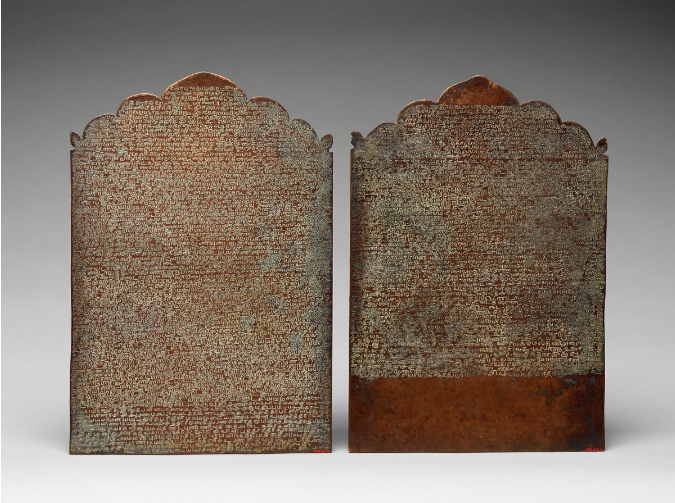
The use of copper in India is not just ancient—it’s elemental. Copper’s story in India begins as early as 3000 BCE with the Harappan Civilization, where copper tools, mirrors & vessels were unearthed in archaeological digs. Used for both utility and ornament, copper quickly earned a sacred place in domestic and spiritual life.
India’s soil is rich in copper deposits—especially in Khetri, Rajasthan, one of the oldest known mining sites in the subcontinent. The mines here have supplied copper for millennia, fueling not just tools and weapons, but also the artistry that would shape India’s cultural landscape. Due to its highly ductile & malleable nature, copper is ideal for crafting a wide variety of utensils. In its purest form, copper has a minimum content of 99.3%, especially in vessels used for drinking water to ensure it doesn’t react adversely with liquids.
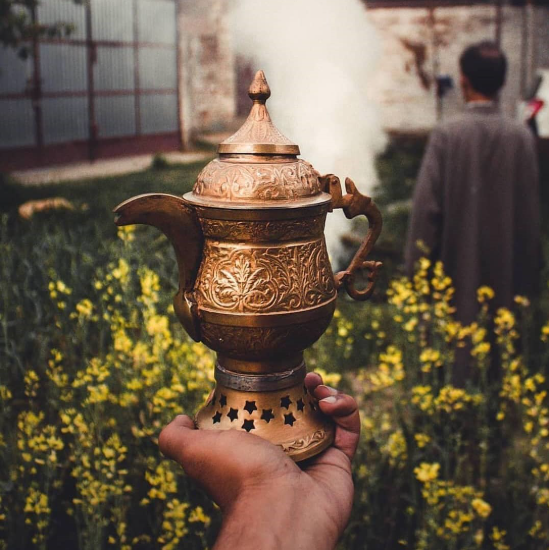
By the 8th century, copper took on a new persona. Islamic scholar Mir Syed Ali Hamdani arrived in Kashmir from Central Asia, bringing with him a cohort of master artisans. They trained locals in a specialized form of copper craftsmanship known as Kandkari. A decorative technique involves intricate hand-engraving of floral & geometric patterns into the surface of copperware, making items like jugs, glasses, & bowls not just functional but also exquisitely artistic.
From this blossomed the elegant copperware of Srinagar, shimmering with Persian grace but grounded in Indian ethos. Trays, jugs, ewers, and hookahs became canvases of faith and functionality.
Meanwhile, in Jandiala Guru, Punjab, the Thatheras shaped massive copper pots and plates—parats, gharas, degchis—for temple kitchens and community feasts. This tradition earned them a place on UNESCO’s list of Intangible Cultural Heritage, a nod to their undying craftsmanship.
Copper & Ayurveda: A Summer Elixir
As the sun climbed higher and the scent of mango blossoms filled the air, Veda fanned herself with the edge of her dupatta. “Why does the heat make me feel so tired, Maharishi Ji?” she asked, her cheeks flushed from the afternoon sun.
Maharishi Ji closed his eyes and smiled knowingly. “Ah, my child, that’s Pitta at play—fire rising within you, just as it does in nature this time of year.”
He reached for his tambe ka lota, its surface warm from the sun, and poured a stream of water into her glass. “Drink this. It’s tamra jal—water that’s rested in copper overnight cools the fire within body. Copper isn’t just a pretty metal you know, it’s a wellness ally, especially during India’s unforgiving summers”
The temple bells echoed gently through the air, Maharishi Ji sat beneath the neem tree, drawing three swirling patterns in the sand with his walking stick. He said, “to understand how copper helps us, you must first understand the doshas. These are the three energies that shape everything—from the movement of the stars to the rhythm of your breath.”
Veda leaned in closer, curious.

Vata: The Wind That Moves Us
“Vata is the wind,” he began. It’s dry, light, cool & ever-moving. It governs movement—of air in the lungs, blood in the veins, thoughts in the mind.
People with a dominant Vata dosha are often quick thinkers, creative & energetic. But when Vata is out of balance, it can bring anxiety, dryness, constipation & restlessness.
You know how in winter your skin gets dry and your mind feels scattered? That’s excess Vata. It needs grounding.
Pitta: The Fire That Transforms
Next, he traced a triangle in the sand. “Pitta is fire—with a touch of water. It’s sharp, hot, and intense. It controls digestion, metabolism & even your sense of vision.”
Those with dominant Pitta are sharp-witted, focused & driven. But when Pitta flares up, it can lead to irritability, inflammation, acidity & skin rashes—especially in summer.
When you’re quick to anger or get overheated easily, Maharishi said, “that’s fiery Pitta talking. You must learn to cool it down—with food, breath, and yes… with copper.”
Kapha: The Earth That Grounds
Finally, he scooped a little pile of soil and patted it down. “Kapha is earth and water. It is heavy, slow, steady, and nourishing. It gives you strength, immunity & a sense of love.”
Kapha types are calm, compassionate & resilient. But too much Kapha can cause sluggishness, congestion & weight gain.
“It’s like when the rains make everything heavy and slow,” he explained. “That’s Kapha overflowing. You need to stimulate it with movement and warmth.”
The Dance of Balance
These doshas are not enemies. They are friends trying to keep your body in harmony. Everyone has all three—but in different proportions. When they are balanced, you feel light, clear, and alive. When imbalanced, disease creeps in.
Veda thought for a moment. “So copper helps with Pitta because it’s cool & calming?”
“Exactly,” he smiled. Copper helps balance fiery Pitta, especially in the summer, when the sun blazes outside and within us. But it can also support Vata by grounding the nerves, and Kapha by enhancing digestion and clearing toxins.
Copper & Modern Science
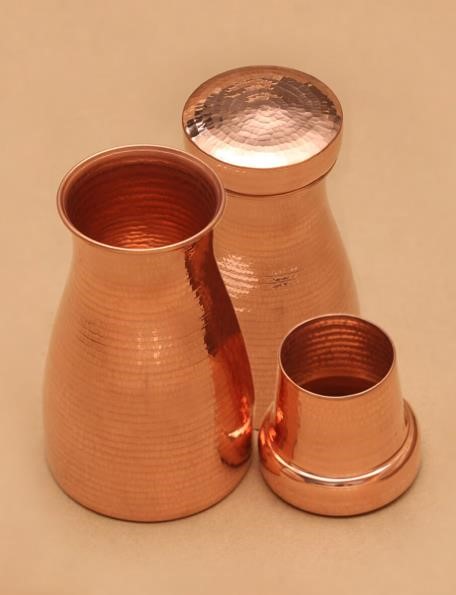
One morning, as the clouds rolled in the blue summer sky, Veda noticed something new. Maharishi Ji was reading—not a scroll or palm leaf manuscript—but a crisp science magazine. The title caught her eye: “The Essential Trace Mineral: Copper’s Role in Human Health.”
“Wait,” she said, sitting beside him. “You mean science is now saying what you’ve always told me?”
He chuckled softly. “My child… truth may wear different clothes in every age, but its essence never changes.”
Modern science classifies copper as an essential trace mineral—meaning our bodies need it, even in small amounts, for a wide range of vital functions. Studies have shown that copper surfaces eliminate harmful bacteria like E. coli and Salmonella within hours. This makes copper-infused water not only a traditional remedy but also a scientifically backed solution for preventing waterborne illnesses—especially vital during the hot months when dehydration and gut imbalances are common. But beware: copper doesn’t play well with acidic or dairy-based liquids—milk in copper? That’s a recipe for tummy trouble.
Crafting Copper: From Fire to Form

As Veda followed Maharishi Ji down the winding path of the old bazaar, the clinking of metal and the scent of warm earth guided her steps. “Where does this tamba come from, Maharishi Ji?” she asked, eyes wide as they approached a quiet lane where the walls echoed with rhythmic tapping.
He smiled gently. “From deep within the womb of the earth, child. But its true form is revealed only through fire, patience & the touch of human hands.”
Pure copper—gleaming and over 99.3% in purity—begins as rugged ore pulled from ancient mines like those in Khetri, Rajasthan. Once refined, it’s molded into sheets or ingots, waiting for the craftsman’s hand to awaken its purpose. In Pune’s Tambat Ali, the ancestral art of Matharkaam breathes life into copper- a rhythmic hammering that creates dimpled textures—strengthening the metal while giving it soul.
Further north, in Kashmir, the delicate Kandkari technique weaves Persian floral motifs, calligraphy, and sacred geometry into copperware, turning everyday vessels into heirlooms. Rajasthan brings silver inlays and repoussé designs into the fold, crafting regal thalis and temple lotas, while in down south, copper rises toward the heavens—crowning temple gopurams, shaping arti plates, and forming sacred kalashas used in Vedic rituals. Here, the metal doesn’t merely serve—it sanctifies.
Across regions, copper isn’t just shaped—it is storied. Each curve carries the memory of flame, the wisdom of hands & the quiet dignity of a tradition that still hums beneath the artisan’s touch.
Beyond health, copper plays a sacred role in Indian spiritual life. Copper kalashas (pots) are used in Hindu rituals to hold sacred water, believed to purify & energize. Yantras & talismanic plates made of copper are etched with sacred geometry to attract divine energies.
Today, as wellness meets minimalism, copper is enjoying a modern resurgence. Its biological benefits are backed by science and it continues to shine in modern Indian homes & wellness spaces.
Finding the Real Tamba: Trusting the Source
As Veda admired the copper kalash glinting in the corner of Maharishi Ji’s veranda, she asked curiously, “How do we know if a copper vessel is real? What if people are selling fake ones?”
Maharishi Ji nodded thoughtfully. “Ah, a wise question, child. Not all that shines is sacred. True copper—shuddh tamba—has a warmth to it, not just in touch, but in spirit. But in today’s world, where imitation is easy and tradition is rare, you must learn to look beyond the polish.”
Authentic copper is rich in tone—reddish-gold, never too shiny or orange. It may tarnish over time, but that is its truth, not its flaw. Real copper carries weight, feels grounded & when tapped gently, sings in a low, solid hum. Most importantly, pure copper will react with water but never with deception—it won’t be lacquered, coated in nickel, or mixed with cheap alloys if crafted with care.
That’s where Jaypore steps in—not just as a brand, but as a custodian of India’s living craft heritage. Jaypore works directly with artisan families who’ve honed their skills over generations. Every copper piece curated by Jaypore is not only authentic but also crafted using traditional methods—Matharkaam, Kandkari, repoussé, and more.
Copper Isn’t Just Metal—It’s Memory
As Veda held the cool copper tumbler in her hands, she felt something stir—not just curiosity, but connection. In the glint of that vessel lay a thousand-year-old legacy—a bridge from Harappa to her present.
Copper isn’t just about health; it’s about harmony. It’s not just tradition—it’s living history.
And in that moment, under the sweltering April sun, Veda took a sip of water infused with both minerals and memory—and felt deeply, unmistakably alive.


 Storytellers of Wonder
Leave a comment