
Whenever I travel, I seek more than sights—I seek to feel the place. And for me, the truest essence of any destination reveals itself in three things: its food, its clothing, and its crafts. To eat what the locals eat, to wear what they wear, and to try your hand at what they make—that’s when a place begins to feel like more than just a dot on the map. That’s when it starts to feel like a story. On my recent getaway to explore the southern charm of India, I had the opportunity to visit Tamil Nadu, where I was captivated by the rich cultural heritage and lush landscapes that seemed frozen in time.
Draped in Royalty: The Magic of Kanjivaram Sarees
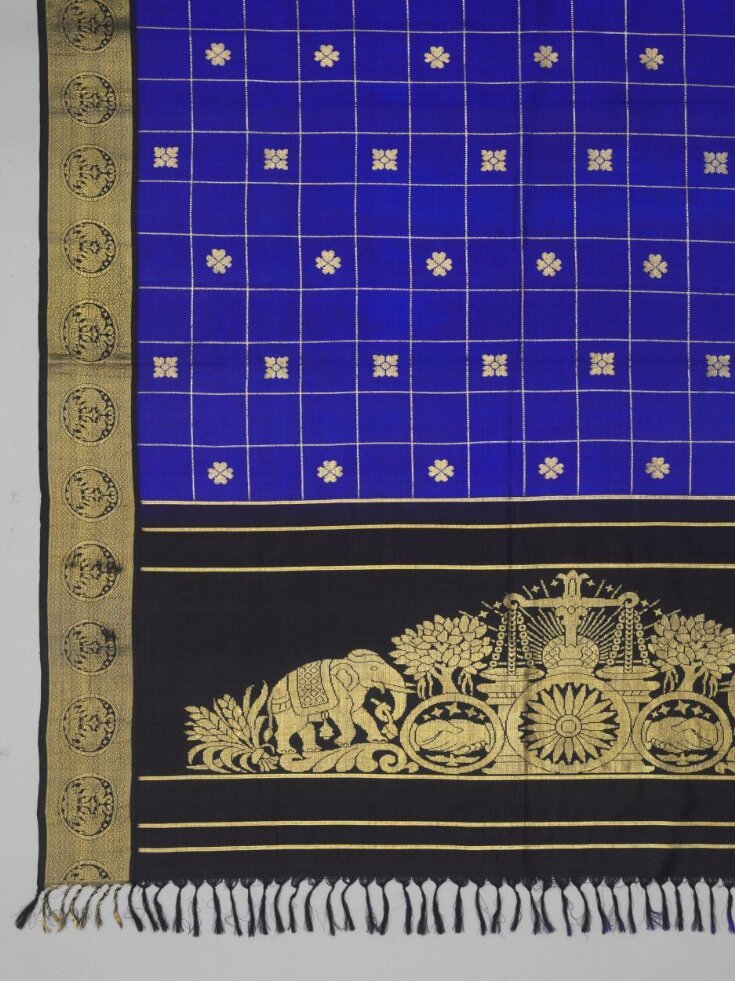
My first stop was Kanchipuram Art Village, renowned for its shimmering handwoven silk sarees. These sarees are also known as Kanjivaram Sarees, with a legacy dating back to over 400 years. Kanchipuram’s conducive climate & abundant natural resources contributed to its prominence as a silk weaving center. According to a legend, Sage Markanda was blessed with divine skills in weaving and was believed to have woven fabric for the gods themselves. His descendants settled in Kanchipuram, where they began crafting what became the iconic Kanjivaram sarees. Traditionally crafted on rich mulberry silk which oozes luxury, it features temple architecture, peacocks, flora & intricate designs that are made with extensive use of gold & silver zari. Fun Fact : A pure Kanjivaram can weigh up to 2 kilograms because of the use of its rich silk and zari. With proper care, a Kanjivaram saree can last for decades & are often passed down through generations as heirlooms. Here’s a useful care tip straight from the artisan, store your Kanjivaram Saree in a muslin cloth and refold it every 3–6 months to prevent zari from creasing or tearing.
While the sarees are a feast for the eyes, Kanchipuram also offers a unique treat for the palate. As a revered temple town, its cuisine is predominantly vegetarian, deeply influenced by ritual purity and temple traditions. Meals here are often served on banana leaves and include classics like ven pongal, sambar, rasam, and payasam, simple yet soul-satisfying dishes that are as much a part of the town’s heritage as its silks.
Gold on Wood: The Divine Charm of Tanjore Paintings
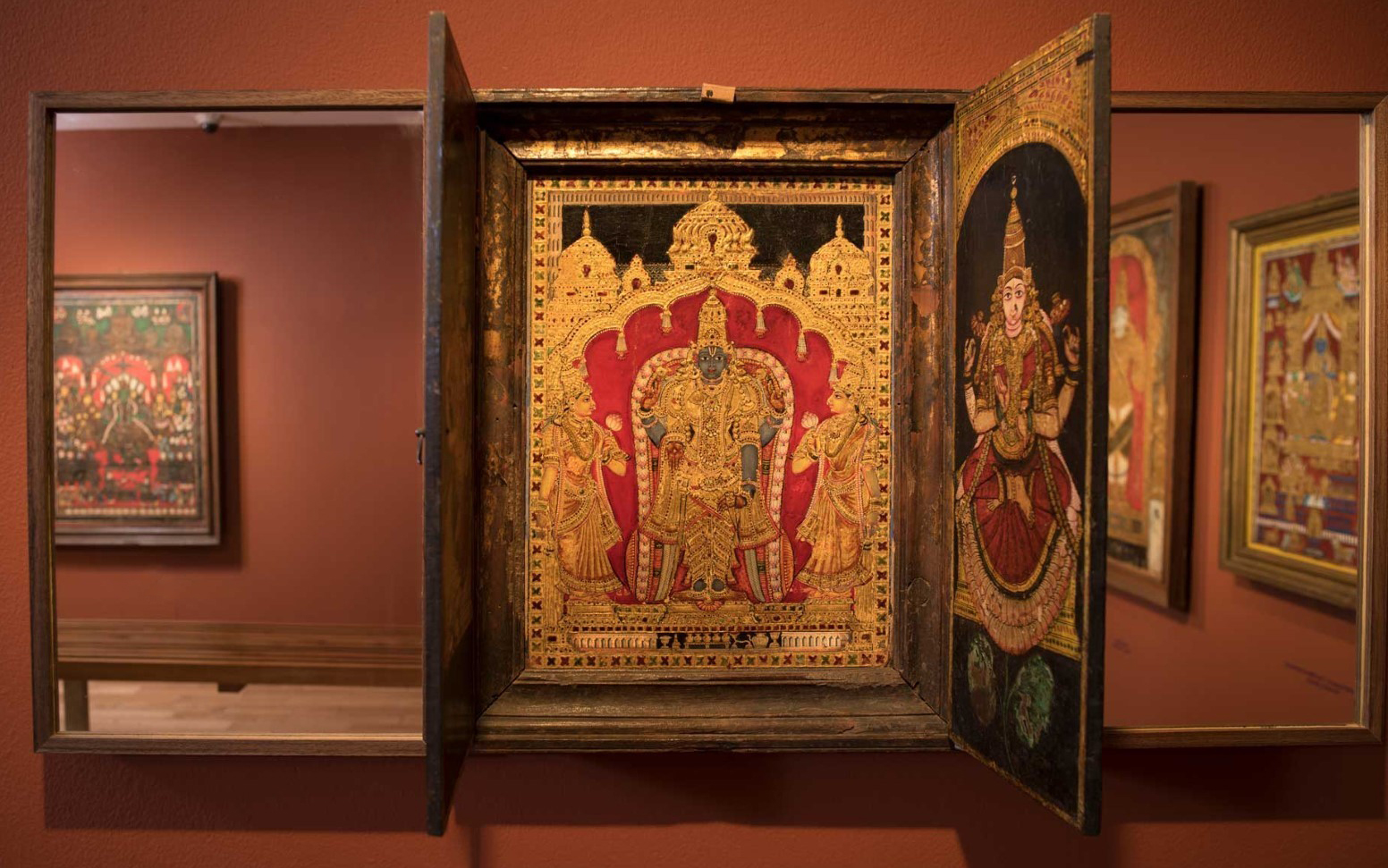
Second stop was Thanjavur Craft Village, famous for its gold-foil paintings called Tanjore Paintings. Thanjavar, was the capital of Chola Empire in 16th century, the Marathas, who ruled Thanjavur from the 17th century onwards, were significant patrons of art & culture, this was the time when Tanjore art started flourishing. On enquiring from the artisans i got to know, what makes these paintings unique is the use of gold foil, intricate details & embossed features. Traditionally it was made with 22-karat gold foil, with gesso work, a paste of chalk & gum to create raised embossed effect. The base is usually a wooden plank called “palagai padam“ giving it a sturdy, heirloom feel. They often depict Hindu deities, mythological scenes, and cultural themes.
Once upon a time, Tanjore paintings, were commissioned by kings & temple patrons & today they are cherished today in modern homes.
Threads of Summer: The Chettinad Cotton Charm

Next stop was Karaikudi in Chettinad region, the biggest cluster of Chettinad cotton sarees. Chettinad is the homeland of the Nattukottai Chettiars known for its affluent trading community that historically dealt in salt, spices, and banking across South and Southeast Asia. The women the community needed sarees that were comfortable, breathable, and suitable for both daily wear and religious ceremonies hence these sarees were made. The original Chettinad sarees were known as “Kandaangi” sarees, with a coarse texture and vibrant color palette. Today, Chettinad Cotton has evolved into a modern softer, finer, and more widely wearable fabric. These sarees were also shorter in length (about 4.5 to 5 meters) and often worn without a blouse or underskirt, & woven in colors like maroon, mustard, black, and deep green which are in stark contrast to the color of the skin. The motifs of these sarees are inspired by Chettinad mansions, temples, and floor tiles featuring bold checks, stripes, and broad contrast borders. Another interesting fact I learnt of Chettinad culture is that the sarees served as social markers reflecting a woman’s marital status, age, and role in rituals. Brides wore bright colors and bold checks, while widows opted for muted, austere shades. Elder women chose dignified, deeper hues, and special rituals called for sarees with symbolic colors. Even the drape style varied based on function, practical for daily chores and elegant for ceremonies. This visual language helped the community navigate social roles with subtlety and respect. Today, these sarees not only carry forward a legacy of craftsmanship but also stand as a timeless symbol of Chettinad’s rich cultural identity.
Equally renowned is Chettinad cuisine, famous for its bold use of spices, sun-dried ingredients, and aromatic blends, offering a fiery yet nuanced palette of dishes like Chettinad chicken, pepper mutton, and flavorful vegetarian gravies, reflecting the region’s trading heritage and culinary finesse.
Woven by Nature: The Craft of Panai Maram
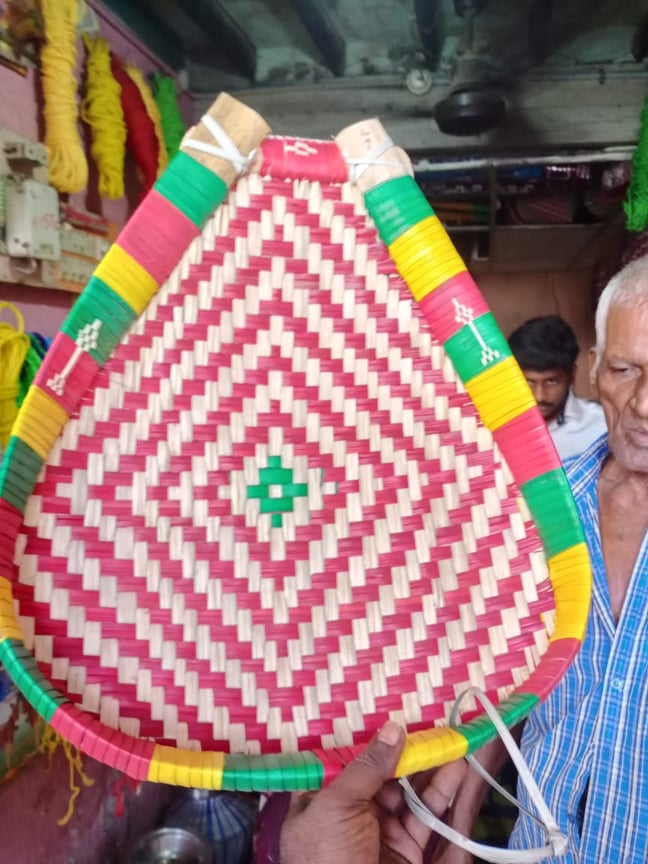
Last stop was Panagudi, known for weaving of palm leaves to make baskets, mats, fans, and decorative items. It involves leaves being cut into thin strips, soaked or boiled to soften, then folded, woven, or stitched with precision. It is commonly known as Panai Olai Craft in Tamil, a practice deeply rooted in the local culture often used in rituals, festivals, and daily life. After talking to the artisans, I was also surprised to know before paper, palm leaves were used to write manuscripts, including ancient scriptures and legal documents not only this, India’s first “books” were palm leaves! Known as Olai Chuvadi in Tamil, these were inscribed using a metal stylus and used to preserve knowledge on everything from medicine to astrology.
Even today, leaves remain an essential part of Tamil tradition through its cuisine, where meals are traditionally served on fresh banana leaves, adding both flavor and a touch of nature to the dining experience. The region’s cuisine is simple yet flavorful, often featuring dishes made from local millets, rice, lentils, tamarind, and freshly ground spices. Whether it’s a spicy kulambu, tangy rasam, or earthy kootu, every meal reflects the land’s deep connection to nature and tradition.

As the visit ended, I left Tamil Nadu with a heart full of stories & hands full of memories, realizing that I had not just visited a place but had connected with its heritage in a way that would stay with them forever. The people, the crafts, and the vibrant culture had left an indelible mark on me. And in the quiet of the hotel room that night, as I unfolded the exquisite Kanjivaram & Chettinad Sarees, knowing that these beautiful crafts had made their journey to Tamil Nadu a story I would treasure forever.
If you’re also someone who loves discovering rare and beautiful finds, then Jaypore is just the place for you. At Jaypore, we’re passionate about connecting people with timeless craftsmanship—each piece telling a story, each artisan’s touch bringing cultures closer together, one handcrafted treasure at a time.


 Storytellers of Wonder

Leave a comment