
“If I ever had to bottle up summer, not in degrees or destinations, but in memory, it would smell like the divine jasmine.”
Kalidasa in Meghadūta describes jasmine as a symbol of feminine grace and longing — “She, with jasmine in her braid, awaits you under the moon.” It’s not just flora. It’s emotional vocabulary.
There’s a kind of softness that only a gajra can bring — a string of jasmine buds in your hair, fragrant with nostalgia, femininity & a quiet kind of power. It’s not just about beauty. It’s about belonging. In our homes, our temples, our stories — mogra lives and lingers.

From Meena Kumari’s poised gajra in Pakeezah to Rekha’s regal bun in Umrao Jaan, from the cascading mogra of Deepika Padukone in Chennai Express to the everyday mogra of Smita Patil in Arth—these aren’t just cinematic moments, they are cultural imprints that celebrate fragrant echoes of India’s feminine soul.

The Ancient Whisper of Jasmine
Jasmine, bela, motiya, mogra, juhi, mallika, malli poo — across India, this fragrant bloom is known by many names. It isn’t just a flower, it’s a feeling that arrives with summer, gracing the nights with a scent so intoxicating, it lingers long after the petals fall. It’s seen as a tender thread that binds generations of women, woven with stories, care & timeless grace. It holds the gentle hands of a grandmother who wore it everyday, the soft smile of a mother who pinned it into her daughter’s braid on the first day of school, of festivals, of growing up. And it cradles the quiet blush of a bride, as she steps into a new life, her gajra fragrant not just with jasmine, but with love, hope & centuries of womanhood before her. A gajra is more than adornment, it’s a memory, it’s legacy, it is love, tied, not told.
Brushstrokes of Grace: Gajra in Indian Art & Craft

The influence of the gajra extends beyond cinema into classical art. These floral adornments not only beautify but also evoke sensory and emotional depth, linking to Indian mythology, romance & ritual.
- We see it immortalized in the celebrated painter Raja Ravi Varma’s paintings symbolizing grace, tradition & divine femininity. In Lady with a Fruit, Damayanti Talking to a Swan, and Mohini, jasmine appears woven into braids or coiled buns, enhancing the elegance & cultural richness of the subjects.
- In miniature paintings, especially from the Mughal and Rajasthani schools, women are often shown weaving or receiving garlands — acts of love, celebration, or preparation.
- Floral designs in Chintz, Block-print, Kalamkari, Ajrakh & Bagru printing traditions mimic jasmine’s shape and symbolism, linking fragrance to fabric, ritual to everyday wear.
Even in perfumed textiles of Hyderabad—once worn by royals—jasmine oils were infused into silks to make clothing an extension of personal aura.
Dance as Devotion
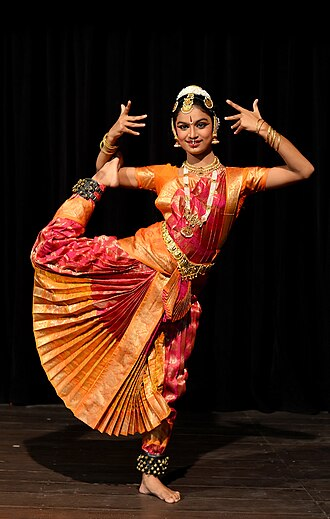
In Indian classical dance forms like Bharatanatyam, Kuchipudi & Mohiniyattam, jasmine is not just adornment — it is offering. Long floral ropes are braided into the hair to invoke the Goddess through performance.
In Odissi, dancers wear stylized gajras made of sholapith, a traditional Indian plant-based craft, emphasizing how deeply culture merge in Indian performance.
The gajra is a marker of devotion — to the art, to the divine, to the body as temple.
Fragrance of Faith: From Temples to Daily Rituals

Beyond performances and art, gajras play an essential role in everyday and festive life. During festivals and pujas, women and girls wear gajras to honor the deities, with jasmine garlands commonly offered and worn at altar ceremonies, symbolizing purity and devotion. The presence of gajras in such rituals connects the wearer deeply to spiritual practice and community celebration.
In daily life, especially across South India, gajras are woven into the fabric of routine. Women in Tamil Nadu and Kerala often braid fresh jasmine into their hair every morning, a ritual done not only for its enchanting fragrance but also for its health benefits. According to Ayurveda, the cooling aroma of jasmine helps balance body heat and soothe the senses. In many parts of South India, gajras are as integral to a woman’s daily attire as bangles or kumkum, embodying a seamless blend of beauty, wellness, and tradition.
From Fragrance to Everyday Philosophy

From grandmother’s temples to bridal trousseaus, from classical arts to temple rituals, from daily routines to silver-screen stardom — the gajra is more than a floral strand.
It is India’s soft strength. A garland of quiet confidence. A symbol of the sacred in the everyday.
So this summer, instead of reaching for a bottle of perfume, try something more intimate. Walk to the local phool bazaar. Buy a string of mogra. Wear it just for yourself.
And when someone asks what that scent is, you’ll smile and say —
It’s summer. And memory. And me.



 Storytellers of Wonder
Leave a comment