
Can you recall the first outfit you ever wore? Maybe not. Those first memories are misty, tucked away somewhere in the warmth of amma’s arms. But if you asked her about that first tiny garment, she’d probably smile and say: cotton. That soft little wrap, gentle on newborn skin, was likely made of this timeless fiber. Cotton is not just a fabric—it is memory, comfort, and care woven together.
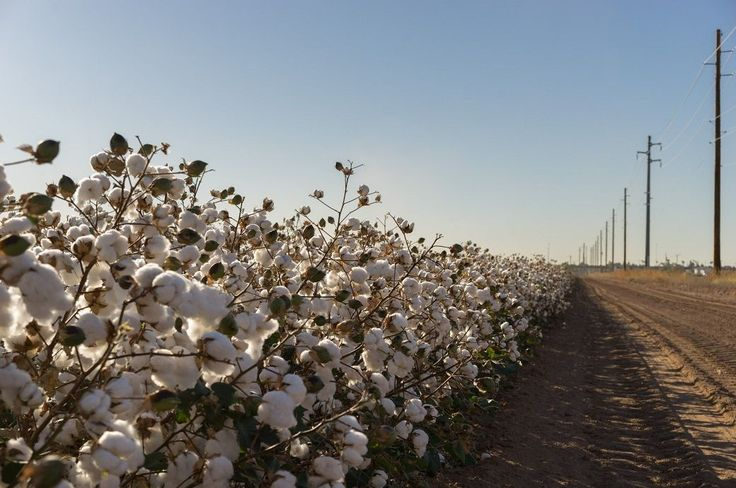
Did you know? India is the oldest known cultivator of cotton, dating back to 5000 BCE in the Indus Valley Civilization!
From the gamcha casually tossed over a farmer’s shoulder, the simple cotton dupatta fluttering in the breeze, to crisp school uniforms and post-shower towels—it’s cotton that walks beside us through life. It’s a part of everyday India breathing with us in summer heat while blending into our lifestyles like the rhythm of a tabla—quiet yet indispensable.
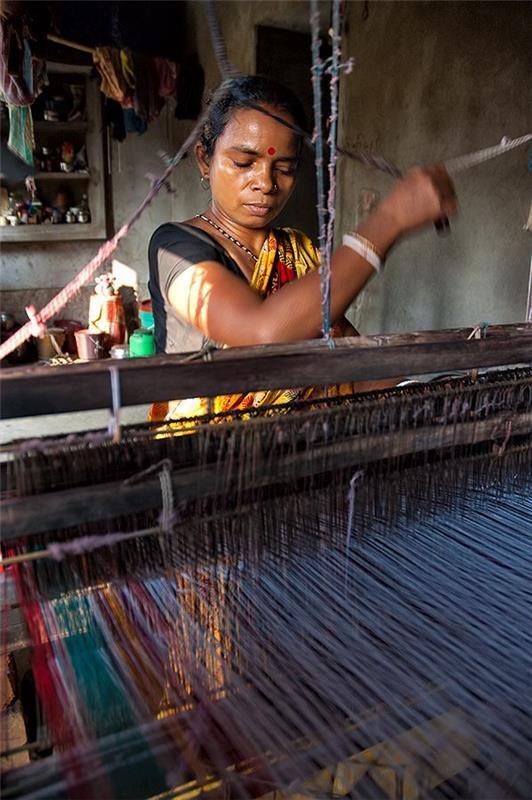
At Jaypore, we don’t see cotton as background or basic—we see it as buniyaad, the very foundation of who we are. It’s cultural, emotional, and quite literally, our history. So, the next time you wear your favorite cotton kurta, pause for a moment and think about its journey. How that soft fabric you wear so comfortably started out as tiny seeds carefully planted by a farmer in the soil of Bharuch, one who rises before dawn, hoping the skies will be kind. It grew under the watchful eyes of monsoon winds, bloomed into white bolls, and was gently plucked by calloused hands. Then came the artisans—perhaps a spinner in a dusty gali of Gujarat, who turns clouds of kapas into threads with quiet mastery. Or a weaver in a centuries-old handloom cluster in Kutch, who aligns warp and weft with the rhythm of his heart. Finally, in the narrow lanes of Rajasthan, another artisan picks up a wooden block, dips it in colorful dye, and prints a booti, a bel, or a paisley—adding color, character, and soul.
Your kurta isn’t just a garment, it’s a story of hard work, tradition, and connection that stretches across continents and cultures. In a way, your everyday cotton connects you to people and places you might never meet, reminding us that even the simplest garment holds a world of human effort and care.
Did You Know? A cotton plant grows up to 3 feet tall, and each boll contains nearly 500,000 individual fibers!
Table Of Contents
- Lifecycle Of Cotton
- Cotton As Global Currency
- Cotton In Mughal Era
- Cotton In Indian British Raj
- The Swadeshi Movement (1905–1911)
- Cotton In Modern Era
Lifecycle Of Cotton
- Sowing the Seeds : Come April, as the sun warms the earth, Indian farmers sow tiny cotton seeds. Known as kapas, these seeds hold the promise of that soft fabric we love. It all begins in silence—one hopeful seed at a time. Wondering why are cotton plants sown during summer in India? Because they need heat and sunlight to germinate and grow before the monsoons arrive!
- Watching It Grow : As the monsoon rains begin, the cotton plants start to sprout and grow. Over the next few months, farmers carefully tend to their fields. They look out for pests and weeds, hoping for a healthy crop. Slowly, green leaves turn into flowering plants, and soon, small cotton bolls emerge, swelling with fluff.
- Time to Harvest : By the time October arrives, the bolls burst open to reveal soft, white cotton. It’s a beautiful sight with acres of land dotted with fluffy white clouds. Harvesting is mostly done by hand, which takes time and care. Farmers collect the kapas and get it ready for the next step.
- Cleaning and Separating : The freshly picked kapas isn’t ready to wear yet! First, it goes to ginning factories, where machines separate the cotton fiber from the seeds. The clean cotton is then pressed into large bales and sent to mills, while the seeds are used for oil or planting again.
- Turning into Thread : Next, the cotton travels to spinning mills. Here, it’s stretched and twisted into fine thread or yarn. This yarn is the starting point for most of the clothes and cotton products we use every day.
- Weaving into Fabric : Once the yarn is ready, it’s woven into fabric on looms. Some are hand-operated, especially in traditional weaving centers, while others are powered by machines. The result is soft, breathable cotton cloth perfect for India’s warm climate.
- Adding Colour and Designs : Plain cotton cloth can be dyed, printed with patterns, or even hand-painted. From bold block prints to delicate embroidery, this is where fabric becomes fashion. Each piece now has a story, a splash of culture, and a touch of artistry.
- Creating the Final Product : Tailors and factories cut and stitch the fabric into shirts, sarees, kurtas, bedsheets, and more. What began as a tiny seed is now something useful, beautiful, and ready to be worn or used.
- Reaching the World : Finally, these cotton products are packed and sent across India and the world. Cotton from farms ends up in homes around the world, a global journey that starts in a quiet field and ends in someone’s wardrobe. Fun Fact – Cotton is so versatile that beyond clothing, it’s used in items like bookbinding, coffee filters, and even medical supplies!
Cotton As Global Currency
Unlike gold or coins, cotton wasn’t the currency in traditional sense but historically it has functioned like one in trade & colonial economies. In India, Egypt & parts of Africa it was used as barter in exchange of livestock, food, spices & more. It was the ideal “soft currency” as it was light, durable & valuable making it perfect foe long-distance trade also known as “white gold”.
As early as the Indus Valley Civilization, India was cultivating, spinning, and weaving cotton, laying the foundation for one of the world’s oldest textile traditions. Indian cotton textiles especially the fine, handwoven muslin and calico, were highly prized and became essential trade goods exchanged with Arab traders, Romans, and Southeast Asians. Long before coins became common, cotton fabric was already stitching together communities and economies across and beyond the Indian subcontinent.
What nickname did cotton earn during ancient trade? White gold, for its lightweight yet high-value appeal!
Cotton In Mughal Era
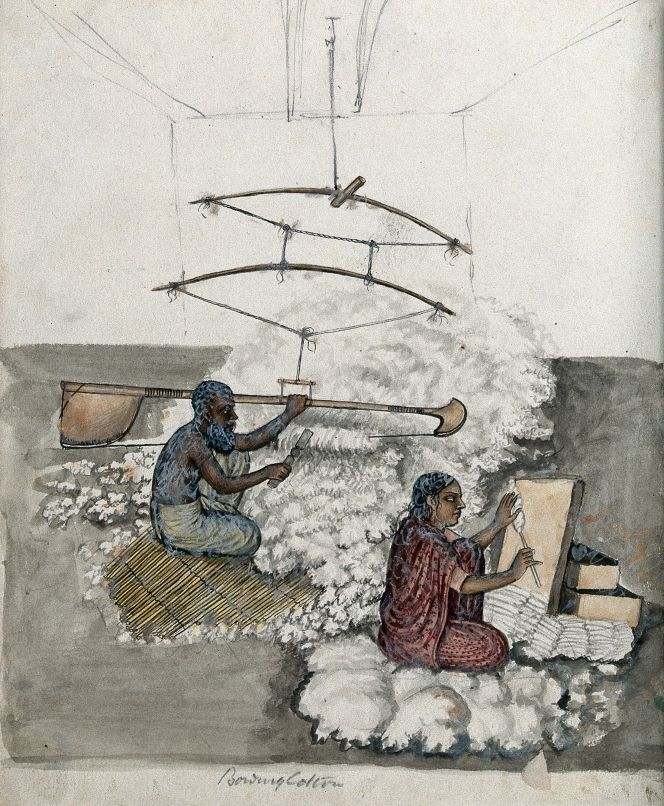
During the Mughal era, India emerged as the world’s leading exporter of cotton textiles, with its fabrics reaching markets across Europe, Africa, and Southeast Asia. Indian renowned for its quality and beauty and known by names like khadi, chintz, and calico, was so valuable that it became a key part of global trade.
In some African kingdoms, these textiles were not only prized for their utility but also held cultural significance, often used as tribute or ceremonial currency. India’s cotton industry during this period was not just an economic powerhouse but a vital thread in the fabric of international commerce and diplomacy.
Cotton In Indian British Raj
India, once a global leader in fine cotton textiles like muslin and calico, was gradually reduced to a supplier of raw cotton. The British dismantled local weaving and spinning industries through harsh colonial policies, heavy taxation, and import-export restrictions that favored British manufacturers. Raw cotton was extracted from Indian farmers at low prices, shipped to textile mills in Manchester and Lancashire, processed into finished cloth, and then re-imported to India, where Indians were often forced to buy back their own cotton in the form of expensive British fabric.
This exploitative cycle created a system where India bore the burden of production, while Britain reaped the profits. Cotton became the economic engine that powered British industrialization, while impoverishing Indian artisans and farmers. Over time, millions of Indian weavers lost their livelihoods, traditional textile centers collapsed, and India became dependent on imported cloth, transforming a once-thriving textile exporter into a captive market. In this way, cotton wasn’t just a crop, it became a tool of colonial control, a symbol of economic drain, and the backbone of British wealth generation at the cost of Indian self-sufficiency.
The Swadeshi Movement (1905–1911)
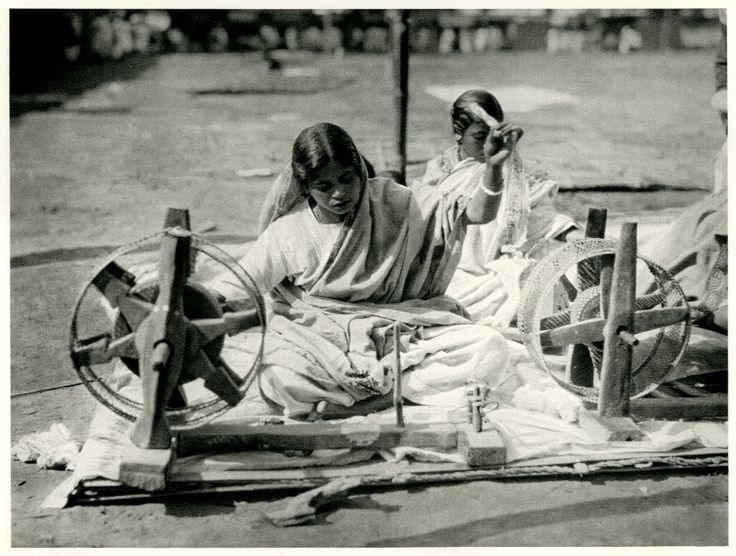
A major part of India’s fight for independence from British rule. It began as a protest against the British decision to partition Bengal in 1905 but quickly grew into a larger campaign promoting self-reliance and Indian-made goods. Cotton, especially Khadi, hand-spun and hand-woven cotton cloth, became a powerful symbol of this movement.
Mahatma Gandhi championed Khadi as more than just fabric, it represented the rejection of British industrial goods and the revival of India’s rural economy. Spinning cotton on a simple charkha (spinning wheel) became a patriotic act, encouraging millions to produce their own cloth rather than buying British textiles. This not only promoted Indian craftsmanship but also empowered rural communities, reduced dependence on imports, and united people across classes in the freedom struggle.
The movement helped revive the Indian cotton and handloom sectors and left a legacy on India’s cultural identity it is still seen today as a symbol of simplicity, self-sufficiency, and national pride.
Cotton In Modern Era
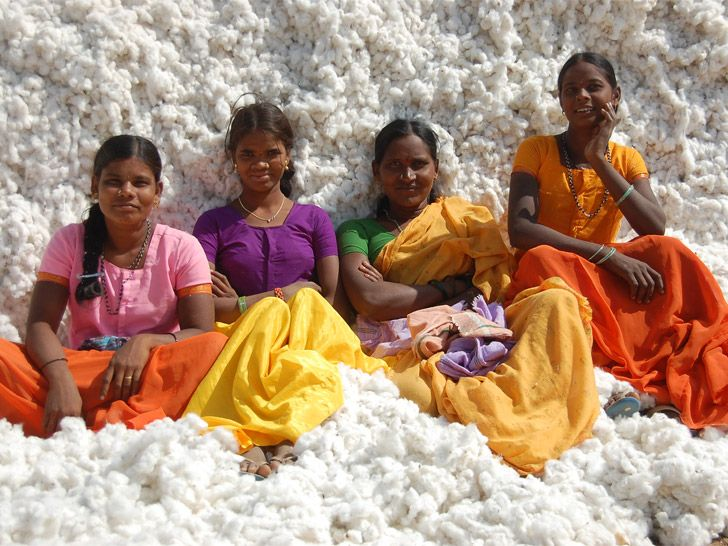
Today we produce around 6 million tonnes of cotton lint every year, which amounts to roughly 35 to 37 million bales weighing about 170 kilograms each. The country holds the top spot in the world for the largest area dedicated to cotton cultivation and is one of the two biggest producers globally, alongside China. When it comes to exporting cotton, India ranks second, just behind the United States.
Fact Check: India ranks #1 in cotton cultivation area and #2 in global cotton exports
Cotton may seem basic just a soft fabric we wear every day, but look a little closer, and you’ll find that in its folds live generations of care, craft, and culture. It carries the touch of the farmer who nurtured it, the skill of the artisan who spun and wove it, and the quiet strength of a tradition passed down through time. Maybe that’s why, no matter how far we go or how much the world changes, cotton feels familiar. It feels grounding. And maybe, just maybe, that’s why it feels so much like home, the fabric of us.


 Storytellers of Wonder
Leave a comment