
Around seven centuries ago in Gujarat, a forbidden love blossomed between a shepherd boy from the Bharwad community and a weaver girl from the Wankar tribe. Their union, though frowned upon, sparked more than just a romance, it ignited a legacy woven in thread and passion. To survive and honor their bond, they invented a unique craft: tiny, bead-like knots called danas, painstakingly raised onto fabric. Each dana was formed from yarn lovingly spun from the shepherd’s own sheep.

This was no ordinary fabric; it was a language of love stitched into every fiber, a timeless tapestry of heritage and hope. From their love story rose the Dangasia community, and with it, the exquisite Tangaliya weaving tradition. Today, Tangaliya stands as a shimmering testament to India’s rich cultural pride and the undeniable power of love and craft to shape history.
Table Of Contents
The Dot That Stayed
In a quiet village nestled between dust-kissed fields of Gujrat, lived an old man named Kanav ji. He was a figure of routine and silence. Every morning, he sat by the window, shawl folded neatly beside him, watching the world pass like a slow river.
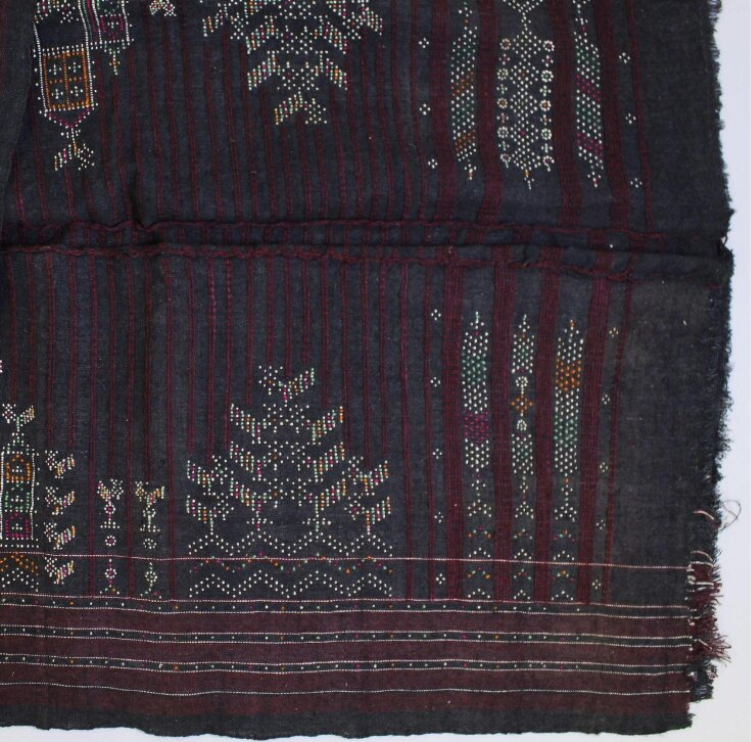
The shawl was old—black, softened by time, and dotted with tiny white specks like stars across a night sky. No one had ever seen him wear it, yet he tended to it as one might a sacred text.
One day, a young traveler visited the village. A storyteller gathering forgotten tales, he noticed the shawl and approached Kanav ji, expecting to be waved away. But instead, the old man gestured for him to sit.
After a long pause, Kanav ji spoke.
“This dot,” he said, pointing to a single raised knot, “hasn’t moved in seventy years.”
He traced it gently.
“My mother tied it the day I left home. She said, ‘Whenever you’re lost or alone, touch this dot. I’ll be there.”
Through war, grief, and quiet years of solitude, Kanav ji wore the shawl like armor. The fabric faded, threads loosened but the single dot, his mother’s dana, remained. Unshaken. Intact.
“It’s not just cloth,” he whispered. “It’s a memory that knew how to hold on, even when I didn’t.”
The traveler left with more than a story. He carried a quiet truth: Sometimes, what endures isn’t the thread itself, but the love knotted into it, just like tangaliya.
History
Practiced primarily by the Dangasia community of Gujarat, Tangaliya weaving is more than just a textile tradition, it is a living repository of cultural memory, love, and resilience. Passed down through generations, this intricate craft remains rare and deeply rooted in identity and devotion.
Historically, Tangaliya shawls were considered auspicious and were included in wedding dowries or worn during sacred rituals, signifying their cultural importance. Every shawl, every wrap is not merely a garment, but a handwoven story, of a community that turned adversity into art, of forbidden love that gave birth to innovation, and of skilled hands that continue to knot history into fabric. In each tiny dana lies a quiet defiance, a delicate memory, and a celebration of heritage that refuses to fade.
In 2009, Tangaliya weaving received the GI tag, protecting its origin and ensuring the craft is recognized as unique to Gujarat’s Surendranagar region.
Process
Tangaliya weaving is intensely skill-intensive, requiring immense focus, patience, and skill. A single shawl can take days or even weeks to complete.

- Preparing the Yarn
The process begins with hand-spun cotton or wool, often sourced from local sheep or markets, reflecting the close connection between the artisan and the land. Once spun, the yarn is carefully dyed, usually in deep, earthy tones like indigo, maroon, or black—that not only enhance the beauty of the weave but also honor traditional aesthetics. The dyed yarn is then dried and prepared for the loom, ready to be transformed into fabric.
- Setting Up the Loom
The weaver sets up a traditional pit loom, often a humble structure placed within their home or courtyard. The warp threads—longitudinal threads stretched across the loom—are aligned with painstaking care. This stage is foundational, as the accuracy of the setup directly affects the precision of the final weave. It’s a meticulous task that sets the rhythm for everything that follows.
- Forming the Danas (Beaded Dots)
The defining hallmark of Tangaliya weaving lies in the tiny, raised dots known as danas. These bead-like motifs are not embroidered post-weaving; rather, they are woven into the fabric itself. Each dana is created by twisting contrasting threads around specific warp threads while the fabric is being woven. The weaver counts each thread by hand, forming every dana with rhythmic precision. This complex and repetitive process requires immense concentration, skill, and years of practice.
- Designs by Memory, Not Markings
What sets Tangaliya apart is the absence of visual guides. There are no drawings, templates, or stencils used. The patterns—geometric, symbolic, and traditional are carried in the mind of the artisan, passed down orally and visually through generations. This makes each creation not just handmade, but heart-made: one-of-a-kind and deeply rooted in cultural memory.
- The Final Fabric
The finished textile is a quiet masterpiece—soft to the touch, intricate in detail, and rich in texture. The raised danas shimmer subtly against the dark base fabric, creating a dotted effect that’s both tactile and visual. Every piece of Tangaliya fabric tells a layered story: of love, skill, identity, and craftsmanship carried forward by generations of dedicated weavers.
Types of Tangaliya Weaves
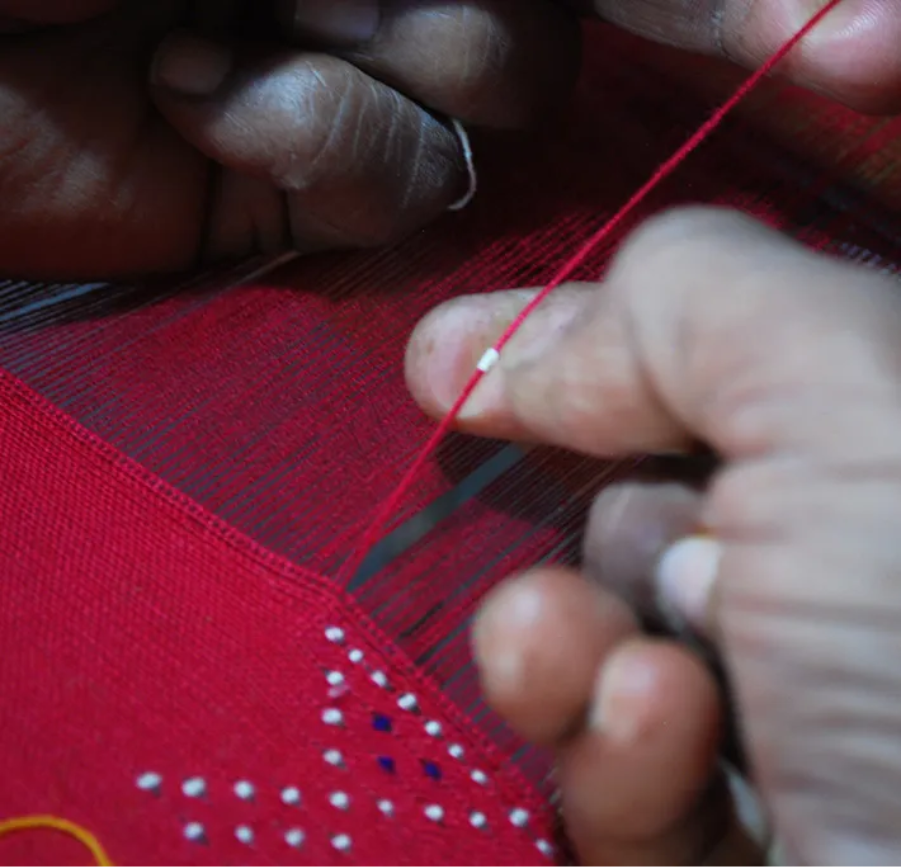
- Danas Work : Tiny raised knots or bead-like dots tied onto fabric during weaving, creating textured, dotted patterns.
- Geometric Patterns : Intricate shapes like diamonds, triangles, and zigzags symbolizing cultural meanings.
- Animal Motifs : Stylized animals such as peacocks or camels woven using danas, symbolizing strength and beauty.
- Floral Designs : Delicate floral patterns adding elegance and representing nature’s fertility.
- Striped Weaves : Horizontal or vertical stripes highlighted by danas for rhythmic texture.
- Border Designs : Ornamental borders with repeated motifs framing the fabric.
- Plain Base with Dense Danas : Simple fabric base with densely packed dots for a striking textural effect.
The Revival
By the early 2000s, only three families practiced Tangaliya. Its revival began with grassroots efforts and training programs that have now reached over 100+ artisans.
Grassroots Revival & Community Empowerment
Organizations like Saath Charitable Trust have played a pivotal role in reviving Tangaliya by establishing common facility centers and providing training to artisans. These initiatives have led to a significant increase in the number of families practicing Tangaliya, from just three in 2005 to over 100 today. The Times of India
Global Recognition & Market Expansion
In 2009, Tangaliya received Geographical Indication (GI) status, safeguarding its authenticity and boosting its global profile. This recognition has attracted international interest, with buyers from countries like Australia and Kenya expressing interest in the craft. Business Standard
Tradition Reimagined, Tangaliya Renewed
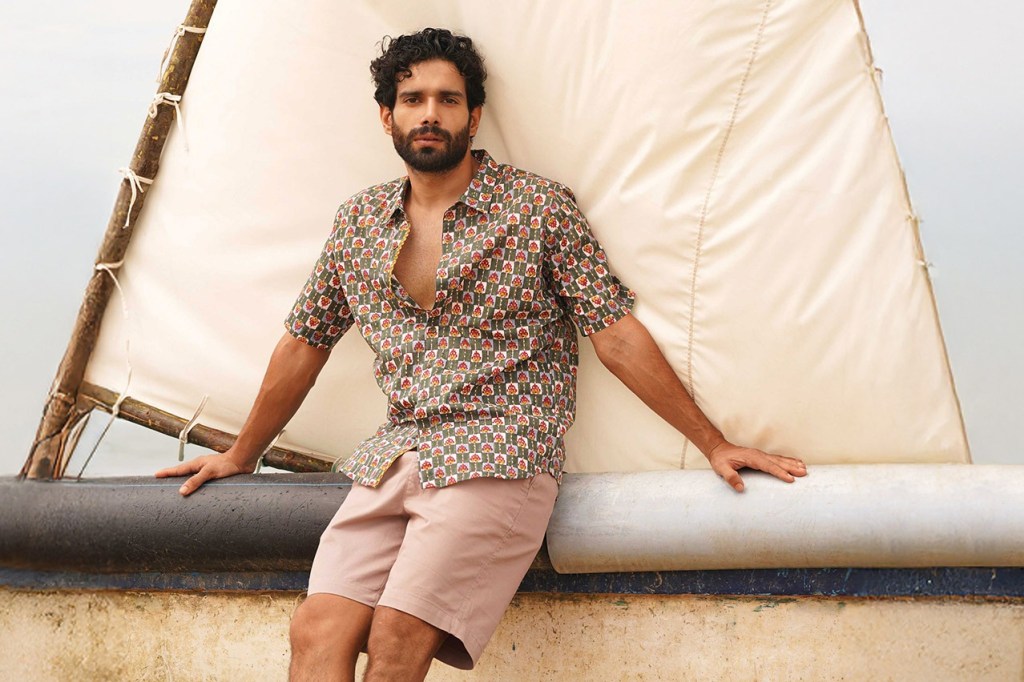
Jaypore has partnered closely with skilled Tangaliya artisans to breathe new life into this centuries-old weaving tradition. Through thoughtful collaboration, the brand has reimagined Tangaliya’s signature dana technique into ensembles that appeal to today’s aesthetics. Today, this heritage weave finds form in contemporary festive silhouettes—crafted for modern celebrations. These creations honor the cultural legacy of the Dangasia community while opening new avenues for Tangaliya to evolve, proving that heritage and modernity don’t just coexist, but can enhance one another when rooted in authenticity.


 Storytellers of Wonder
Leave a comment