
Come Sharad, the clear skies become dotted with cotton-like clouds, and the air is tinged with the sweet, earthy smell of Mogra. It is a nod to the arrival of Sharad Navaratri, one of India’s most sacred and celebrated festivals. The nine-day celebration begins the day after the new moon, known as Amavasya. A nine-day celebration of the divine feminine, it also serves as a reminder of our connection to the earthly elements. However, Navaratri is more than just dance, devotion, and feminine energy- it is an inner journey and a tapestry of stories, crafts, culture, and people.
As we wake up each day to the Dhun of the bells and immerse ourselves in the light of the diyas and Aarti, we have a chance to honour our rich heritage. Each day of the Navaratri offers us the opportunity to wear a handcrafted treasure that deepens the connection to tradition.
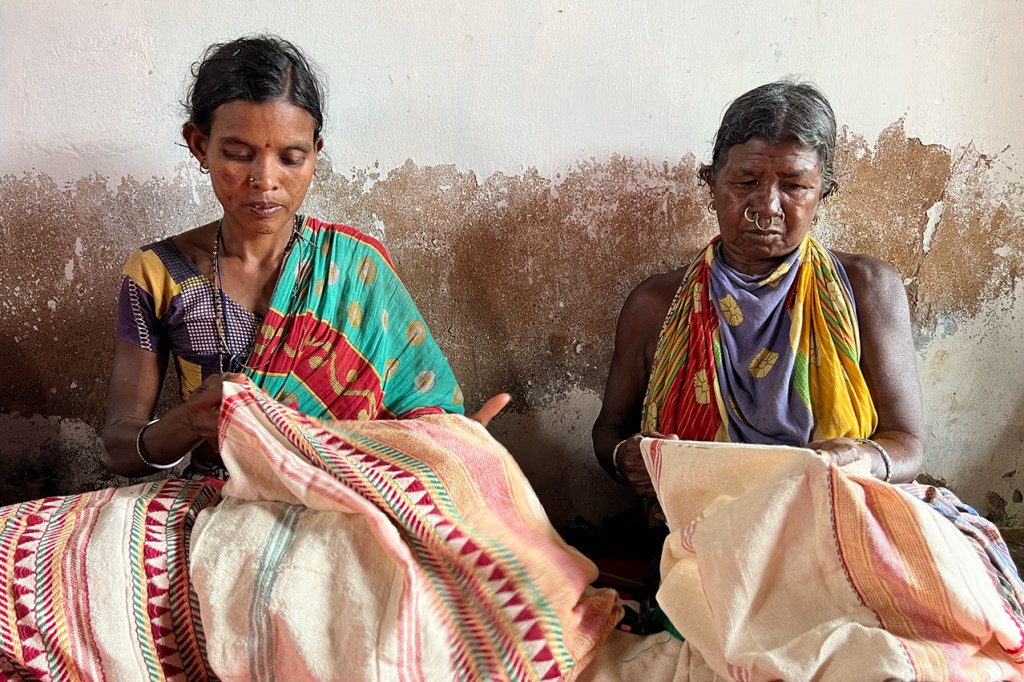
There is a sense of profundity and sacredness in wearing something made by hand. While it is deeply personal, it is also a celebration of artisanal craftsmanship. Each warp and weft carry the rhythms of the artisan’s fingers, and each painted detail the breath of the one who envisioned it. They are intimate, meditative, and almost prayer-like in their creation.
As we step further into the festivities, here are nine styling ideas — one craft per day — to help you step out in style, with soul and subtle storytelling.
Table Of Content
- Day 1: Madhubani- Painted Myths, Colors, & Stories
- Day 2: Block Print- The Sanctity in Every Stamp
- Day 3: Handwoven- Threads of Courage, Heritage & Calm
- Day 4: Maheshwari: The Elegance of Reflection
- Day 5: Banarasi- Regal Threads of Devotion
- Day 6: Ajrakh: The Rhythms of Earth
- Day 7: Paithani- The Peacock’s Plume of Grace
- Day 8: Jamdani- The Ethereal Threads
- Day 9: Bagru: The Culmination of Roots & Fire
- Weaving Myth into Devotion & Meaning
Day 1: Madhubani- Painted Myths, Colors, & Stories
The first day of Navaratri is dedicated to Shailputri, the daughter of Lord Himalaya. A symbol of prosperity and embodiment of Mother Nature, people seek blessings from her for spiritual growth and awakening. It is believed that Goddess Sati, after her self-immolation, was reborn as the daughter of the Lord Himalayas. This earned her the name Shailputri, where ‘Shail’ means mountain and ‘Putri’ means daughter.
And what is a better way to honour the Goddess Shailputri than draping a Madhubani painting saree or a dupatta? The art of Madhubani painting comes from the Mithila region of Bihar. It is a hand-painted craft where artisans use natural ingredients to create paintings on canvases, mud walls, and textiles. What makes the art distinct is its vivid and narrative nature, characterized by bold lines.
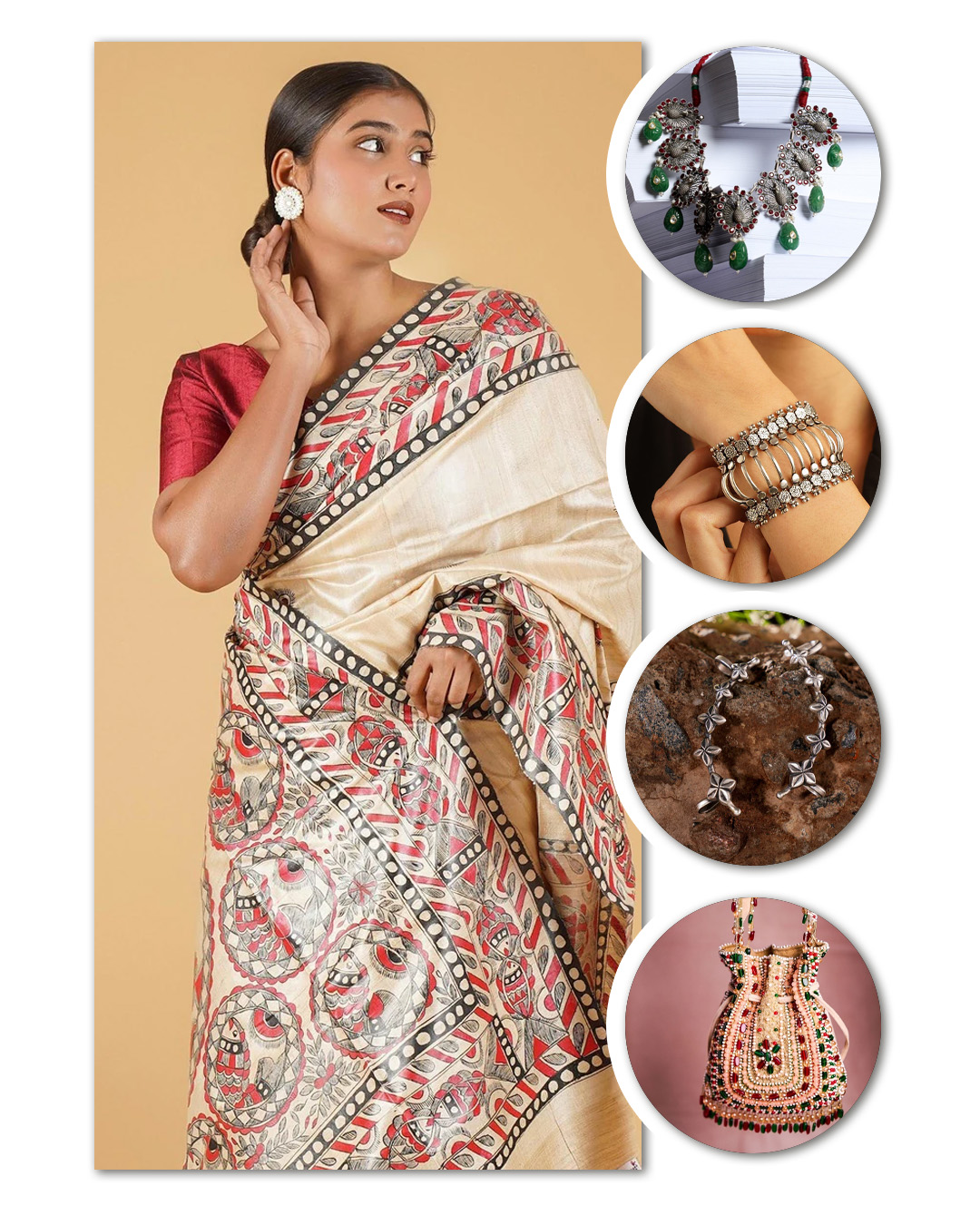
Pick a Madhubani saree or a kurta set and pair it with a Madhubani dupatta with figures of birds, animals, mythology, and lotus. You can complete the look by matching oxidized jewelry, such as danglers, necklaces, and bangles. Don’t forget to wear a matching jutti or heels with a handcrafted potli or sling bag.
Day 2: Block Print- The Sanctity in Every Stamp
On the second day, we honour Goddess Brahmacharini, who walks the earth with penance and in devotion. Her strength lies in simplicity and purity. For this day, nothing fits better than wearing a block-printed fabric to honour Goddess Brahmacharini. The prints are rooted in earth, wood, and dye. It carries the whispers of the rhythmic pattern that are carved by the deft hands of the artisans.

For this day, choose a block-printed, saree in jewel tones. Choose a traditional motifs or flowers or geometric ones. Top off the look with tribal necklace, jhumkas or danglers. You can finish off the look with a matching pair of juttis and a Zari embroidered clutch.
Day 3: Handwoven- Threads of Courage, Heritage & Calm
Day three of the Navaratri is dedicated to Goddess Chandraghanta. She rides the lion, symbolizing fierce beauty and warrior courage. Handwoven textiles, whether handloom cotton or linen, celebrate the human hand that weaves the fabric with patience and perseverance. They are strong yet tender, imperfect yet perfect in their story.

On this day, choose to wear ahandwoven kurta set with a dupatta with a rich metallic tone that signifies the courage and strength of Goddess Chandraghanta. For accessories, wear an elaborate neckpiece like a choker followed by elegant bangles. Complete the look with matching heels and an embroidered handbag.
Day 4: Maheshwari: The Elegance of Reflection
Day four is the day on which we worship Goddess Kushmanda, who created the vast universe with her gentle cosmic smile. Nothing suits better than the ever luminescent and wispy Maheshwari to adorn for this day. A craft known for its splendid Zari work and an airy feel and smooth texture for its fine silk, Maheshwari mirrors the smile and the elegance of the deity.

Style a Maheswari saree in a soft pastel hue that has a silver or light gold accent. To make the saree stand out, keep your jewelry minimally elegant. Pair it with a Chandbali or stud coupled with a sleek bracelet. Don’t forget to try out different drapes for your saree, as this offers a much more distinct style.
Day 5: Banarasi- Regal Threads of Devotion
Goddess Skandamata, the mother of Skanda, is whom we dedicate this day to. She is a fierce warrior who loves and nurtures as she protects. What better way to honour her than to adorn a beautiful Banarasi saree? The rich and luxurious brocade weave with the fine Zari work is a statement of fine artisanal craftsmanship. The Banarasi saree is distinguished for its evocative motifs of Kalga, Bel, Jaal, lotuses, and more, becoming an example of exquisite art.

Choose a striking coloured Banarasi saree & pair it with a contrasting blouse, perhaps crafted from the same fabric as that of the saree. Top off the look with statement stud earrings and bangles. Finish it off with matching juttis and a brocade Batua or a potli bag.
Day 6: Ajrakh: The Rhythms of Earth
On this day, we honour the venerated Goddess Katyayani, who is said to have slain Mahishasura. She is fierce and powerful, and her strength echoes in the very bones of us. Wearing an Ajrakh dress or a kurta set is the right ensemble for this day to celebrate the victory of good over evil.

Choose an Ajrakh kurta and pair it with a matching dupatta. You can wear a matching jacket or a waistcoat to add a quirky hint to your style. Pair it with vibrant or oxidized earrings and a stack of tribal bangles. Don’t forget to wear matching Kolhapuris or embroidered heels with it.
Day 7: Paithani- The Peacock’s Plume of Grace
This day is dedicated to the fiercest form of Maa Durga- Kalaratri. She is fearsome yet bears compassion. She is known to remove ignorance and darkness and protect us from evil and negativity. There is no better way to honour the strength, power, and compassion of Goddess Kalaratri than to wear a handwoven Paithani saree. Each weave, meticulously handwoven by the hands of the artisans, is a testament to their strength and craftsmanship. Paithani sarees are known for their exquisite Zari work and motifs of Mor, Muniya, Kamal, Asawalli, Narali, and more.

Style your Paithani saree with traditional minimal jewelry. You can also try antique heritage gold jewelry with a statement design. Wear a Kamabandh that sits on your waist, offering a much-sculpted appeal. Let the pallu trail and catch the glint of light, making it shimmer.
Day 8: Jamdani- The Ethereal Threads
One of the most sacred days, on day eight, we worship Maa Mahagauri, the goddess of peace and purity. After the darkness of Kalaratri comes the clarity. The soft and fine weaves of Jamdani are something that, when draped, makes you feel calm and peaceful. Jamdani is weaved from the finest of muslin, with woven motifs that feel like floating stars.
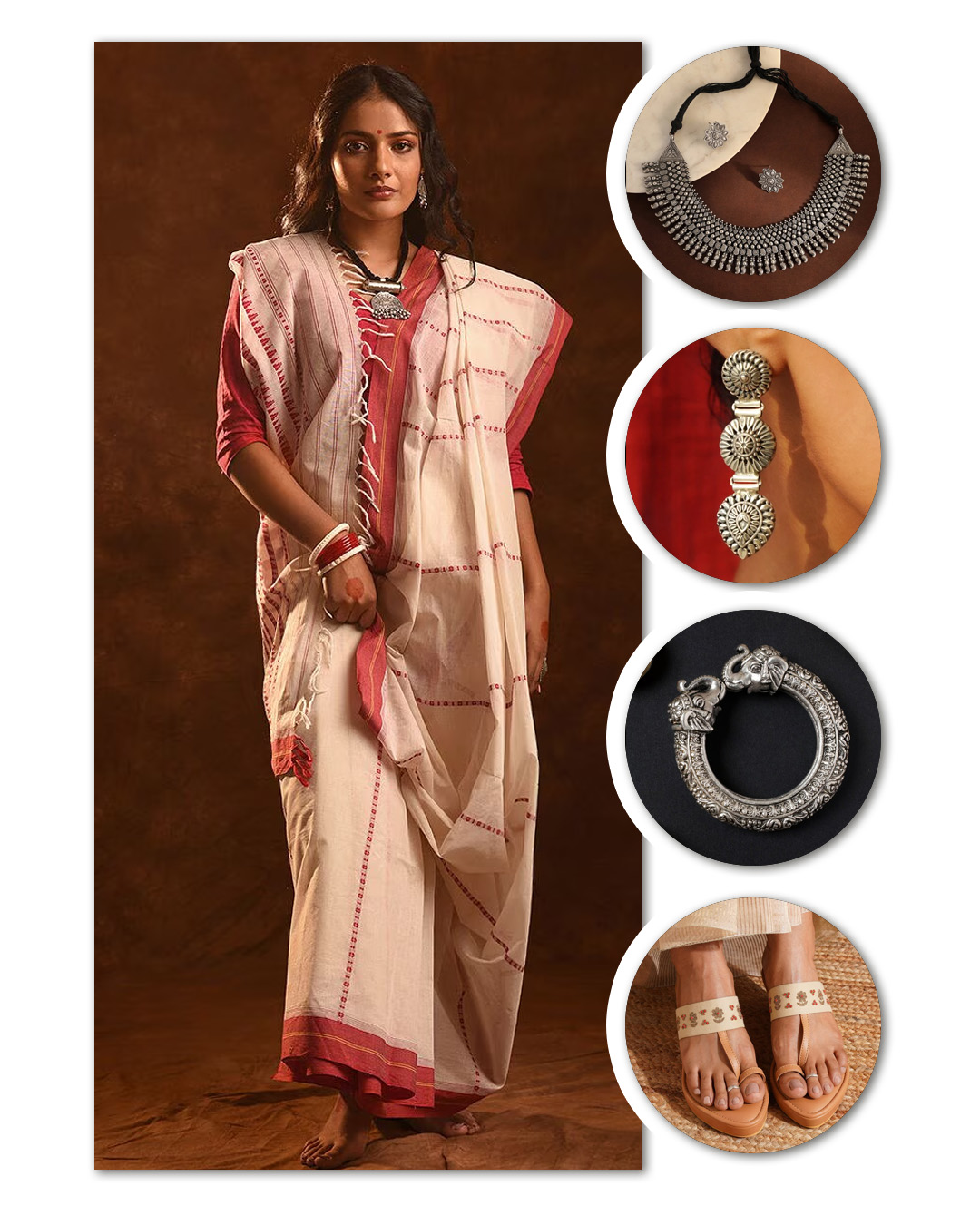
If you decide to wear a saree, then keep it traditional choose one with motifs of flowers and leaves with a geometric connotation. Pair it with a contrasting blouse to make the motifs stand out. Wear statement tribal & hand-embroidered heels with it, to complete the look.
Day 9: Bagru: The Culmination of Roots & Fire
The final day of Navaratri is dedicated to worshipping Siddhidatri. She is the bestower of Siddhis and spiritual wisdom. For this final day, you can choose to adorn Bagru prints. Made from earthy elemental ingredients, it is a gentle reminder of our relation to earth and divinity. The natural dyes, hand-carved wooden blocks, bring us back to our roots.
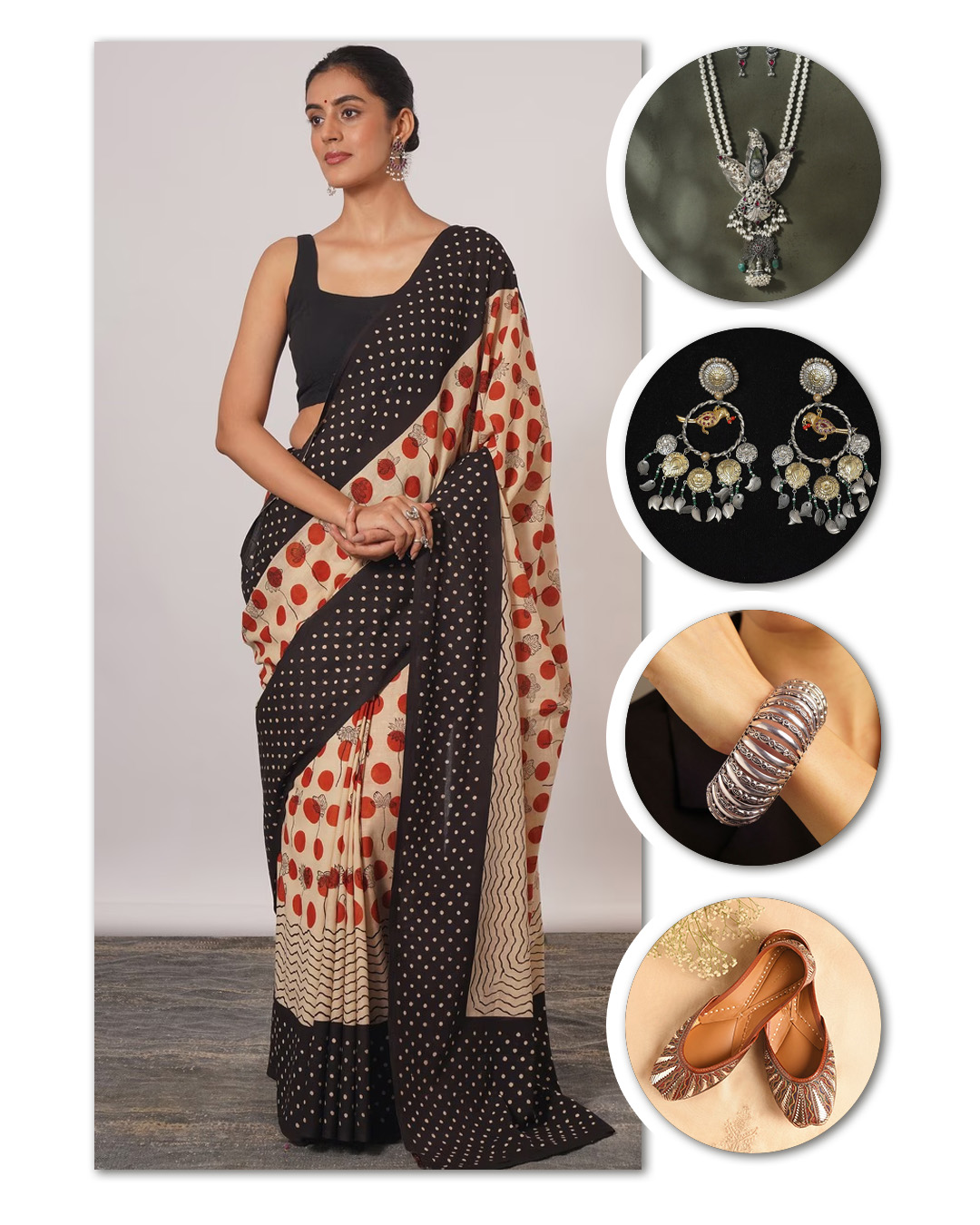
Opt for a Bagru-printed ensemble, whether it’s a saree, kurta set, women’s top, or dress. Keep your jewelry light with earthy tones, such as rust, reds, and browns. You can also try rustic tribal silver jewelry and finish it off with simple, elegant jutti and a handbag.
Weaving Myth into Devotion & Meaning
Navaratri is less about attire and more about transformation. When you choose to wear a Paithani, Block Print, Jamdani, or Banarasi sari across nine days, you don’t just change your outfits but walk through an inner journey. Each thread, weave, and motif becomes part of the devotion honouring the Goddesses and the craftsmen.
By choosing to adorn yourself with handlooms and handcrafted items, you are not just dressing for the divine – you are preserving the very essence of fine artisanal craftsmanship and craft traditions that have been passed down for generations.
At Jaypore, we celebrate not only the festivals but also the soul of what makes it meaningful. When you choose Jaypore, you are choosing authenticity and a commitment to preserving the slow, mindful craft traditions that festivals like Navaratri embody. Celebrate this Navratri with Jaypore’s timeless, handcrafted collections, thoughtfully curated with contemporary silhouettes for the woman of today.


 Storytellers of Wonder
Leave a comment