
Long before machines hummed and factories filled the skyline, there was a land where beauty was shaped not by force, but by fingers patient, steady, and devoted. This land was Cuttack, in present-day Odisha, a place cradled by rivers and known to poets as the “Silver City.”
But the story of Tarakashi, the delicate art of silver filigree, doesn’t begin in Cuttack.
It begins much earlier centuries ago along bustling ancient trade routes.
Table Of Content
History
Born in the heart of Mughal-era India, where artistry and opulence walked hand in hand. The term “Tarakashi” refers to an intricate metal inlay work, where thin threads of silver, gold, or brass are meticulously hammered into brass, copper, or bronze surfaces, creating patterns that shimmer with elegance.

Tarakashi was not just decoration, it was a statement of status, refinement, and artistic taste, a way to turn everyday objects into heirlooms. The craft found its home in Bengal, particularly in Murshidabad, where artisans perfected the art over generations. Each swirl, motif, and floral pattern carries echoes of history, blending Mughal geometric precision with the delicate rhythms of local folk art.
Over time, it became more than courtly luxury, it seeped into households, festivals, and rituals, adorning everything from jewelry boxes to temple lamps, reminding people that art can live in the smallest details of life.
Tarakashi today continues to celebrate this legacy, connecting us to centuries of skill, patience, and culture. Every etched curve is a dialogue between the past and present, a tiny shimmer of history crafted to catch the eye and the imagination.
Process
Getting the Metal Ready: The metal is polished until it is smooth and spotless, just like preparing a clean canvas before painting. Every mark matters because even the smallest flaw will show once the shiny threads go in.
Drawing the Design: Soft lines of flowers, vines or patterns are lightly drawn onto the metal. These marks act like a guide, showing exactly where the silver or gold threads will rest.

Making the Fine Threads: Silver or gold is beaten into very thin wires, almost like bright little strands of light. They are delicate and precious, so the artisan must work slowly and carefully.
Setting the Threads In: This is where the magic truly starts. Using simple tools, the artisan gently taps each thin thread into the drawn grooves, letting it settle perfectly. Bit by bit, the plain metal begins to glow with beautiful patterns.
Bringing Out the Shine: Once all the threads are in place, the piece is polished again. The mix of metals shines softly, and the design sparkles as it catches the light.
The Finished Story: The piece is now complete, carrying the artisan’s patience and skill within it. Whether it becomes a box, tray or keepsake, each creation shares a quiet story of tradition and craftsmanship passed down over generations.
Tarakashi Jewelry
A long way from its traditional roots, Tarakashi is slipping effortlessly into the world of modern festive style. What once adorned royal boxes and temple décor now shines in earrings, pendants, bracelets and statement rings that feel fresh, elegant and full of character.
Today’s designers blend the old-world charm of fine metal inlay with clean silhouettes, playful shapes and lightweight forms that fit beautifully into contemporary wardrobes. Think delicate filigree earrings that shimmer softly as you move, minimal pendants with tiny inlaid motifs, or bold cuffs where traditional patterns meet modern geometry.
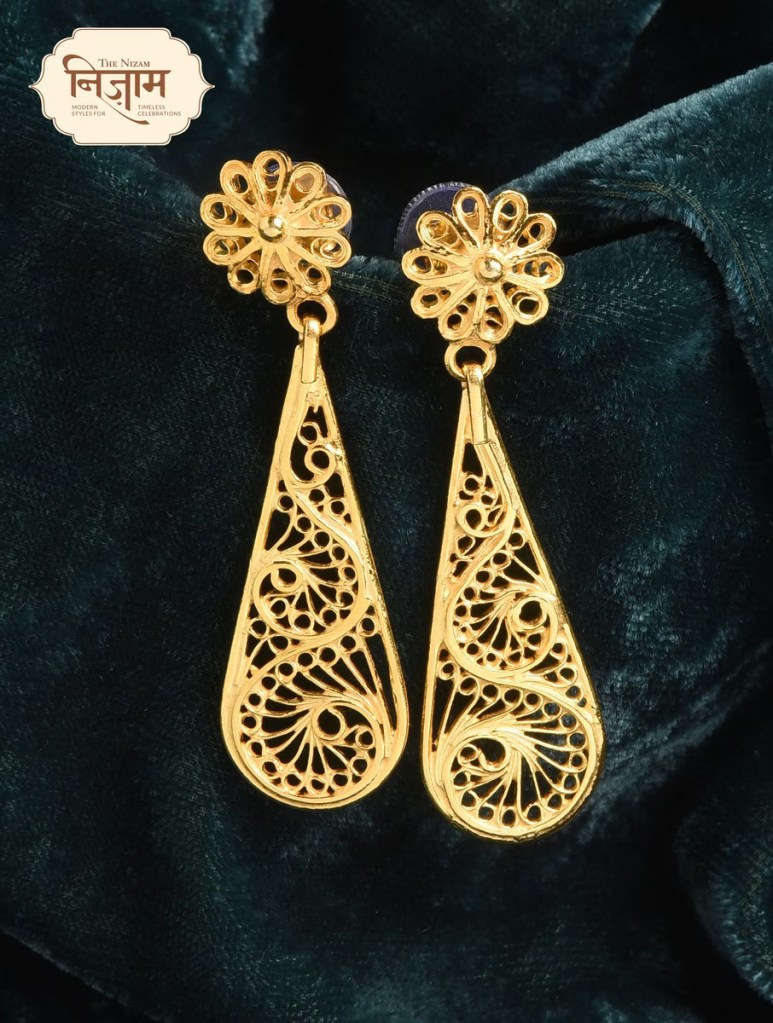
These pieces instantly lift festive looks, adding a touch of sparkle without overpowering your outfit. Whether paired with a flowing saree, a modern kurta set or an Indo-western ensemble, Tarakashi jewelry brings a quiet kind of glamour, rich in heritage yet perfect for today’s celebrations.
Festive dressing becomes even more special when your jewelry tells a story, and Tarakashi does exactly that: a timeless craft made ready for the moments you want to shine.
Tarakashi Serveware
Tarakashi transforms into trays, bowls and platters that shimmer with delicate inlay work and centuries of craft. Place them on a festive table and they instantly lift the mood, making sweets look sweeter and gatherings feel a little more special. Each piece carries the charm of heritage but fits beautifully into modern homes, adding a touch of elegance without ever trying too hard.
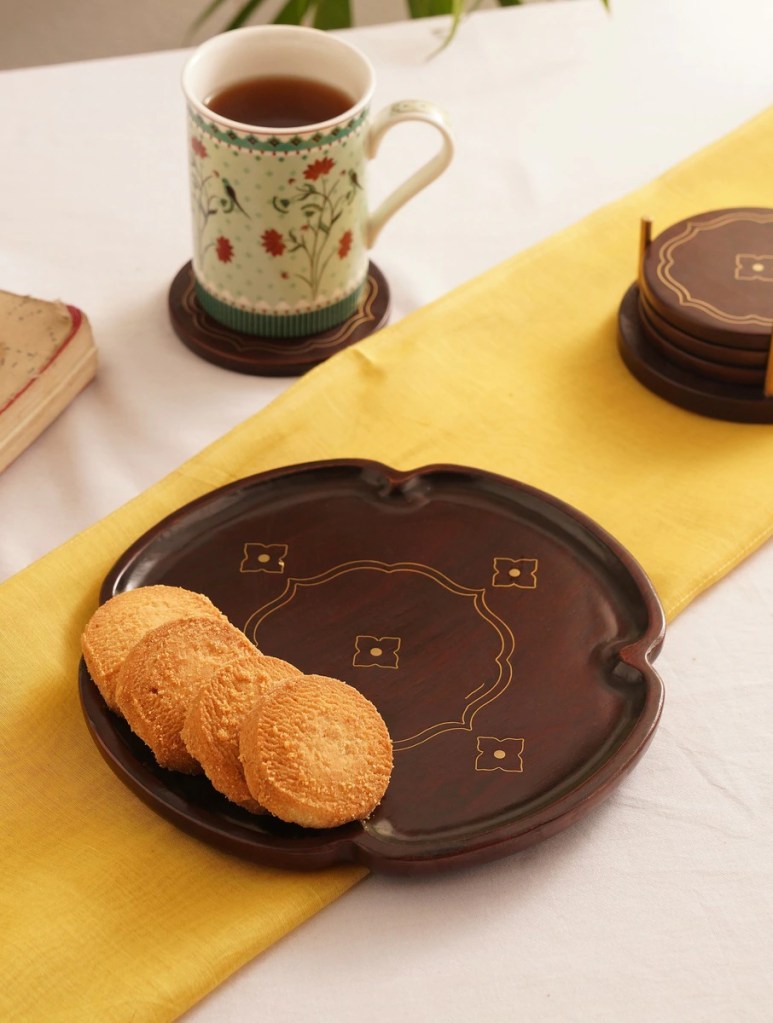
When it comes to gifting, it feels thoughtful and memorable. It is the kind of gift that people actually keep, use and admire long after the festivities fade. Every swirl of silver and gold tells a story, making the gesture feel personal and full of meaning. Whether you are hosting or gifting, Tarakashi adds that extra sparkle which turns ordinary moments into celebrations worth remembering.
Tarakashi in Weddings and Festivities
In old times, Tarakashi boxes were treasured wedding gifts, almost like the vintage version of today’s luxury keepsake trunks. Families treated them like mini treasure chests, passing them down with stories attached.
Today, Tarakashi has slipped smoothly into modern celebrations. A Tarakashi tray can make even simple mithai look grand, and a jewelry box with that delicate shimmer feels like it was made for the camera. It is the perfect blend of old charm and new energy.
In weddings, where every touch counts, Tarakashi adds that quiet elegance guests notice without knowing they did. It has sparkle, it has heritage and it brings just the right amount of festive flair.
At Jaypore, we cherish the delicate balance where tradition and modernity bringing forward Tarakashi in forms that honor its heritage while making it meaningful for modern lives. When you hold a piece of Tarakashi you are embracing history, celebrating craftsmanship, and sharing a story that connects the past with the present. In every shimmer and inlay, tradition sparkles anew, inviting you to treasure it, live with it, and pass it on.



 Storytellers of Wonder
Leave a comment