
“Between sky and salt, Kutch learned to paint life with its own colors.”
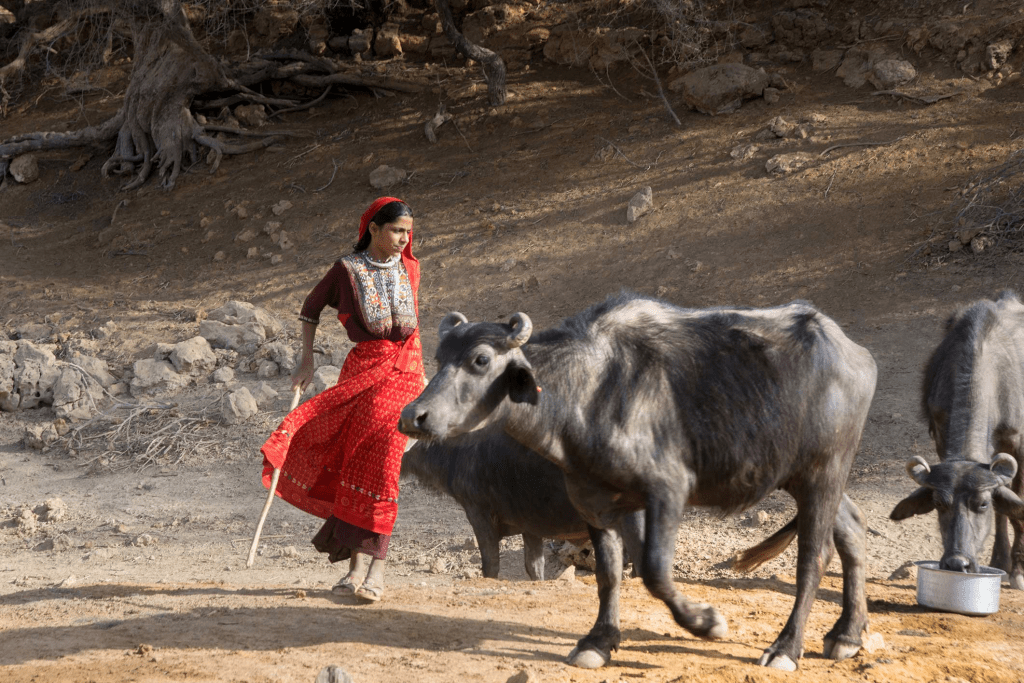
In the Rann of Kutch, one of the largest salt deserts in the world, the landscape is defined by stark whites, shifting sands, and harsh climatic extremes. Life here demands resilience, and for the Jat community, creativity became a way to brighten and preserve daily life. Using vibrant threads, mirrors, and intricate stitching, they transformed plain fabrics into Jat embroidery, echoing the contrast and vibrancy of their surroundings. Just as the desert’s patterns are formed by wind and salt, each embroidered motif reflects careful craftsmanship, resourcefulness, and a deep connection to the land.
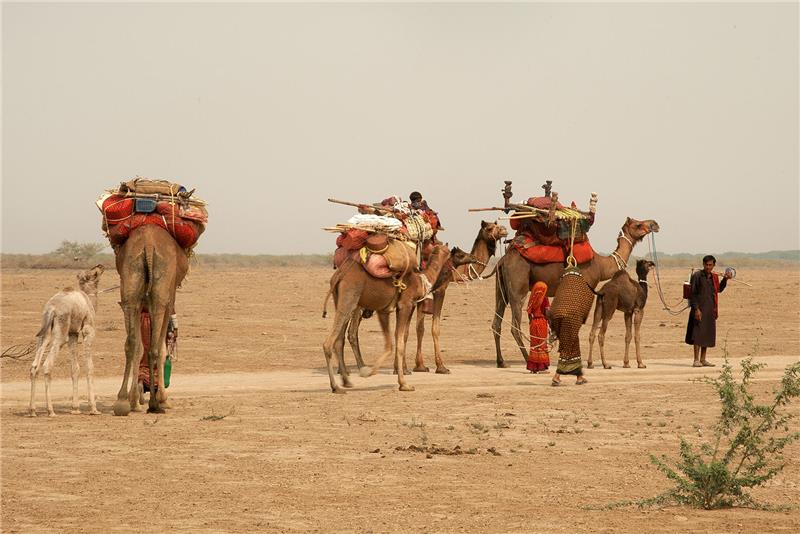
Table Of Content
- The Origin: Rooted in Community and Identity
- The Language of Motifs and Colors
- Technique and Craftsmanship
- From Tradition to Modernity
- Preservation Through Practice
The Origin: Rooted in Community and Identity
Jat embroidery is believed to have taken shape around the 16th century, when pastoral Jat communities settled across Kutch in Gujarat. Their semi nomadic lifestyle influenced not only what they created but how they created it. Textiles became essential markers of identity, used in garments, dowries, and ceremonial occasions.
Distinct Jat Sub Groups and Their Embroidery Styles
- Garasia Jats: Known for their bold and highly structured geometric patterns, Garasia Jat embroidery often features dense compositions with strong symmetry. The use of contrasting colours like red, black, and yellow creates a striking visual impact, making their textiles instantly recognisable.
- Fakirani Jats: Fakirani Jat embroidery is more restrained and minimal in comparison. Their work typically uses finer stitches and subtler colour palettes, with a focus on precision and delicate detailing rather than dense pattern filling.
- Dhaneta Jats: This group is associated with intricate stitch work and balanced layouts. Their embroidery often combines small repeating motifs with careful spacing, resulting in designs that feel both detailed and harmonious.
- Halepotra Jats: Halepotra Jats favour vibrant colours and slightly larger motifs. Their embroidery tends to be more expressive, with patterns that appear less rigid and more fluid, reflecting a distinctive creative style within the tradition.
The Language of Motifs and Colors
What makes Jat embroidery stand out is its fearless use of color and pattern. Bright reds, deep blues, sunny yellows, and stark blacks are combined in striking contrasts that immediately catch the eye. These colors are not chosen randomly. Red often represents celebration and life, while darker shades help anchor the design.
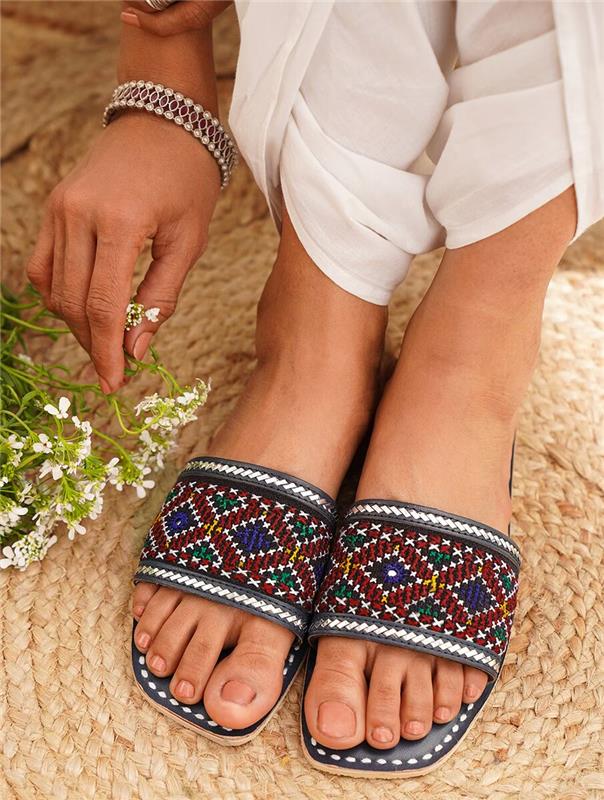
Motifs are largely geometric, with diamonds, triangles, and grids forming intricate patterns. Many artisans create these designs without sketches, relying entirely on memory and experience. This intuitive approach results in pieces that feel both structured and organic. Small mirrors are also sometimes added, reflecting light and adding a subtle shimmer while carrying cultural beliefs of protection.
Technique and Craftsmanship
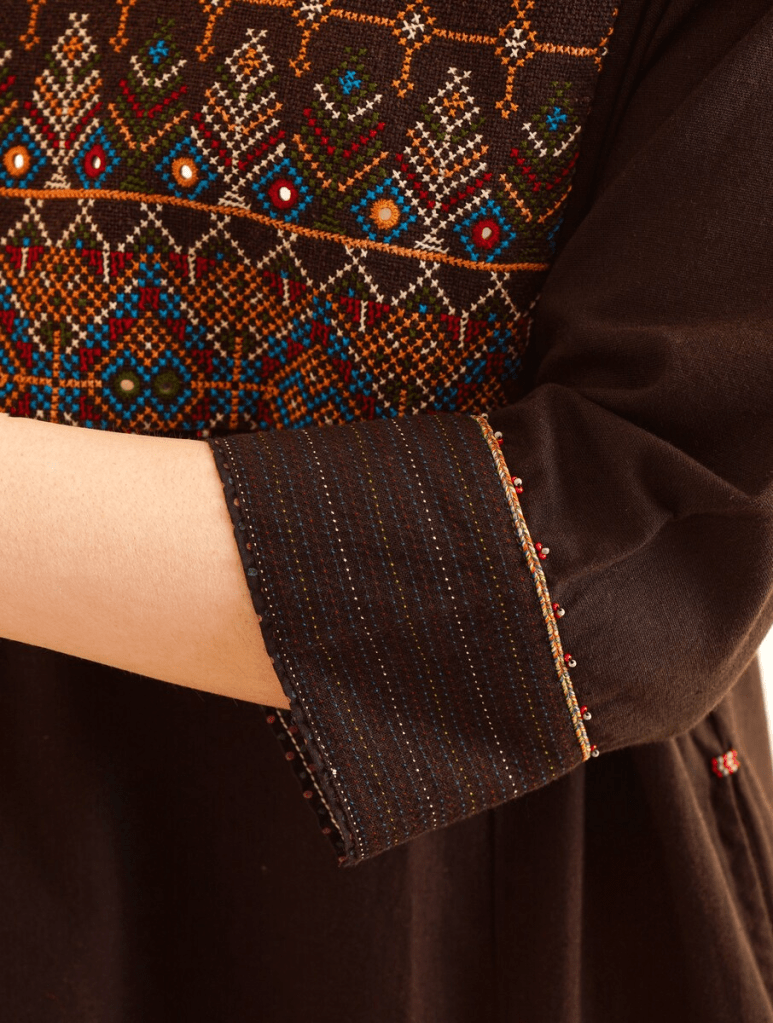
The process of Jat embroidery is methodical, skill driven, and deeply rooted in tradition. It combines precision with instinct, resulting in textiles that are both structured and expressive. Here is a closer look at how the craft comes together:
- Selecting the base textile: Artisans begin with a durable handwoven cotton fabric, often locally sourced. The choice of base is important, as it needs to support dense stitching and maintain tension during the embroidery process.
- Preparing threads and colour palette: Cotton or silk threads are chosen in bold, contrasting shades such as red, blue, yellow, and black. These colours are guided by community traditions rather than predesigned palettes.
- Marking without outlines: The layout is mapped mentally, with artisans using their understanding of proportion and spacing to begin directly on the fabric.
- Counted thread technique: A defining aspect of the craft is the use of counted thread embroidery, where stitches are placed by counting the warp and weft threads of the fabric. This ensures symmetry and consistency in geometric patterns.
- Executing signature stitches: The embroidery primarily uses variations of the satin stitch and double running stitch, creating dense, filled surfaces. In some cases, small mirrors are incorporated using the abhla bharat technique, secured with precise stitching.
- Maintaining symmetry and structure: Geometric motifs such as diamonds and grids are built incrementally. Artisans constantly adjust tension and alignment to maintain balance across the design without the aid of measuring tools.
- Time intensive layering: The embroidery develops in layers, with sections being completed over extended periods. Depending on complexity, a single textile can take several weeks or months to finish.
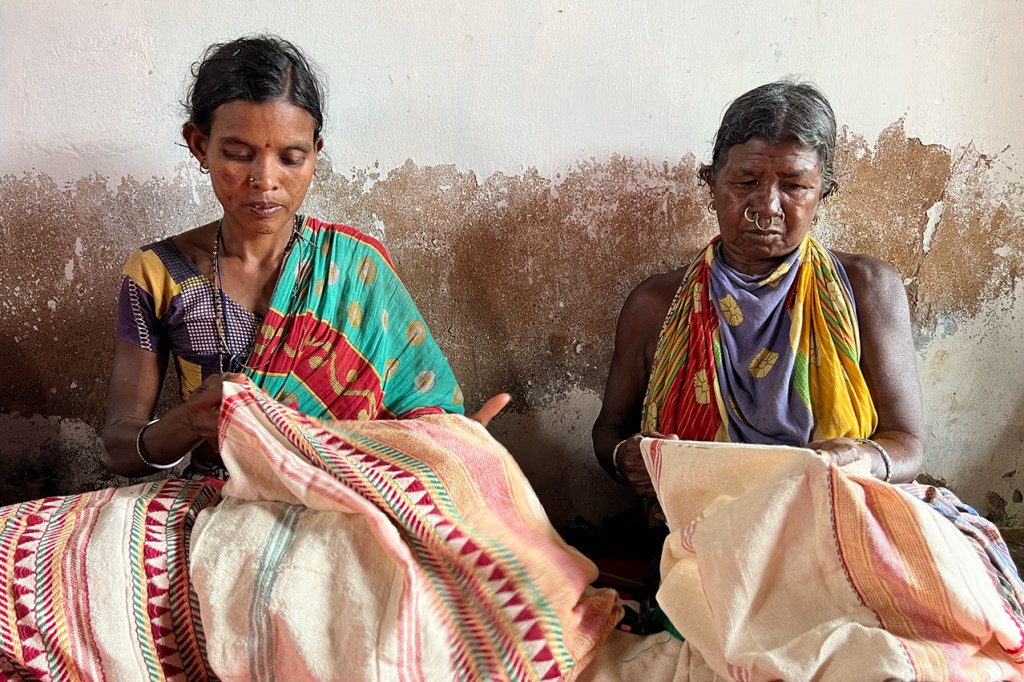
- Skill transmission through practice: The craft is passed down within families, with knowledge shared through demonstration and repetition. There are no written patterns, making experiential learning central to mastering the technique.
Each finished piece reflects not only technical precision but also the continuity of a craft that has been refined and preserved across generations
From Tradition to Modernity
Today, Jat embroidery is finding new relevance beyond its traditional roots. Designers are incorporating these patterns into contemporary fashion, accessories, and home décor. Jackets, bags, cushion covers, and wall pieces now carry this heritage into modern spaces.
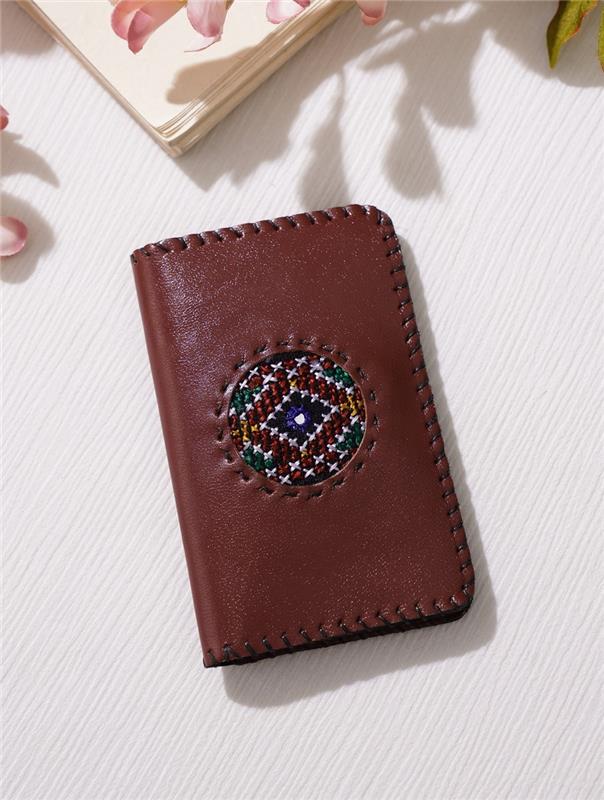
What makes these adaptations special is that they retain the essence of the original craft. Even when used in modern designs, the embroidery continues to reflect the hand made quality and cultural depth that define it.
Preservation Through Practice
Sustaining Jat embroidery requires more than appreciation. It depends on conscious support for artisans and ethical production practices. Fair wages, direct collaborations, and respect for traditional methods are essential to keeping the craft alive.
At the same time, innovation plays a crucial role. By adapting designs thoughtfully for contemporary audiences, artisans can continue their practice without losing authenticity. When people choose handmade over mass produced, they contribute to preserving not just a craft but an entire cultural legacy.
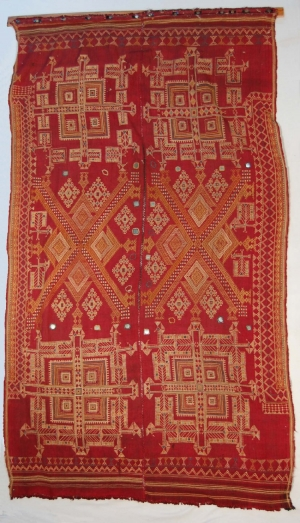
Jat folk embroidery remains a vivid reminder that even in the harshest landscapes, creativity can thrive. Through color, craftsmanship, and community, it continues to tell stories that deserve to be seen, valued, and carried forward.
By bringing Jat embroidery to more homes, Jaypore preserves not just patterns, but the hands and lives behind them. Each textile becomes a bridge from the salt flats of Kutch to modern homes, carrying color, skill, and cultural memory with it.


 Storytellers of Wonder
Leave a comment