
A weaver sits on his loom patiently weaving ‘Khesh’ – a weaving technique that uses new yarn in the warp and strips slashed off old sarees in the weft. The weaver chooses these strips randomly off a pile sitting next to him; the result is a stunning piece of fabric where the colors of the old sarees blend in with new yarn to produce unexpected, eye-pleasing combinations. The place is Shantiniketan’s vocational training center – Shilpa Sadan and the time is somewhere in the early 1920s.


A group of many-aged women sit together hemming discarded cloth scraps and old sarees together with a simple running stitch. They decorate it with beautiful motifs of flowers, animals and birds, and geometric patterns in simple embroidery. The new amalgamated fabric that emerges out of the old, rejected scraps is called ‘Kantha’ and the women have been taught this art by their mothers who got it from theirs and this tradition has been going on since at least the mid 1500s. Gudri – a patchwork quilting technique utilizes the same concept as Kantha and produces eye-catching quilts in a burst of colors.
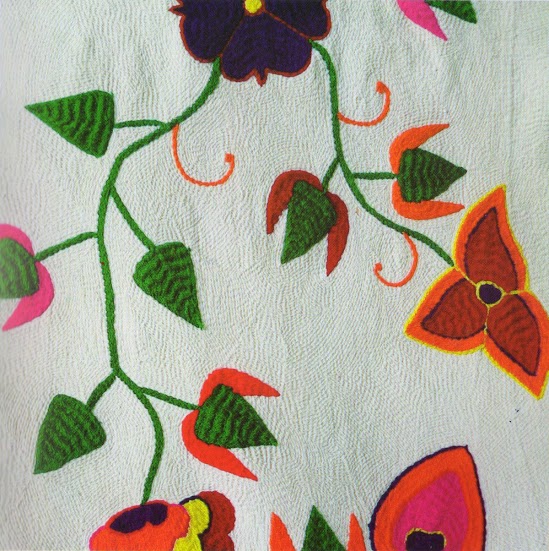
Khesh, Kantha and Gudri are weaving traditions born ages ago, of a need to minimize expenditure on raw materials to make fabrics, reduce waste, satisfy a creative need and build the community, the last of which was a pleasant incidental outcome. Stuff that is considered trend-setting, clever and eco-responsible in the global textile and fashion now and even has a name – Upcycling.
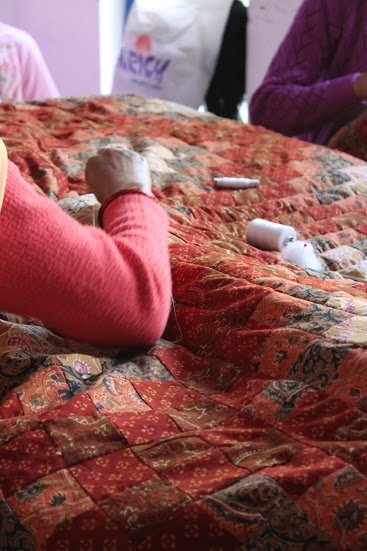
Upcycling is not merely re-using or re-purposing old objects or fabrics that are at the end of their lifecycle. To upcycle is to create something new, of better value and quality. In developing economies like India, the impact of upcycling – besides being a valuable step in the waste management chain is on the creation of additional employment opportunities. Usha Prajapati, a reputed textile designer and founder of Samoolam Collective says, “At samoolam 5 years ago, our first project was recycling waste – left over fabric scraps from tailors & textile factories and used sarees to create textile jewelry. As part of livelihood program, we did face challenges while training women to re-use fabrics but over the years our community mobilization and awareness programs have yielded fruit and we’ve managed to overcome reluctance to work with old fabric to create sustainable livlihoods for these women.”
Upcycling is also finding expression in the creative pursuits of other textile designers, apparel designers, artists and craftsmen in the current landscape. Fabric waste is being used to make sarees, jewelry, home textiles and even embellishments. Aditi Prakash of Pure Ghee Bags, that uses upcycled tassels made from fabric waste, tells us, “We are committed to creating sustainable livelihoods for the women and youth in the area where we work. To this end, we also run project “Crazy Katran” aimed at upcycling fabric waste generated in our studio. The waste is sorted according to colour, shredded and then stitched onto a sturdy base fabric. The fabric surface thus created is used to further create bags which constitute the “Crazy Katran” range. We also make handmade tassels and silk ‘gajras’ – a hair accessory – out of left over fabric pieces. Our aim is to generate additional employment while reducing waste as well as creating something fun and quirky that adds value to our product.”
Globally too, upcycling is cementing its position as more than just a passing trend in the textile and apparel segment. Designers are working to eliminate their ‘fabric liability’ and celebrating the slow – fashion ideology to create attention-grabbing outfits and finding an increasingly faithful audience for them. In India, upcycling has always been part of design for even the most mundane, everyday objects and is deeply ingrained in our social and cultural fabric. Gradually, it has leapt out of the realm of subsistence to art that meets the needs of the society. With the raw charm of found objects and a tangible list of benefits for the planet, upcycling is here to stay.
-Images via Alcha of Santiniketan, Samoolam & Jaypore.
This article was first published in POOL Magazine.


 Storytellers of Wonder
Leave a comment