
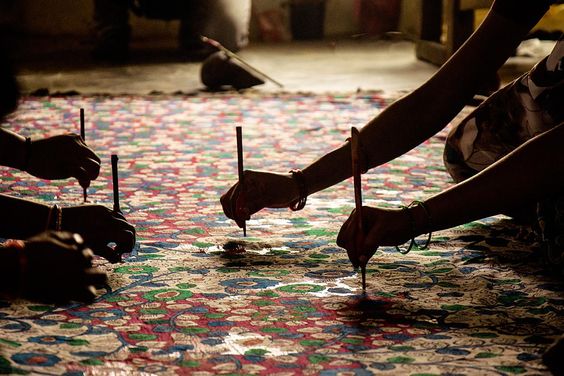
It was a sun-drenched afternoon in Andhra Pradesh, where the heat danced off the pavement and the air was thick with the scent of blooming jasmine. In a quaint village, an artisan hunched over a piece of fabric, his hands deftly guiding a bamboo stick dipped in natural dye. Each stroke was deliberate, each line a whisper from centuries past. This is the world of Kalamkari, an ancient 3000-year-old Indian art form that weaves history, culture & beauty into every thread.
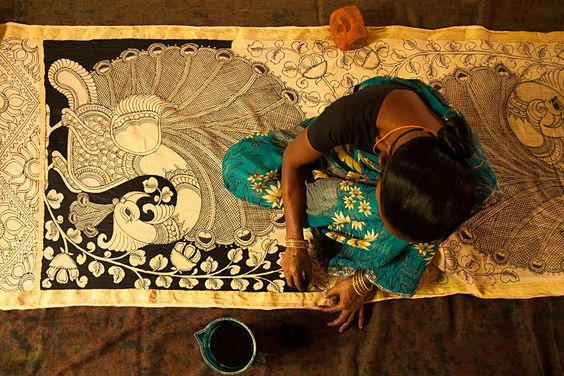
Kalamkari is not just a craft; it’s a legacy that has been handed down through generations. It’s the art of storytelling through fabric, where each piece narrates tales of gods, nature, and the human experience. This timeless technique, which combines freehand drawing and block printing, transforms plain cloth into a vibrant canvas of stories. Natural dyes, derived from plants & minerals, add rich hues to the fabric, ensuring each piece is not only a visual delight but also an eco-friendly masterpiece.
Did you know? Historically, Kalamkari’s natural dyes were believed to have medicinal properties
The Origins: A Tale as Old as Time
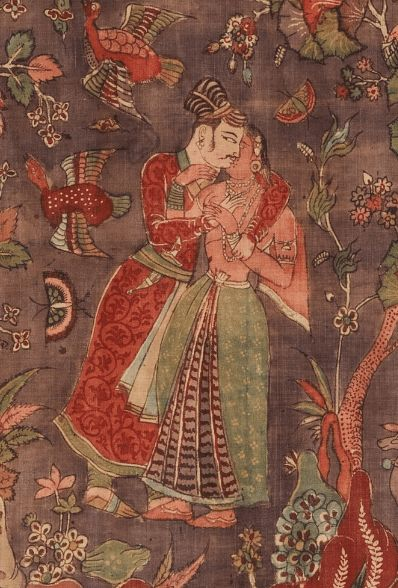
Kalamkari derives its name from the Persian words ‘kalam’ meaning pen and ‘kari’ meaning craft. This intricate art form originated in the regions of Andhra Pradesh and Telangana in India, with roots tracing back over 3,000 years. Originally, Kalamkari was used to tell stories of gods and goddesses, depicted on temple walls & hangings.
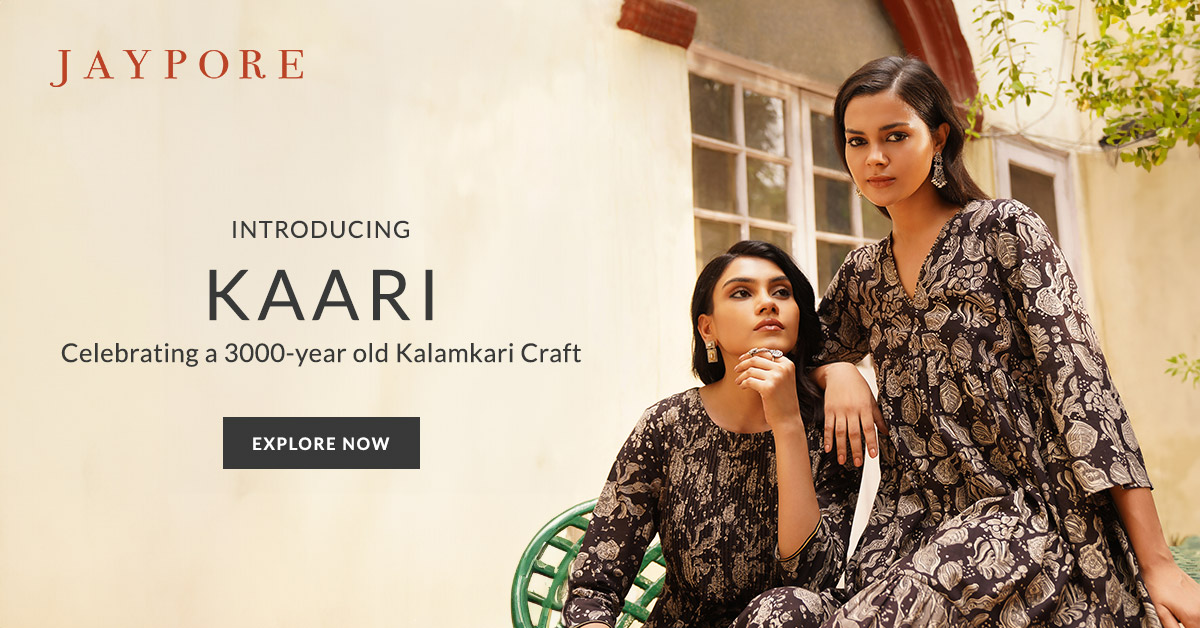
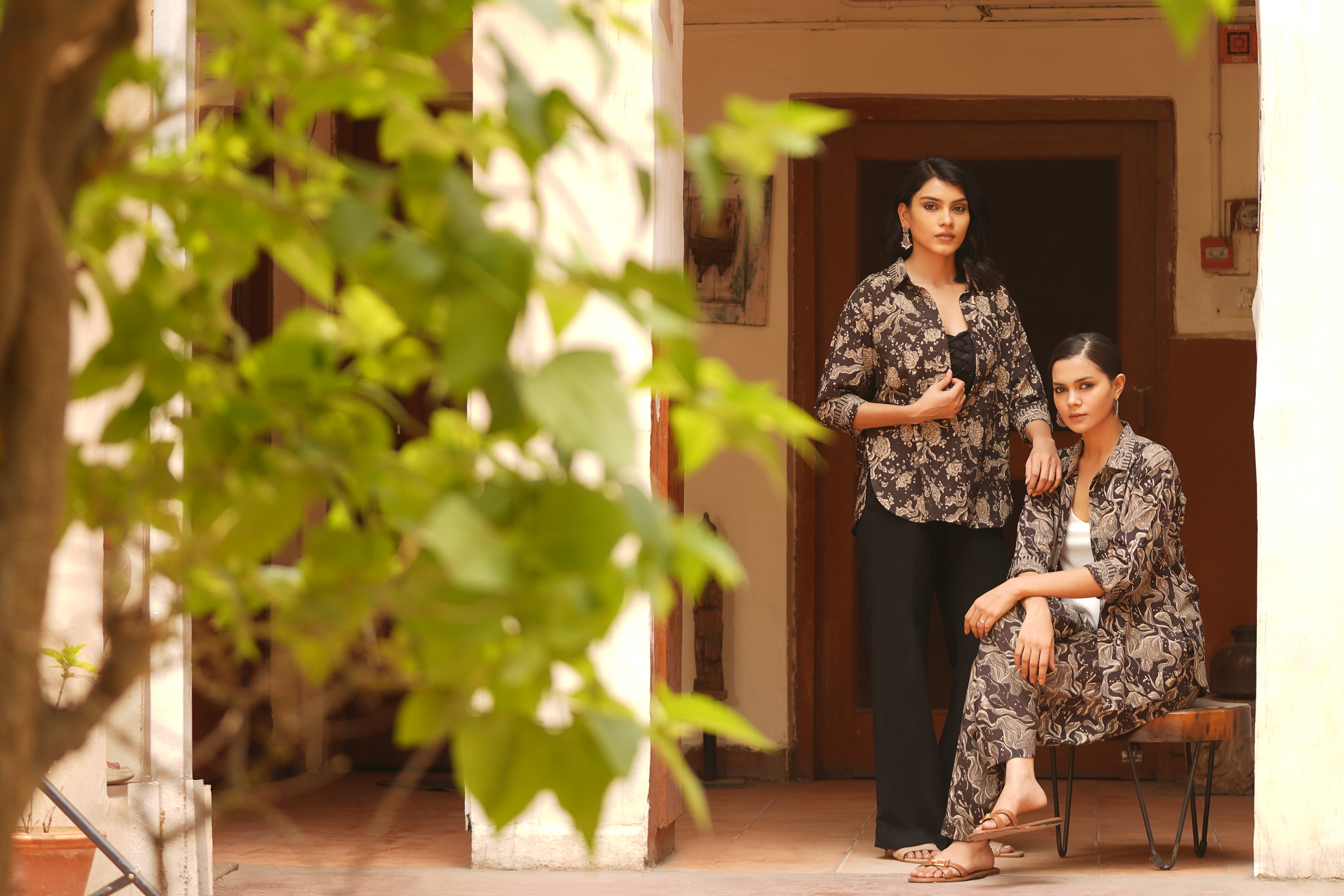
Introducing our newest collection Kaari, a celebration of 3000 year old Kalamkari craft & hand block-printing using natural dyes. Explore sartorial separates, dress, shirt & more in deep charcoal & black hues, fusing ancient tradition with contemporary designs.
A Walk-Through History
During the Mughal era, Kalamkari flourished under the royal patronage. The Mughals, known for their love of art and culture, saw the potential in this intricate craft and supported its development. They introduced new motifs, including elaborate floral patterns and Persian-inspired designs, which added a layer of sophistication to the art.
Kalamkari’s appeal was not limited to the East. European traders, particularly the Portuguese and the Dutch, also found themselves enchanted by these exquisite textiles. They began exporting Kalamkari fabrics to Europe, where they became highly fashionable. These international exchanges helped to elevate the status of Kalamkari, turning it into a global phenomenon.
Popularity: From Temples to Trendsetters
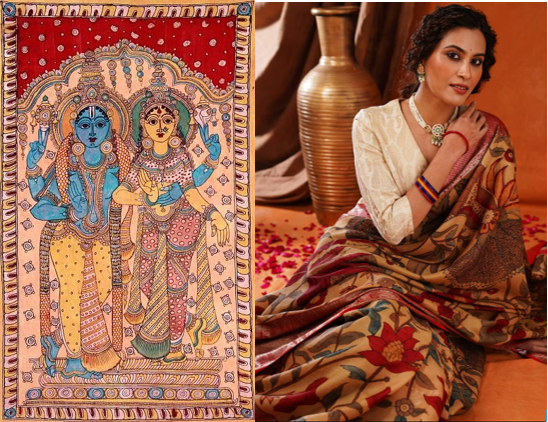
From its sacred origins in temples, Kalamkari made its way into the hearts of art lovers worldwide. Today, it’s not just about religious depictions; the themes have expanded to include flora, fauna, and contemporary motifs. Fashion designers have embraced Kalamkari, bringing it to the global stage in the form of sarees, dresses, and home decor items.
The Intricate Process in 23-Step
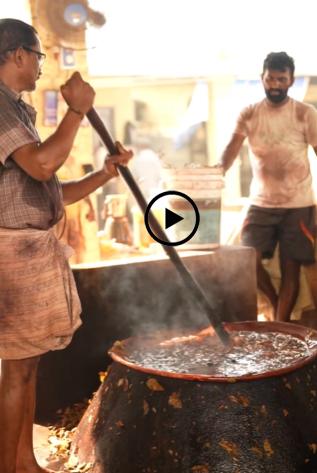
Creating a piece of Kalamkari is no simple task. It’s a labor-intensive process that requires a perfect blend of skill, patience, and creativity. This art includes a precise resist technique, a meticulous 23-step process that encompasses cloth treatment, sketching, dyeing, printing, numerous washing procedures, and even gold or silver brocade work. Here’s a step-by-step look into how these masterpieces come to life:
- Preparation of Fabric: The process begins with treating the fabric (usually cotton or silk) with a mixture of cow dung and bleach, then allowing it to dry under the sun. This step ensures that the fabric is free from any impurities and ready to absorb dyes.
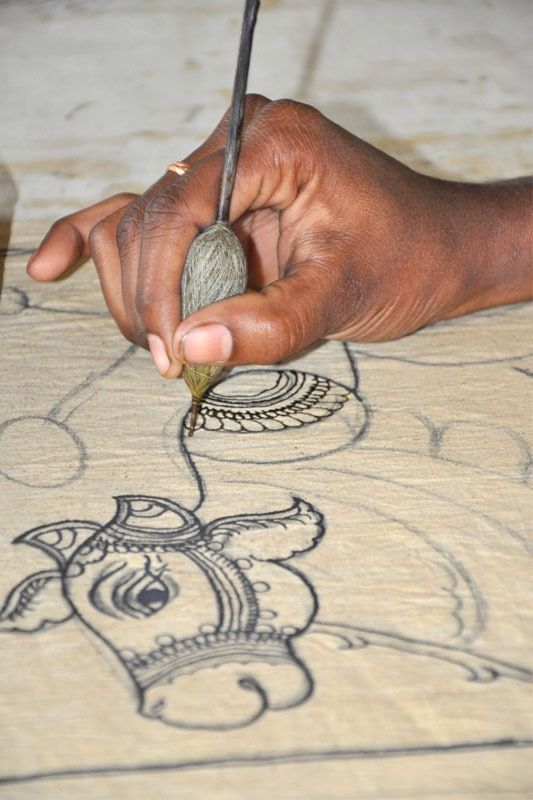
- Drawing the Outline: Using a bamboo or date palm stick, artisans dip the tip in natural dyes and meticulously draw the outlines of the design. Traditionally, the outlines are drawn with black or dark brown ink made from jaggery and iron fillings.
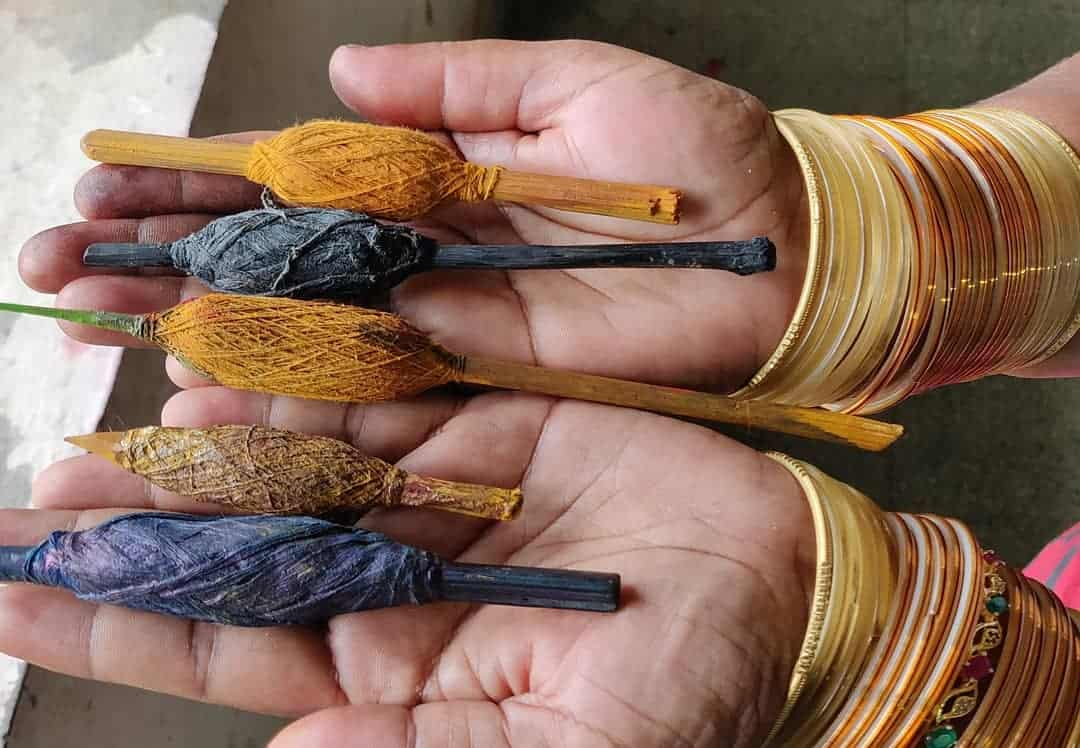
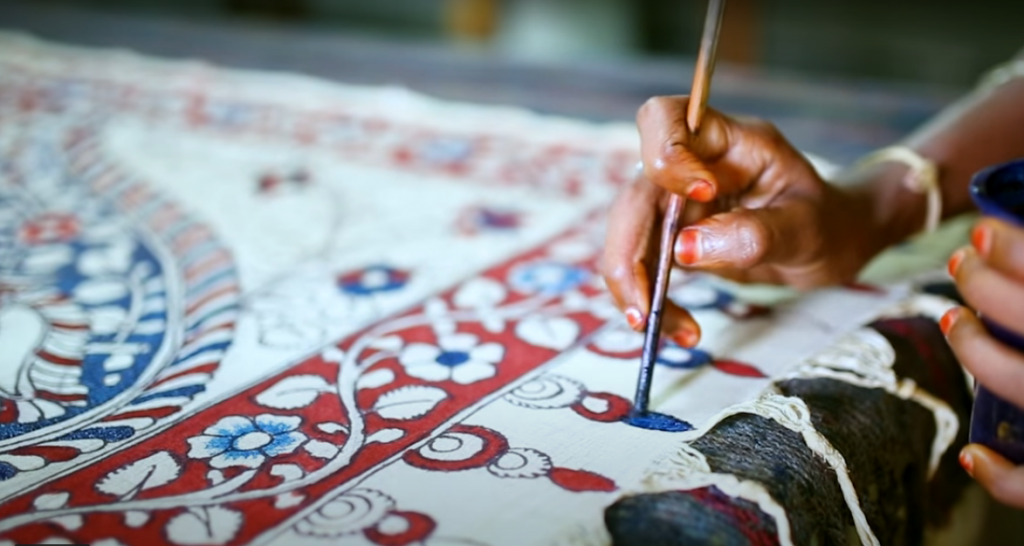
- Filling in Colors: Natural dyes are extracted from plants, roots, and minerals. Each color application is followed by washing and sun-drying the fabric to ensure the colors set perfectly.
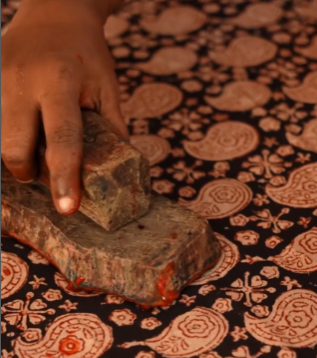
- Final Touches: Once all the colors are applied and dried, the fabric undergoes a final wash and treatment, resulting in a vibrant and durable piece of art.
Challenges: The Struggle Behind the Beauty
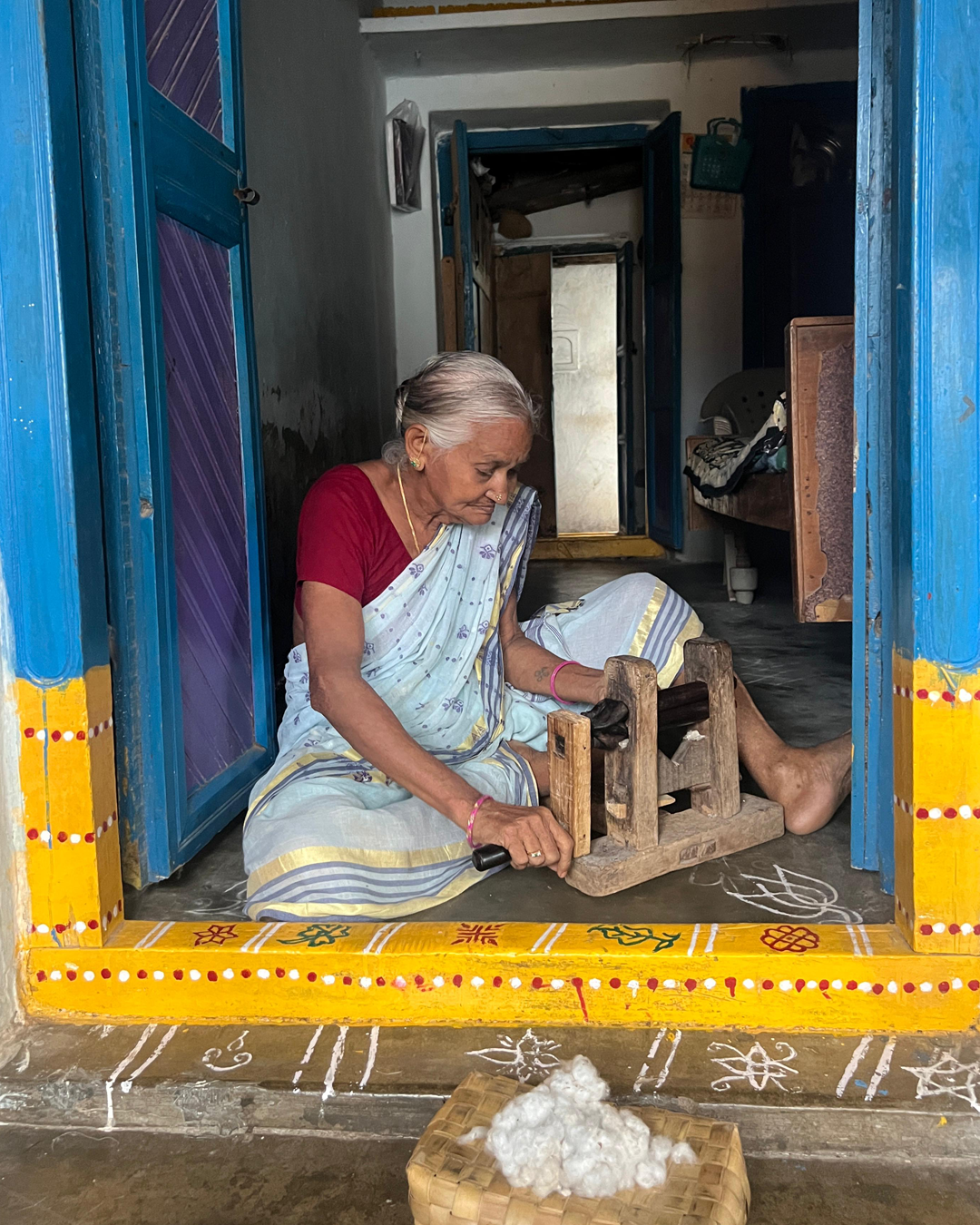
Despite its beauty and cultural significance, Kalamkari artisans face numerous challenges:
- Labor-Intensive Process: The intricate and lengthy process of creating Kalamkari pieces can be physically demanding and time-consuming.

- Market Competition: The influx of machine-made textiles poses a significant threat to traditional hand-made crafts.
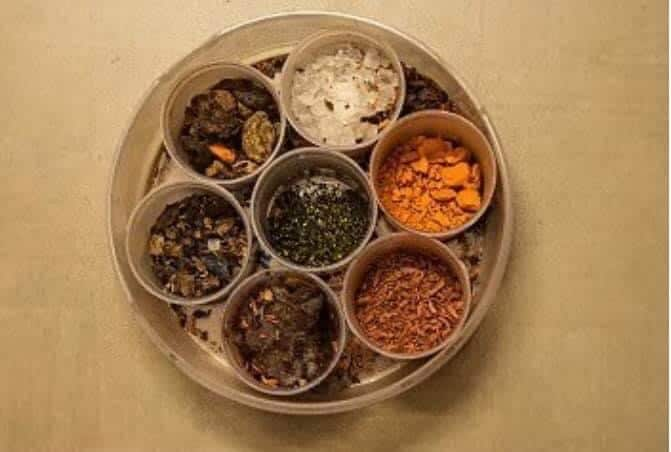
- Sustainability of Natural Dyes: Sourcing and preparing natural dyes is a challenging task, particularly in maintaining consistency and quality.
- Economic Viability: Ensuring fair wages and sustaining the livelihood of artisans is an ongoing struggle, especially in an era of fast fashion.
A Journey Worth Exploring
Kalamkari is more than just a craft; it’s a legacy of art, culture, and tradition. Each piece is a testament to the dedication and skill of the artisans who breathe life into their creations. So, the next time you come across a Kalamkari fabric, take a moment to appreciate the history, effort, and artistry woven into its threads.


 Storytellers of Wonder
Leave a reply to kaamari Cancel reply