
They say the Baghini River was once a woman who waited too long.
In the villages near its banks, grandmothers still tell the story on summer nights when the lantern flame trembles and the neem trees rustle like silk saris. A young bride had crossed forests to meet her husband, a warrior who never returned from battle. She waited through one monsoon, then another. Her tears fed the earth until the gods, moved by such stubborn love, turned her into a river so she would never again have to wait in one place. But the river carried her longing with it. That is why, they say, the Baghini changes moods without warning. In winter it glimmers like a woman remembering her wedding jewels. In the rains it rises restless and full, searching every bend of the forest for the footsteps of the man she loved.
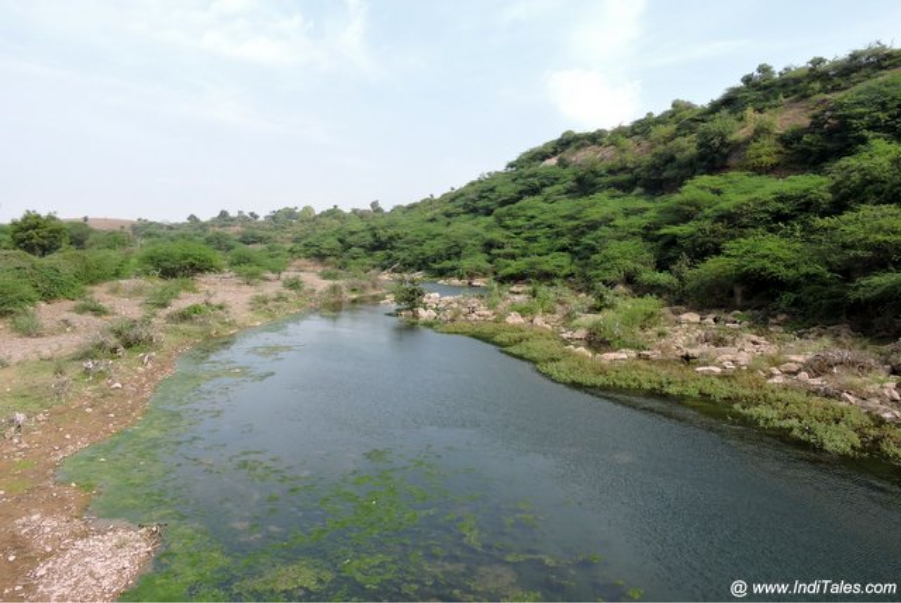
Along these banks, another story slowly took root. The artisans of Bagh began washing their hand carved blocks and dyed fabrics in the river’s mineral rich waters. Over time, the flowing vines, blooming flowers, and dark earthly tones of Bagh Print came to carry something of the river itself. A sense of movement, memory, and longing pressed gently into cloth.Even now, when a length of Bagh print dries under the sun, the elders say the river is still telling her story, one motif at a time.
Table Of Contents
- What is Bagh Print?
- History and Origin
- The Making of Bagh Print: A Step-by-Step Journey
- What Makes Bagh Print Unique?
What is Bagh Print?
A centuries old hand block printing craft from Bagh, Bagh Print is known for its rich reds, deep blacks, and striking geometric and floral motifs. Rooted in the landscapes of Madhya Pradesh, the craft draws inspiration from flowing rivers, Mughal architecture, forest forms, and everyday life around the region.
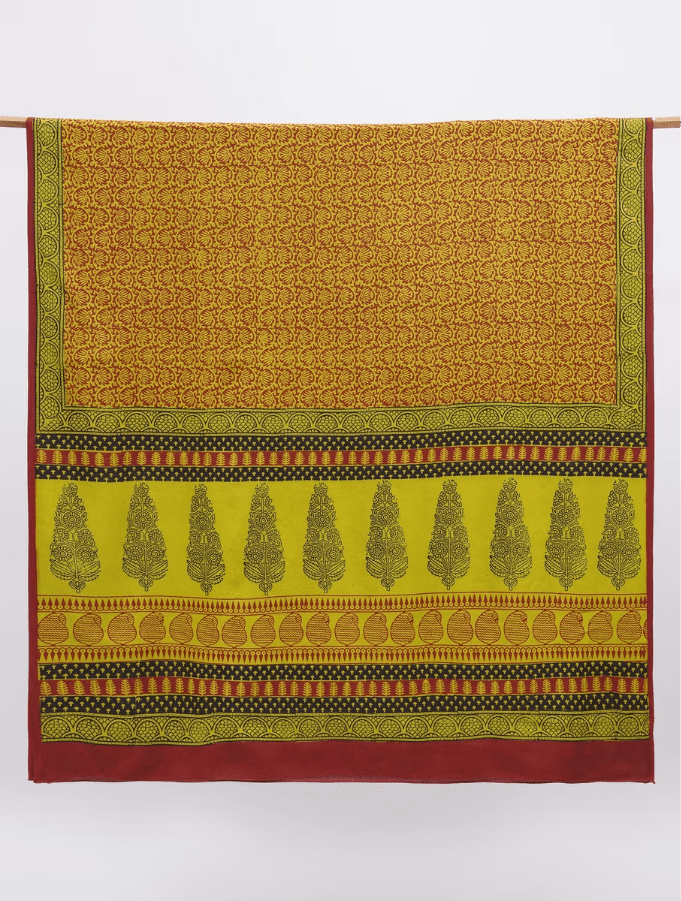
What makes Bagh Print especially distinctive is its earthy depth, where every motif feels both bold and deeply connected to nature. Over generations, artisans have preserved the craft not just as a textile tradition, but as a living expression of memory, rhythm, and cultural identity. Today, Bagh Print continues to evolve across sarees, apparel, and home textiles while staying rooted in its handcrafted origins.
Fun Fact: Many traditional Bagh motifs are named after the objects or spaces they resemble, from jaalis and flowers to architectural arches seen in old forts and havelis around Madhya Pradesh.
History and Origin
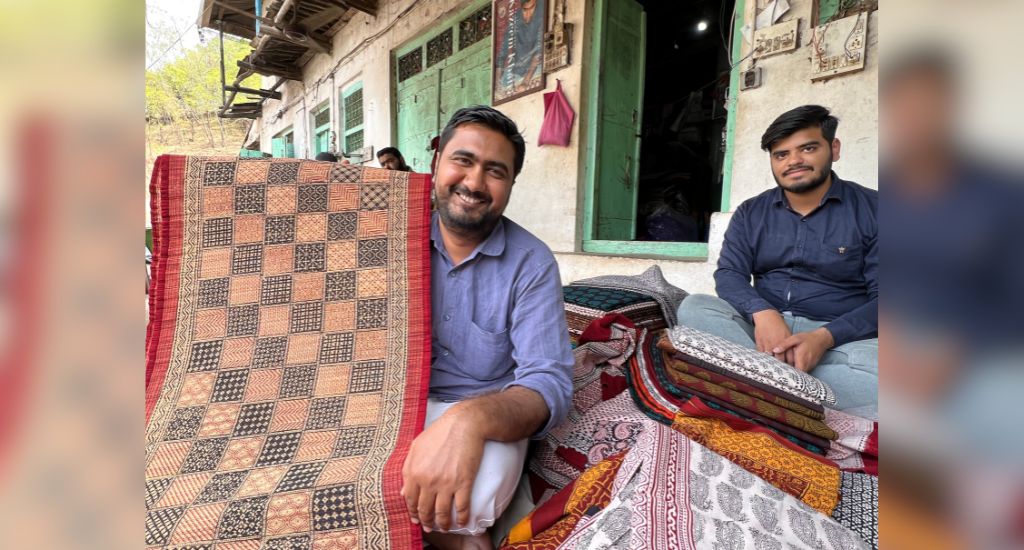
The origins of Bagh Print traces back to 3000 BC, when the Khatri community of printers migrated from regions of present-day Sindh to central India in search of water suited for natural dyeing. They eventually settled in Bagh, a small town whose mineral rich river became essential to the craft’s distinct colours and finish. Over generations, the artisans developed motifs inspired by Mughal architecture, flowing rivers, jalis, and the surrounding forests. What began as a local textile tradition slowly grew into one of India’s most recognised forms of natural hand block printing.
Lesser Known Trivia: The village of Bagh is also home to the ancient Bagh Caves, known for their Buddhist murals and intricate carvings. Many believe the symmetry and flowing forms seen in Bagh Print quietly echo the visual language of these caves.
The Making of Bagh Print: A Step-by-Step Journey
1. Preparing the Fabric: The process of traditional Bagh Print begins with plain cotton or silk fabric. The cloth is thoroughly washed to remove starch, dust, and impurities, helping the natural dyes absorb evenly into the fabric.
2. Treating the Cloth with Natural Ingredients: The fabric is then soaked in a traditional herbal mixture made using rock salt, castor oil, and goat dung. This age old preparation softens the fabric and improves its ability to hold colour during the hand block printing process.
3. Sun Drying the Fabric: After treatment, the fabric is spread out under the sun to dry naturally. This step prepares the cloth for printing and helps create a smooth surface for the handcrafted motifs.
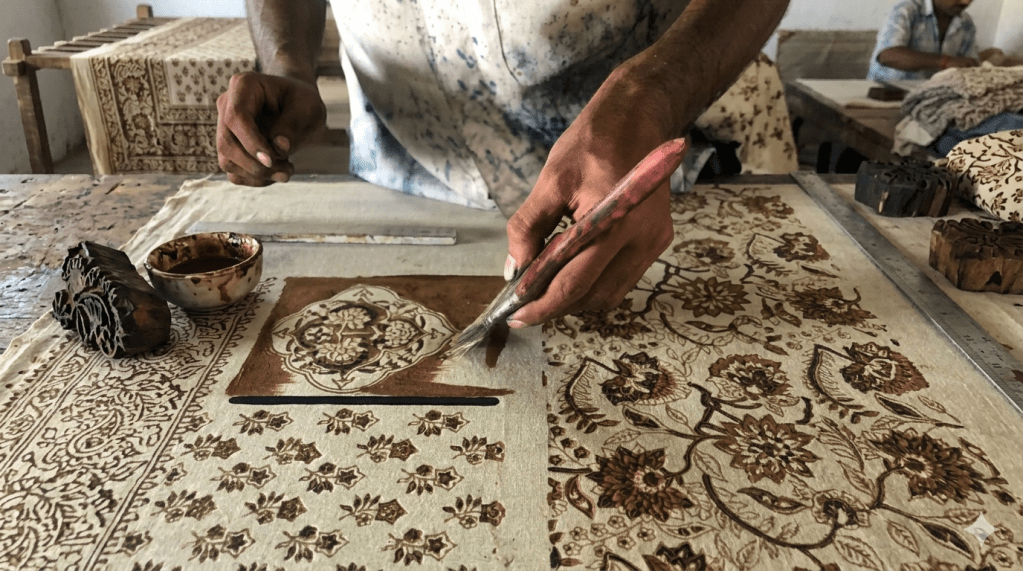
4. Hand Carving the Wooden Blocks: Artisans use finely hand carved wood blocks to create the signature motifs of Bagh Print. Inspired by nature, Mughal architecture, rivers, and floral patterns, these wooden blocks are often preserved and passed down through generations.
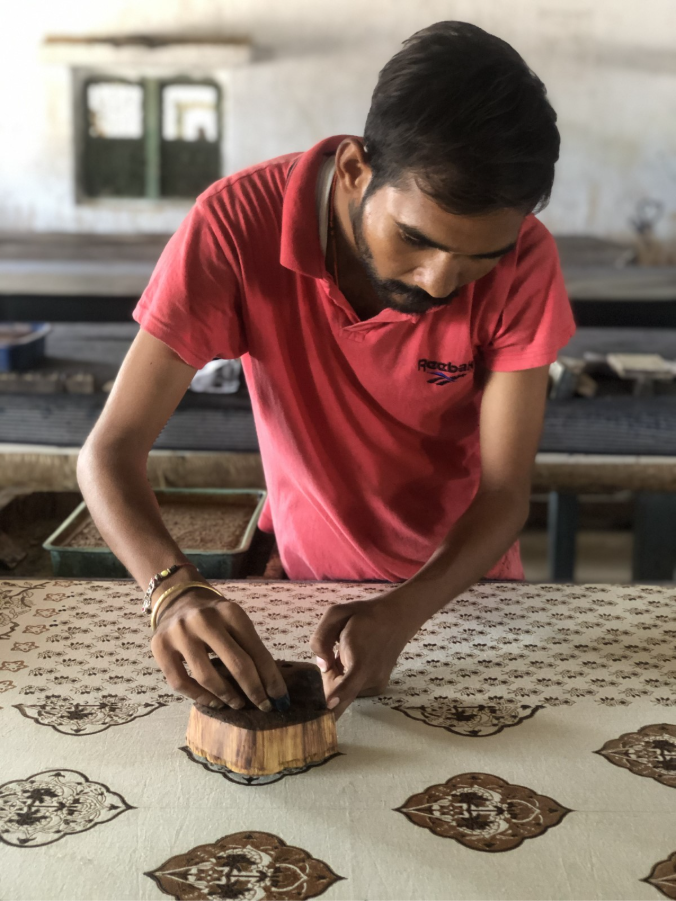
5. Hand Block Printing the Motifs: The carved blocks are dipped into natural dyes and carefully stamped onto the fabric by hand. Each motif is printed individually, making every Bagh Print textile unique and deeply connected to artisan craftsmanship.
6. Creating the Signature Bagh Print Colors: Traditional Bagh Print is recognised for its rich red and deep black colours. Black dye is created using iron filings and jaggery, while red shades are developed using alum and natural ingredients like alizarin. These natural dyes give Bagh textiles their earthy beauty.
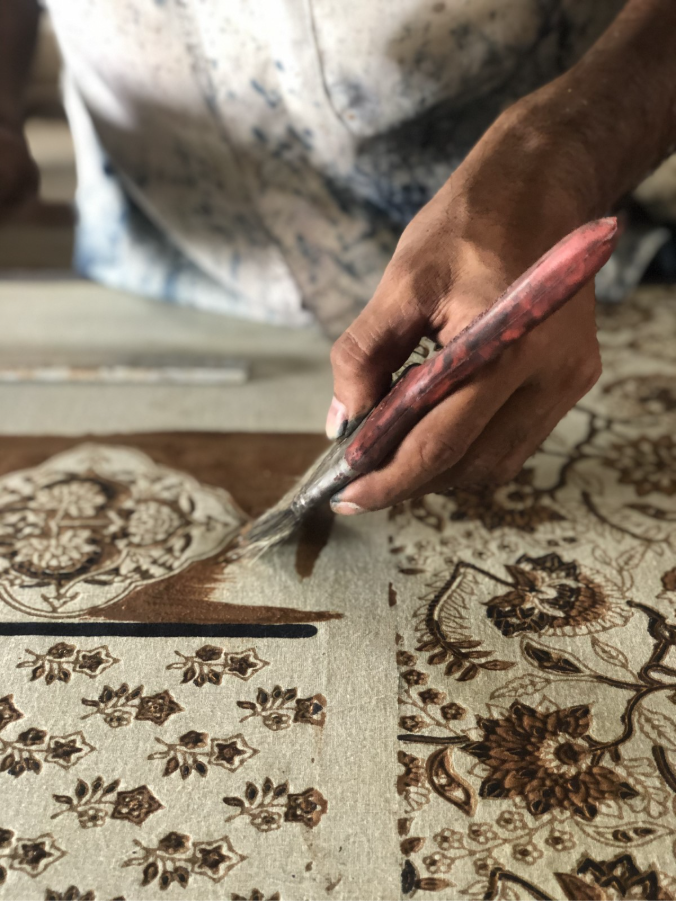
Lesser-Known Trivia: The black dye mixture is often fermented for days before use, giving it the depth and richness that Bagh Print is known for.
7. Washing the Fabric in River Water: Once printed, the fabric is repeatedly washed in the mineral rich waters near Bagh. The river water helps develop the colours naturally and gives Bagh Print its distinctive depth and softness.
8. Boiling to Fix the Natural Dyes: The printed fabric is boiled with flowers and other natural ingredients to fix the dyes permanently. This step enhances the richness of the colours and ensures the handcrafted print lasts beautifully over time.
9. Drying and Finishing the Fabric: Finally, the fabric is dried again in sunlight and open air. What emerges is a handcrafted Bagh Print textile shaped by natural dyes, wooden block printing, traditional techniques, and generations of artisan skill.
What Makes Bagh Print Unique?
There is a certain depth to Bagh Print that feels almost impossible to separate from the land it comes from. Its motifs do not merely decorate fabric, they echo the landscape around Bagh, from winding river paths to carved stone jaalis and flowering forest trails. Unlike trends that shift with seasons, Bagh Print has held on to a visual language that feels both rooted and remarkably modern. The patterns carry a sense of rhythm and movement, making even the most detailed designs feel effortless on fabric.
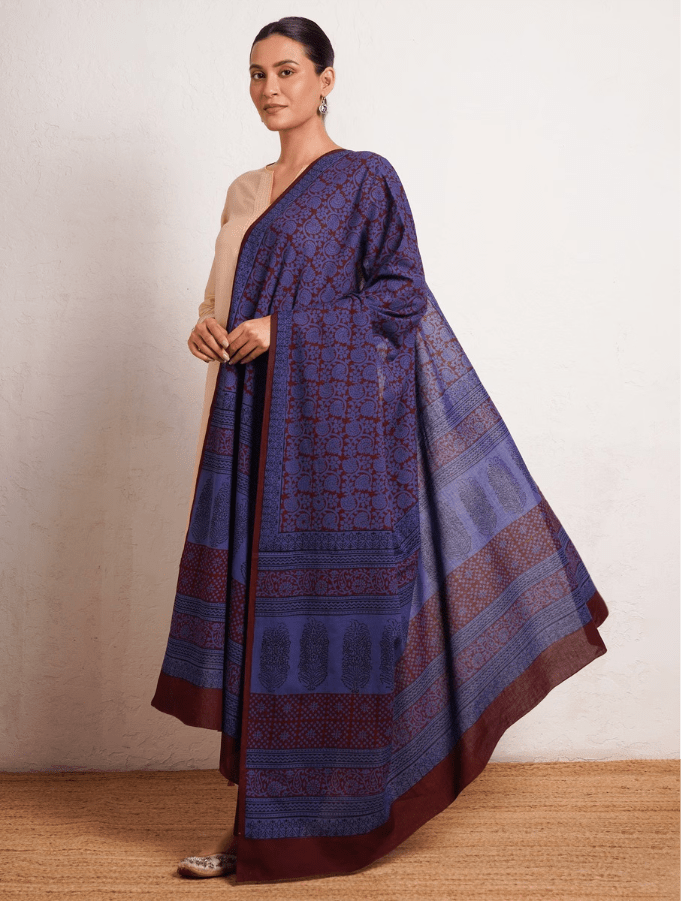
At Jaypore, Bagh Print finds new expression through sarees, apparel, and home accents that honor the craft while making it feel relevant for today. Some artisan families still preserve printing blocks older than the people using them, each carrying tiny imperfections shaped by decades of repeated handwork. Perhaps that is what makes Bagh Print endure so beautifully, every motif holds not just colour and pattern, but time itself.

 Storytellers of Wonder
Leave a comment