
What Is Chitai Craft?
Chitai is a traditional hand-engraved and embossed metalwork craft rooted in the desert regions of western India, particularly Rajasthan. Practised by communities including the Meghwal, Rabari, and Khatri, Chitai emerged as an ingenious response to scarcity, a way to create visual richness without heavy embroidery or costly materials.
Using only simple hand tools and natural techniques, artisans build striking surface patterns on thin metal sheets, producing work of remarkable depth and intricacy.
Did you know? Traditional desert textiles like Bandhani (tie-dye), Leheriya (wave patterns), and Bagru or Dabu block prints were designed to be visible from a distance, helping communities identify one another across vast, open landscapes.
Table Of Content
- What Is Chitai Craft?
- The History and Origins of Chitai
- How Chitai Is Made: A Step-by-Step Guide
- Chitai Motifs and Aesthetic: The Visual Language of the Desert
- Why Chitai Is a Dying Craft, And Why That Matters
- Chitai Craft in the Modern World
- Chitai at Jaypore: Keeping the Craft Alive
The History and Origins of Chitai
Like the footprints that briefly mark sand or the ripples shaped by desert wind, Chitai patterns move in rhythmic repetition, creating a sense of motion within stillness.
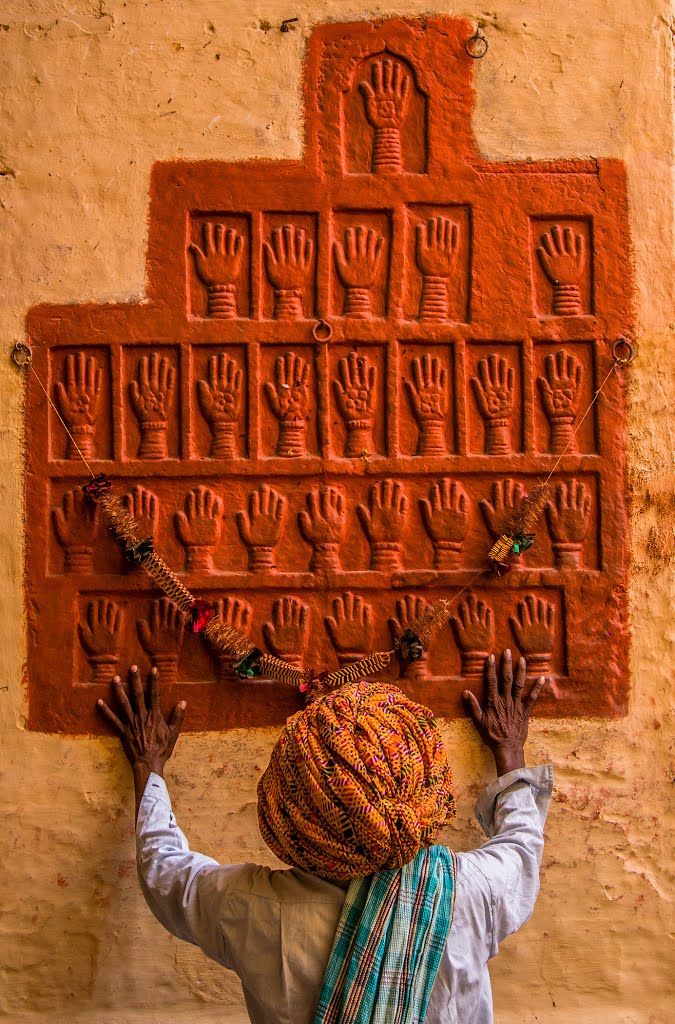
Born in the arid landscapes of Rajasthan, this lesser-known Indian craft tradition evolved alongside the Meghwal, Rabari, and Khatri communities who called the desert home. With limited resources but extraordinary skill, these artisans developed a craft language entirely their own, one rooted in observation of the natural world and refined across generations.
How Chitai Is Made: A Step-by-Step Guide
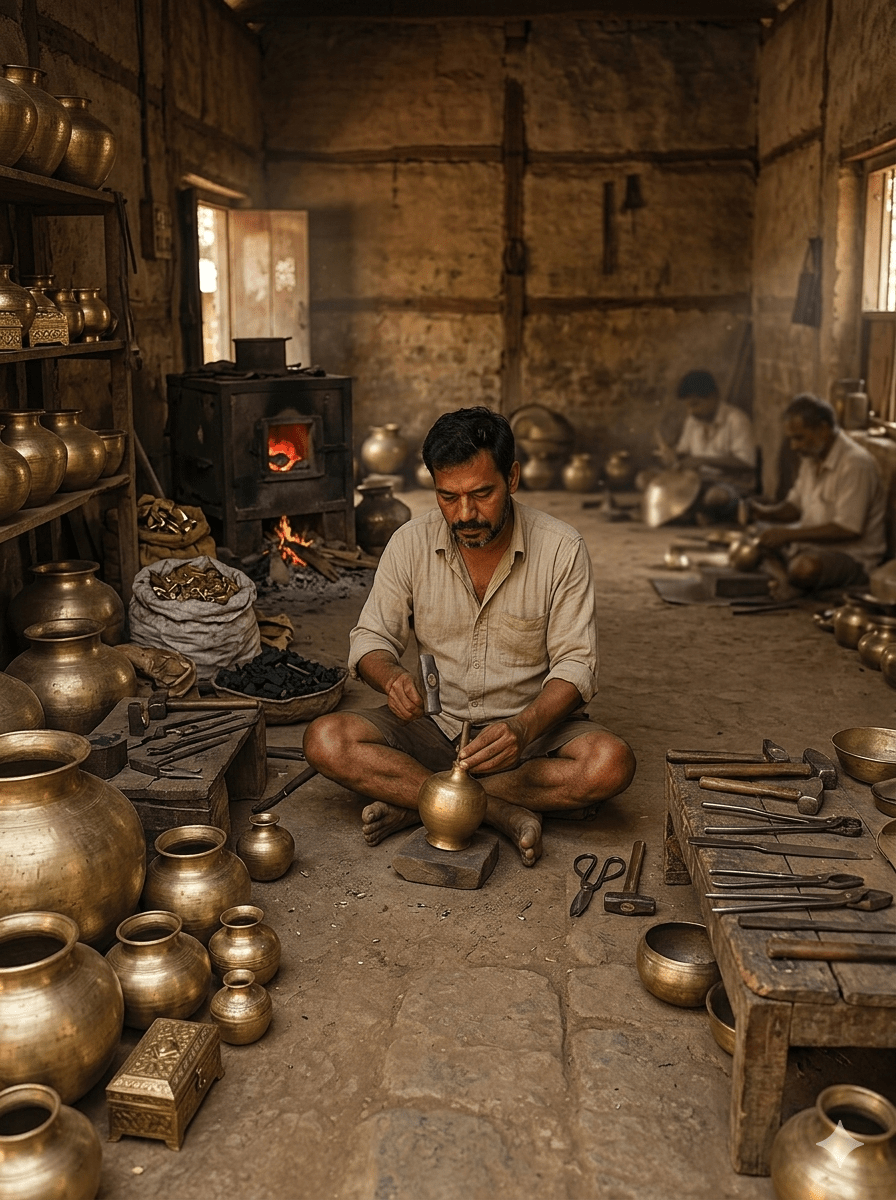
Every Chitai piece is made entirely by hand. The process is slow, meditative, and deeply skilled, a single piece can take several days to complete.
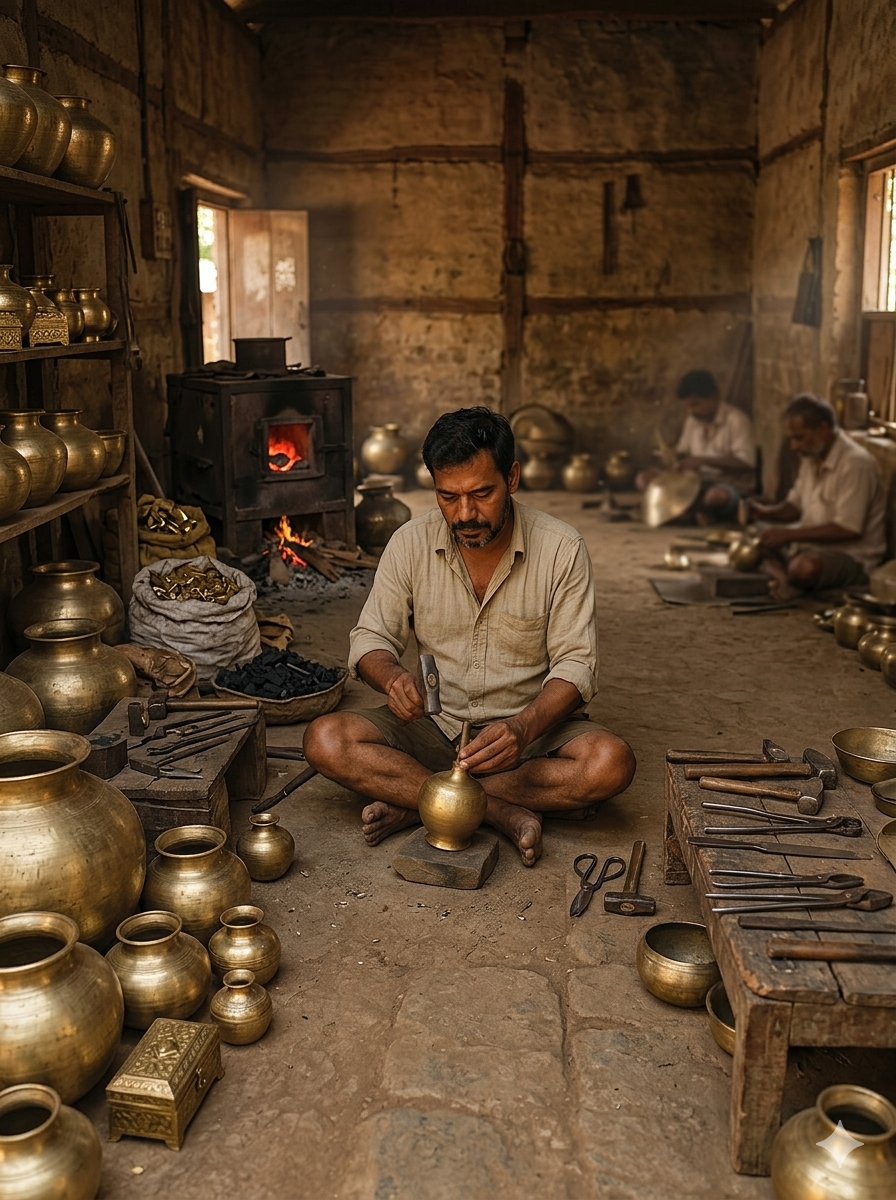
1. Choosing the Metal: The process begins with a thin sheet of silver or brass, which forms the base for all engraving and embossing work.
2. Preparing the Sheet: The metal is gently softened through controlled heating, making it more workable and less prone to cracking.
3. Drawing the Design: Artisans lightly trace the design onto the surface, typically traditional motifs such as florals, geometric patterns, and regional forms drawn from Mughal heritage.
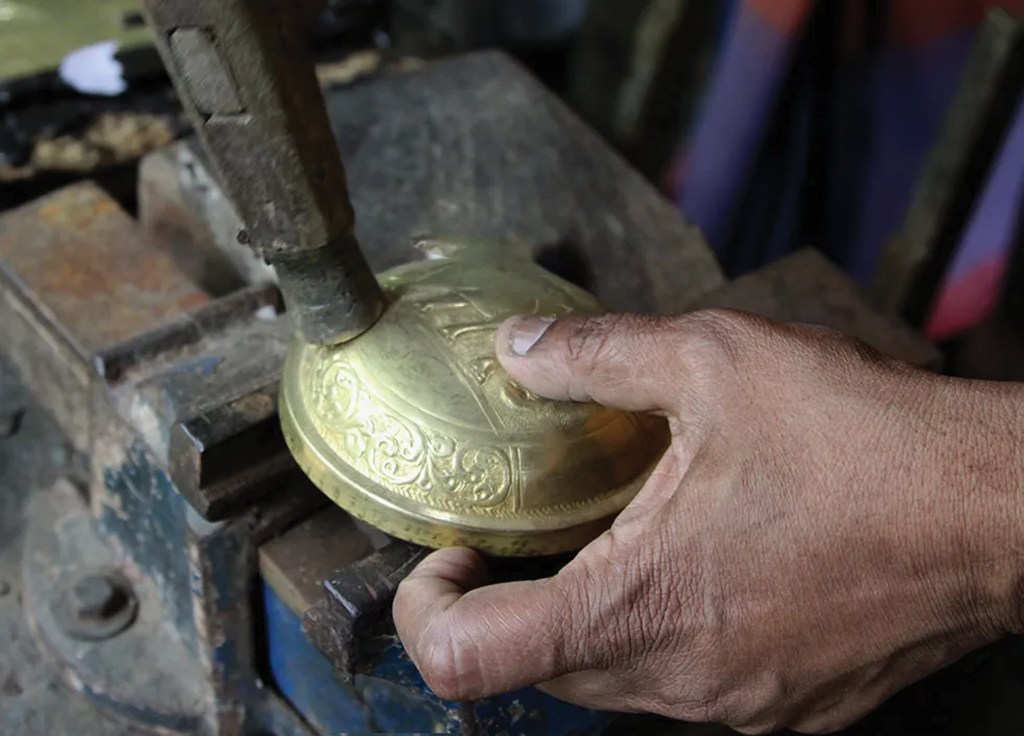
4. Hand Engraving and Embossing: Using small chisels and hammers, artisans carefully tap the metal from behind, creating raised and indented areas that gradually build texture and depth. The work is slow and rhythmic, almost like a steady conversation with the material.
5. Developing the Detail: The same sections are revisited multiple times. This layering process enhances intricacy and brings the surface to life.
6. Cleaning and Polishing: Once engraving is complete, the piece is cleaned to remove dust and residue. Polishing sharpens the contrast between raised and recessed areas, making the design come alive.
7. Final Finishing: Final touches are added to balance the design and sharpen fine details. Each piece carries subtle variations shaped entirely by the artisan’s hand, making every work one of a kind.
Chitai Motifs and Aesthetic: The Visual Language of the Desert
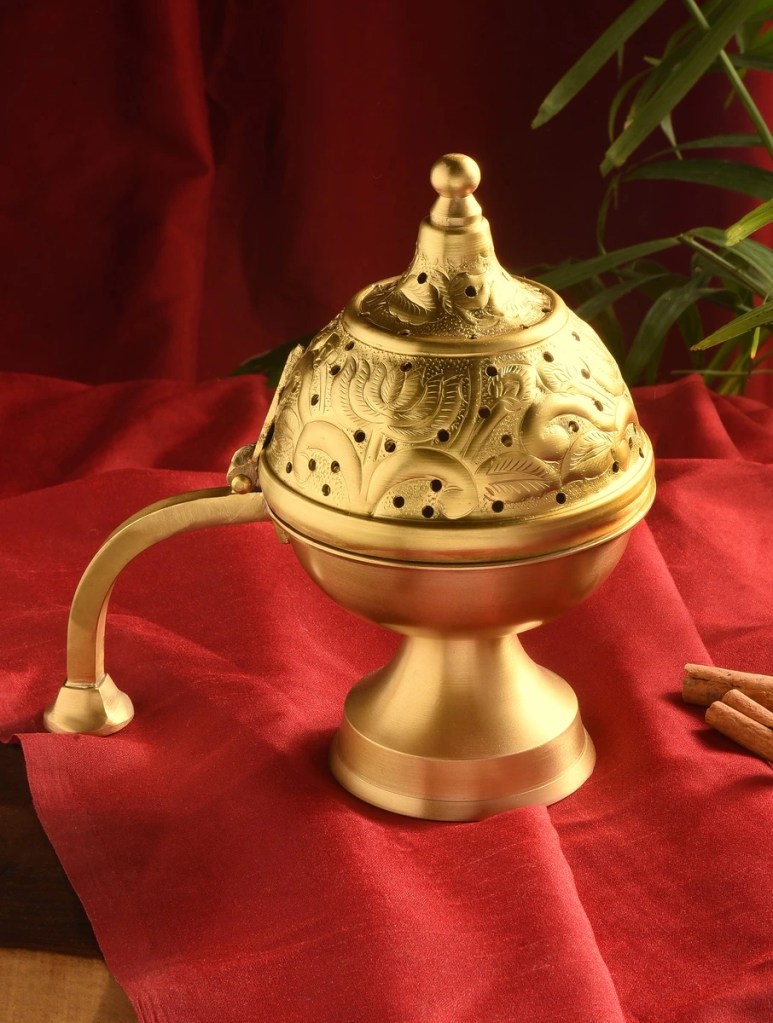
The visual language of Chitai is drawn directly from the desert environment. Common motifs include:
- Geometric patterns — grids, diamonds, and angular forms
- Dot and stripe work — evoking sand, texture, and movement
- Stylised flora and fauna — sparse desert vegetation and regional wildlife
- Dune-inspired forms — fluid curves that mirror the landscape
A defining feature is repetition, the same element echoed across a surface to create hypnotic, almost meditative designs. Far from purely decorative, this approach had practical roots.
Craft insight: Small dot patterns weren’t just ornamental, they helped mask dust and everyday wear, making Chitai textiles genuinely practical for harsh desert conditions.
Why Chitai Is a Dying Craft, And Why That Matters
Like many traditional Indian crafts, Chitai is increasingly rare. Several factors have contributed to its decline:
- Industrial competition: Mass-produced printing methods offer faster, cheaper alternatives, reducing demand for labour-intensive handmade work.
- Generational shift: Younger artisans are often moving away from craft professions in search of more economically stable careers.
- Time investment: Creating a single Chitai piece can take days, making it difficult to sustain in a fast-fashion market.
Preserving Chitai isn’t just about keeping a technique alive, it’s about sustaining the cultural knowledge, community identity, and design intelligence embedded in every piece.
Chitai Craft in the Modern World
Despite its rarity, Chitai holds strong relevance for contemporary design. As consumers increasingly seek authenticity, sustainability, and handcrafted value, this craft offers something truly distinctive.

Its minimalist yet striking aesthetic translates naturally into modern wardrobes and home décor. Designers are beginning to revisit techniques like Chitai, blending them with contemporary silhouettes and colour palettes. In many ways, the craft feels ahead of its time, rooted in slow making, mindful process, and enduring design.
Chitai at Jaypore: Keeping the Craft Alive
At Jaypore, we celebrate crafts like Chitai that carry the intelligence of tradition and the beauty of slow making. By bringing these rare techniques to a wider audience, we help ensure they are not only preserved, but experienced in everyday life.
Each piece is more than an object. It is a continuation of a story shaped by desert landscapes, skilled hands, and generations of quiet mastery.
[Explore our Chitai collection →] https://www.jaypore.com/c/search?search_query=chitai&page=1&hs=main

 Storytellers of Wonder
Leave a comment