
Ever noticed how your favorite pair of shoes feels better the more you wear them? At first, they feel new, almost unfamiliar, but with time they begin to fit just right. They soften, adjust, and start to move with you, becoming a part of your everyday without you even realizing it.
That is what sets lasting things apart. They evolve with use, becoming more than what they started as. Just like Shanti leather, which softens, deepens in character, and becomes more personal with every use, marked by the rhythm of daily life.
Table Of Content
- What Is Shanti Leather?
- Origin and History
- The Process
- Design Philosophy & Aesthetic
- Contemporary Relevance & Sustainability
What Is Shanti Leather?
Shanti leather, often used to refer to Shantiniketan leather, is deeply rooted in India’s craft heritage. The name “Shanti” meaning peace, reflects both its origin in Shantiniketan and the nature of its making, which is calm, deliberate, and guided by tradition. Crafted using natural methods and time-honored techniques, these leather goods are designed to last. With a soft feel and lasting strength, each piece ages beautifully, gaining richness and character with every use.
Origin and History
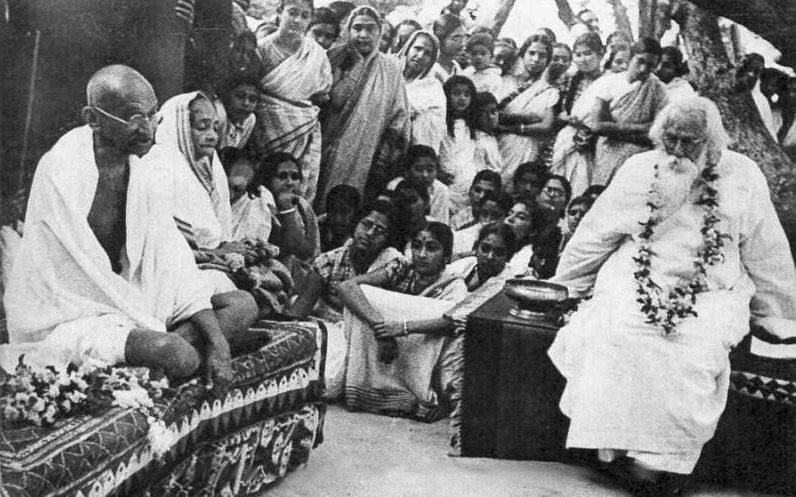
The craft traces back to Shantiniketan in West Bengal in the 1940s. It developed as part of rural craft initiatives inspired by Rabindranath Tagore, with the aim of creating sustainable livelihoods for local artisan communities. What began as simple leatherwork soon evolved through experimentation with embossing, dyeing, and decorative techniques. Artisans transformed everyday utility items into expressive pieces that carried both function and artistic identity. Over time, Shantiniketan leather became known for its distinct character, blending Bengal’s artistic sensibilities with practical design.
The Process
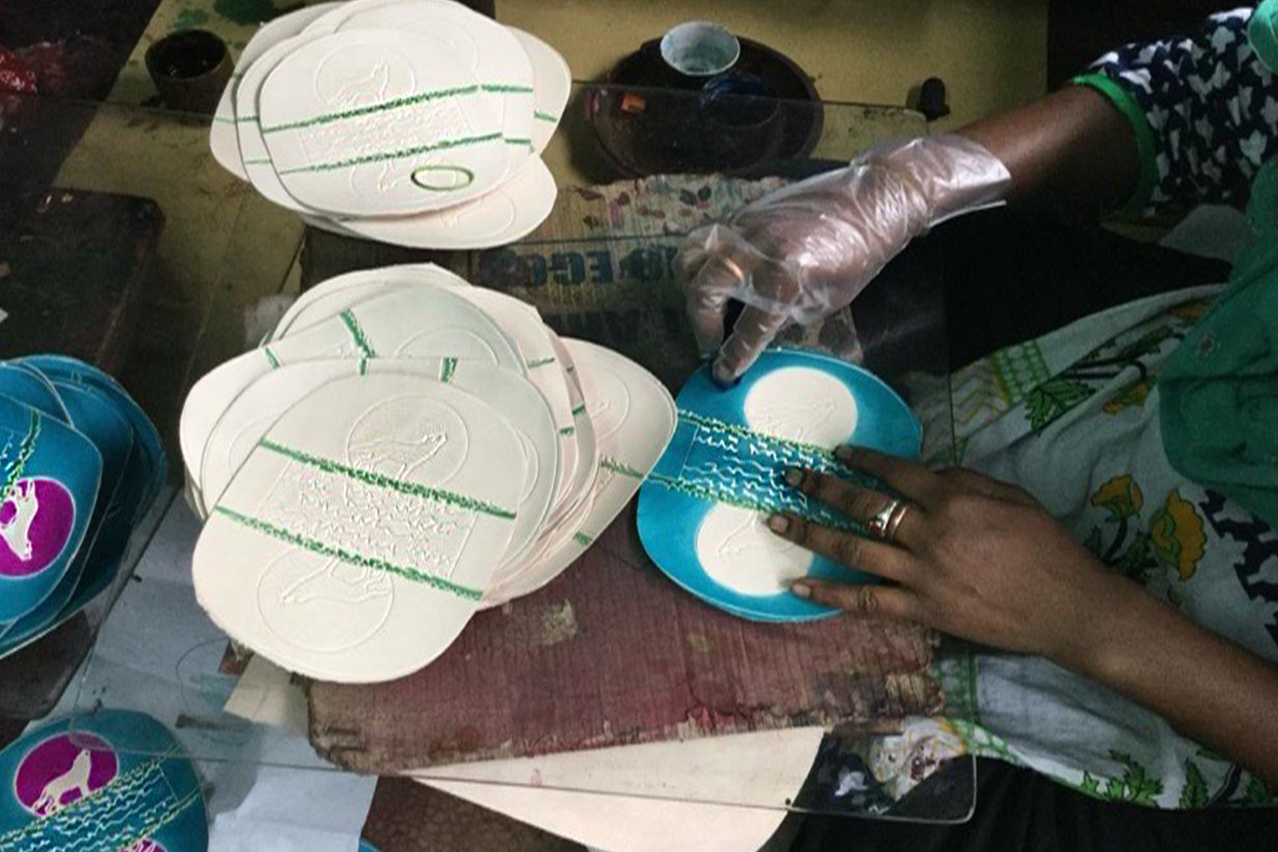
A defining feature of Shanti leather lies in its material and the way it is processed.
- Preparation of Raw Leather: First, the raw leather is carefully cleaned and prepared to create a strong and even base, ensuring durability from the very beginning.
- Vegetable Tanning Process: Next, it undergoes vegetable tanning using natural extracts from plants and bark. This slow process allows the leather to absorb tannins gradually, strengthening the fibers while preserving their natural texture.
- Natural Drying and Setting: Then, the leather is left to dry and settle naturally, helping it gain flexibility and resilience without the use of synthetic treatments.
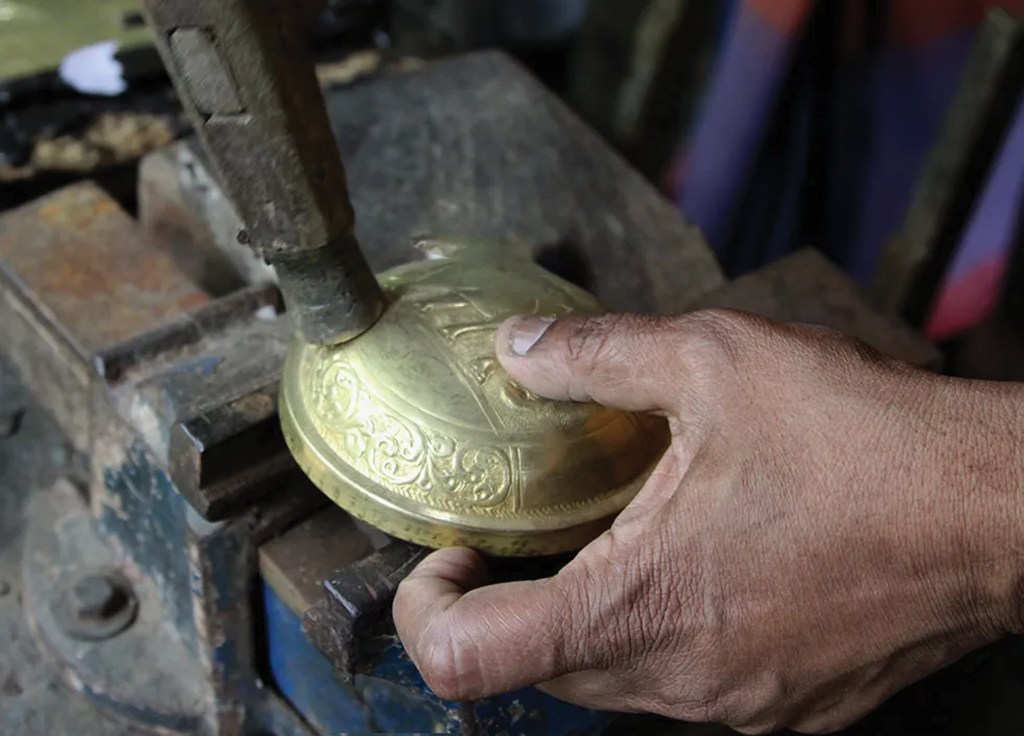
- Crafting and Detailing: Once ready, artisans begin shaping the material through hand cutting, followed by embossing intricate motifs that give each piece its distinct character. This is complemented by careful stitching to ensure strength and structure.
- Finishing and Aging: Finally, detailed burnishing smoothens the edges and enhances the finish, resulting in leather that feels refined yet natural. Over time, it develops a rich patina, gaining depth and personality with every use.
Many designs are inspired by nature, folklore, and traditional patterns unique to Bengal. Each step requires patience and expertise, ensuring that the final product is both functional and visually expressive. These techniques continue to be preserved within artisan communities, keeping the craft alive in its most authentic form.
Design Philosophy & Aesthetic
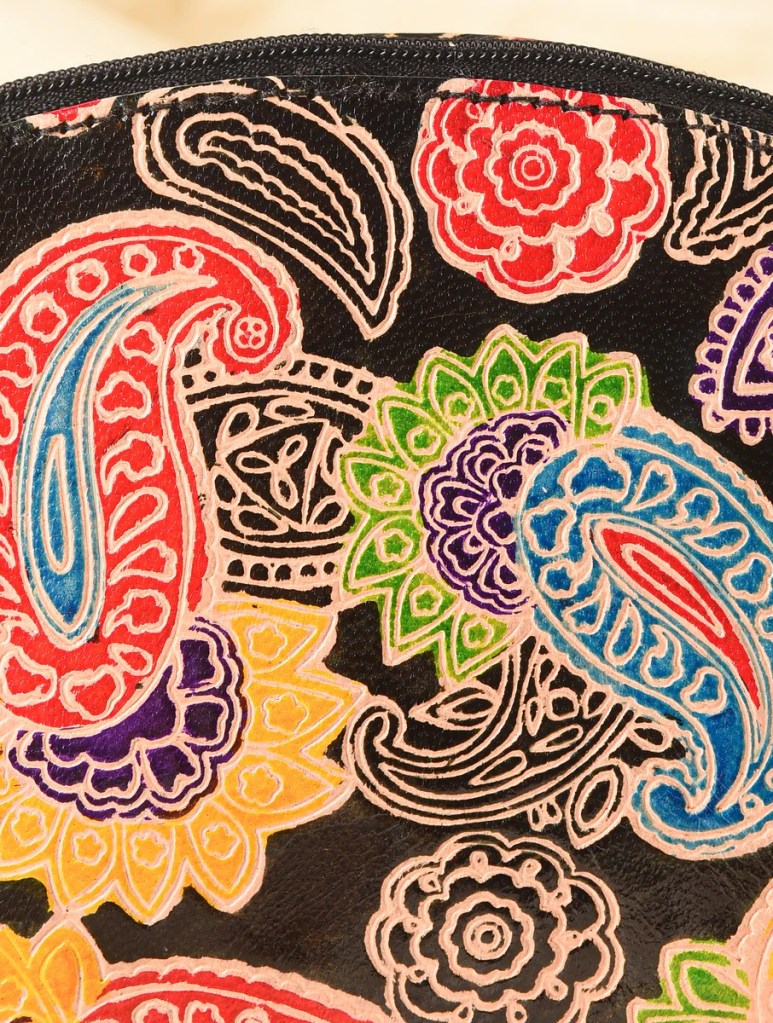
Shanti leather follows a design approach that is rooted in function first, with clearly defined forms such as structured totes, crossbody bags, wallets, and utility pouches. The silhouettes are kept clean and practical, with features like sturdy handles, secure closures, and well-planned compartments for everyday use. What sets these pieces apart is the surface detailing. Artisans use embossing techniques to create motifs inspired by nature, folk art, and scenes from rural life, often featuring florals, animals, or traditional patterns. These designs are pressed by hand, giving each piece slight variations that make it unique.
The color palette typically leans toward earthy tones like tan, brown, deep red, and black, allowing the craftsmanship to stand out without relying on excessive ornamentation. Edges are neatly finished, and the overall construction focuses on durability and long term use. The result is a style that is simple yet expressive, where every element, from shape to surface detail, serves a purpose while still carrying a distinct artistic identity.
Contemporary Relevance & Sustainability
In a world driven by fast fashion and constant change, Shanti leather offers an alternative rooted in longevity and mindful consumption. Its natural processing methods reduce environmental impact, while its durable nature encourages long term use. The handcrafted approach also supports artisan livelihoods and preserves traditional knowledge systems. Today, these pieces fit seamlessly into modern lifestyles, appealing to those who value authenticity, sustainability, and design with meaning.
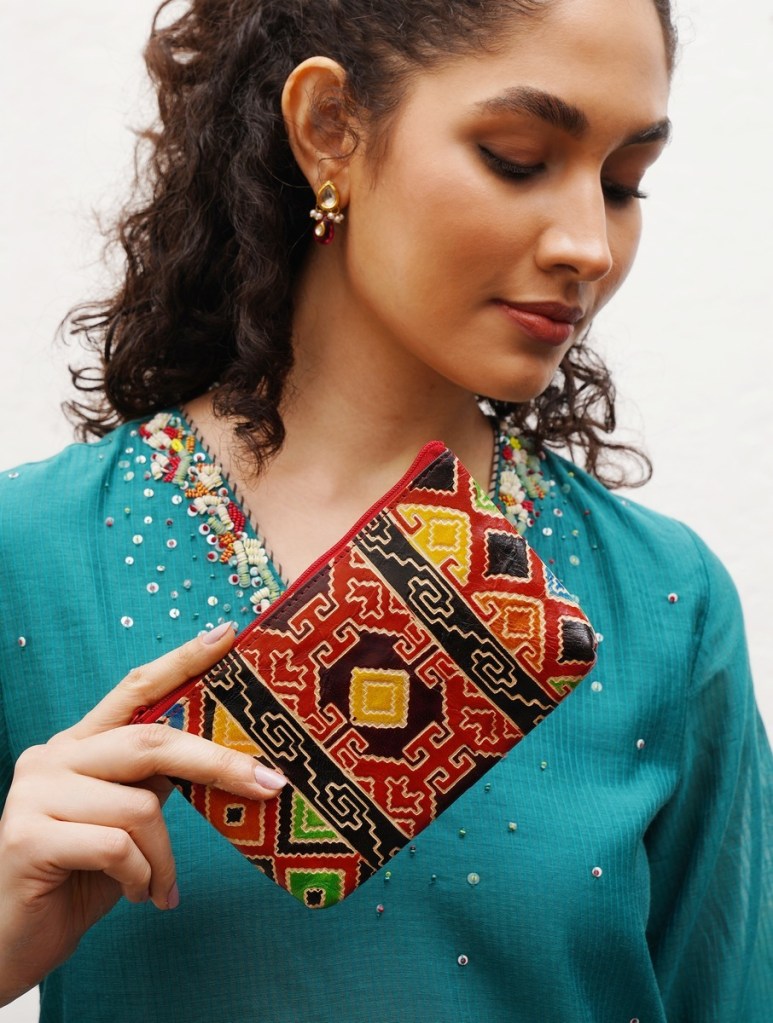
By connecting skilled artisans with modern audiences, Jaypore helps preserve this heritage while making it relevant for today, allowing you to carry a piece of India’s artistic legacy into your everyday life.

 Storytellers of Wonder
Leave a comment